Batrachoseps gabrieli
San Gabriel Mountains Slender Salamander
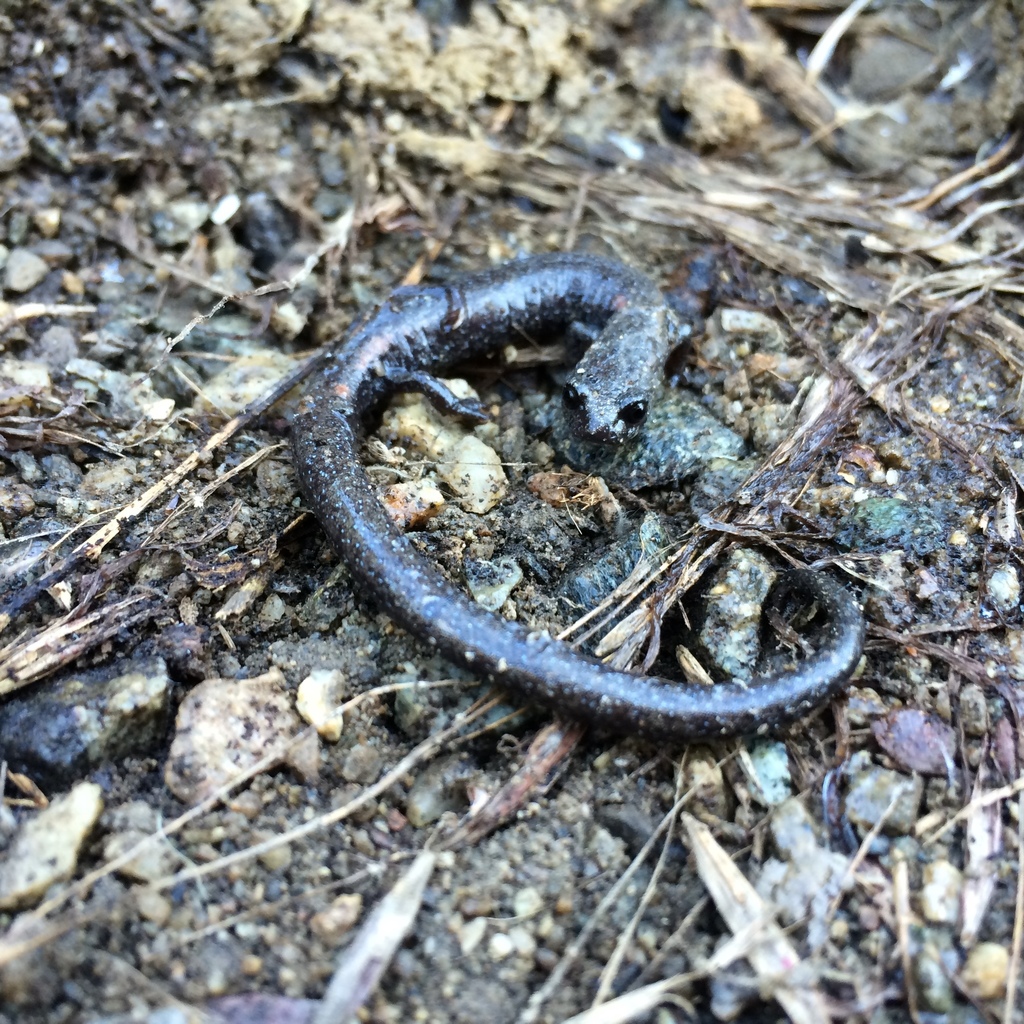
(c) nmoorhatch, some rights reserved (CC BY) · licence
Family: Plethodontidae · Class: Amphibia · Order: Caudata
Conservation status: G2G3 S2S3
Batrachoseps gabrieli (San Gabriel Mountains Slender Salamander) is a California animal in the Plethodontidae family.
The San Gabriel Mountains slender salamander (Batrachoseps gabrieli) is a terrestrial lungless salamander endemic to the San Gabriel Mountains of southern California. Adults typically measure 35-45 mm (1.4-1.8 inches) in snout-vent length, with a total length reaching 80-100 mm (3.1-3.9 inches) including the tail. The species exhibits the characteristic slender body plan of the genus Batrachoseps, with a narrow head, elongated body, and relatively short limbs. Coloration consists of a dark brown to black dorsal surface with a lighter reddish-brown or tan dorsal stripe extending from the head to the tail tip. The ventral surface is typically gray to dark gray. Like all plethodontid salamanders, this species lacks lungs and respires through its skin and oral cavity. Batrachoseps gabrieli is restricted to the San Gabriel Mountains within Los Angeles County, California. The species occupies a limited geographic range within this mountain system, primarily on north-facing slopes at elevations between 300-1,500 meters (980-4,920 feet). Historical records indicate the species was more widely distributed within the San Gabriel Mountains, but current populations appear fragmented due to habitat modification and urbanization pressures in the region. The species inhabits mixed chaparral, oak woodland, and coniferous forest communities. Individuals are typically found under rocks, logs, leaf litter, and other surface cover objects in areas with adequate moisture retention. The salamander shows a preference for talus slopes and rocky outcroppings where crevices provide refugia during dry periods. Microhabitat requirements include stable temperature and humidity conditions, which are maintained through the species' fossorial behavior and selection of appropriate cover objects. San Gabriel Mountains slender salamanders are nocturnal and primarily active during cool, moist conditions from late fall through early spring. The species exhibits direct development, with eggs laid in small clutches of 4-8 in underground chambers or deep rock crevices. Females provide parental care by attending eggs throughout the developmental period, which lasts approximately 6-8 months. Hatchlings emerge as miniature adults without an aquatic larval stage. Diet consists of small invertebrates including mites, springtails, small spiders, and other arthropods captured through tongue projection. The species can live 8-10 years in suitable habitat conditions. Batrachoseps gabrieli is assigned a conservation rank of G2G3 S2S3, indicating the species is imperiled to vulnerable both globally and within California. Primary threats include habitat fragmentation from urban development, recreational activities, and fire suppression practices that alter natural vegetation communities. Climate change poses additional risks through increased temperatures and altered precipitation patterns that may reduce suitable microhabitat. The species' limited range and specific habitat requirements make populations particularly vulnerable to environmental disturbances. No formal federal or state listing status has been established, but the restricted distribution and declining habitat quality warrant continued monitoring and conservation attention.
Classification
Class: Amphibia · Order: Caudata · Family: Plethodontidae
Conservation status
G2G3 S2S3
Frequently asked questions
How is Batrachoseps gabrieli classified?
Batrachoseps gabrieli belongs to class Amphibia, order Caudata, family Plethodontidae.
What family does Batrachoseps gabrieli belong to?
Batrachoseps gabrieli is in the Plethodontidae family.
Is Batrachoseps gabrieli protected or of conservation concern?
Batrachoseps gabrieli carries the following status: G2G3 S2S3.
What is Batrachoseps gabrieli?
The San Gabriel Mountains slender salamander (Batrachoseps gabrieli) is a terrestrial lungless salamander endemic to the San Gabriel Mountains of southern California.
Is Batrachoseps gabrieli found in California?
Yes. Batrachoseps gabrieli is recorded in California in The California Species Project's catalogue.
Related species
Other California species in the same genus, family, or bioregion.
Data from The California Species Project — 14,000+ California species with verified data from CNPS, CDFW, USFWS, and more.