Batrachoseps gavilanensis
Gabilan Mountains Slender Salamander
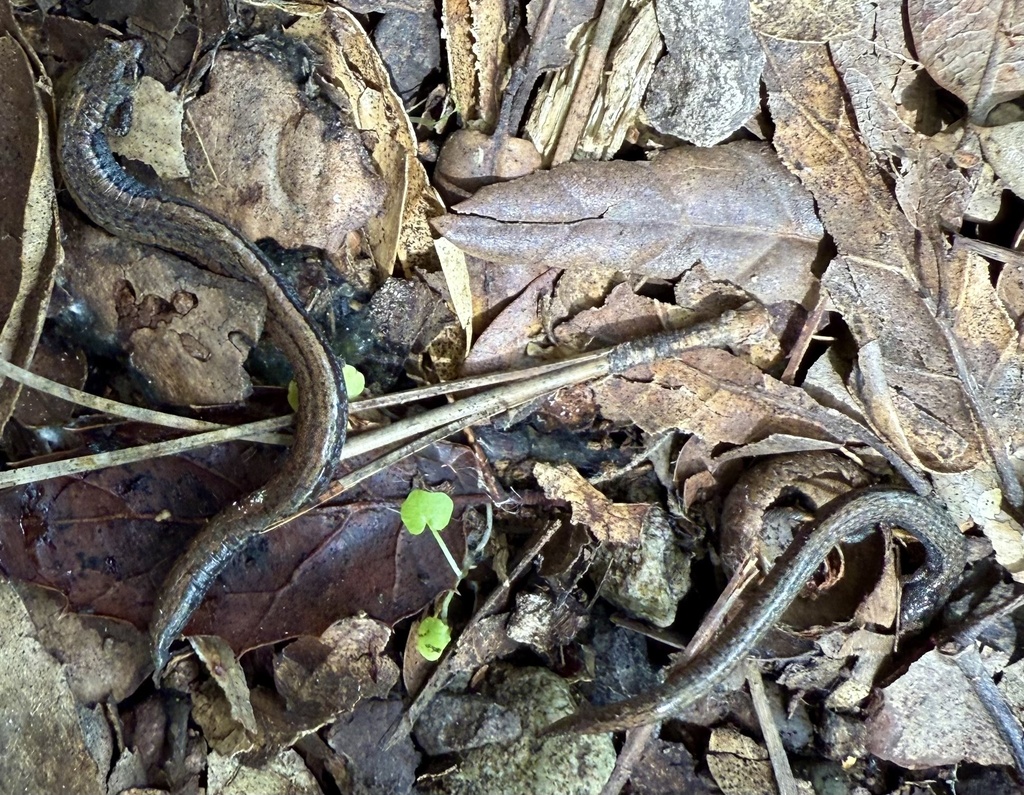
no rights reserved · CC0
Family: Plethodontidae · Class: Amphibia · Order: Caudata
Batrachoseps gavilanensis (Gabilan Mountains Slender Salamander) is a California animal in the Plethodontidae family.
The Gabilan Mountains Slender Salamander (Batrachoseps gavilanensis) is a terrestrial amphibian endemic to the Gabilan Range of central California. Adults typically measure 35 to 50 mm (1.4 to 2.0 inches) in snout-vent length, with a total length including tail of 75 to 95 mm (3.0 to 3.7 inches). The body is characteristically slender with a relatively small head and long, narrow tail. Coloration consists of a dark brown to black dorsal surface with bronze or reddish-brown striping along the back. The ventral surface is typically lighter, ranging from gray to pale brown. Like other members of the genus Batrachoseps, this species has 16 to 19 costal grooves and four toes on both front and hind feet. This salamander is restricted to the Gabilan Mountains of Monterey and San Benito counties in central California. The species occurs at elevations ranging from approximately 300 to 1,200 meters (980 to 3,940 feet) within this geographically isolated mountain range. The Gabilan Range extends roughly 60 kilometers (37 miles) from near Salinas southeastward toward Pinnacles National Park. Gabilan Mountains Slender Salamanders inhabit oak woodlands, chaparral, and mixed hardwood forests. They are typically found under rocks, logs, leaf litter, and bark in areas with moderate moisture retention. The species shows a preference for north-facing slopes and canyon bottoms where humidity levels remain higher during dry periods. Substrate preferences include decomposing organic matter and areas with loose soil that facilitate burrowing behavior during adverse conditions. As a lungless salamander family member (Plethodontidae), this species respires entirely through its skin and must maintain adequate moisture levels. Reproduction is terrestrial, with females depositing small clutches of eggs in moist soil or under protective cover during winter and early spring months. Development is direct, with juveniles hatching as miniature adults without an aquatic larval stage. The species is primarily nocturnal, emerging during periods of high humidity to forage for small invertebrates including springtails, mites, small beetles, and other arthropods. Activity patterns are closely tied to seasonal precipitation, with greatest surface activity occurring during winter and spring months when moisture levels are optimal. The conservation status of Batrachoseps gavilanensis reflects its limited geographic range and specific habitat requirements. As an endemic species restricted to a single mountain range, the population faces potential threats from habitat modification, wildfire, climate change effects on moisture patterns, and urban development pressures in surrounding valleys. The species' dependence on specific microhabitat conditions makes it particularly vulnerable to environmental changes that alter moisture regimes or temperature patterns within its limited range. Current population estimates and detailed threat assessments remain limited, highlighting the need for continued research and monitoring of this geographically restricted endemic salamander.
Classification
Class: Amphibia · Order: Caudata · Family: Plethodontidae
Frequently asked questions
How is Batrachoseps gavilanensis classified?
Batrachoseps gavilanensis belongs to class Amphibia, order Caudata, family Plethodontidae.
What family does Batrachoseps gavilanensis belong to?
Batrachoseps gavilanensis is in the Plethodontidae family.
What is Batrachoseps gavilanensis?
The Gabilan Mountains Slender Salamander (Batrachoseps gavilanensis) is a terrestrial amphibian endemic to the Gabilan Range of central California.
Is Batrachoseps gavilanensis found in California?
Yes. Batrachoseps gavilanensis is recorded in California in The California Species Project's catalogue.
Related species
Other California species in the same genus, family, or bioregion.
Data from The California Species Project — 14,000+ California species with verified data from CNPS, CDFW, USFWS, and more.