Batrachoseps nigriventris
Black-Bellied Slender Salamander
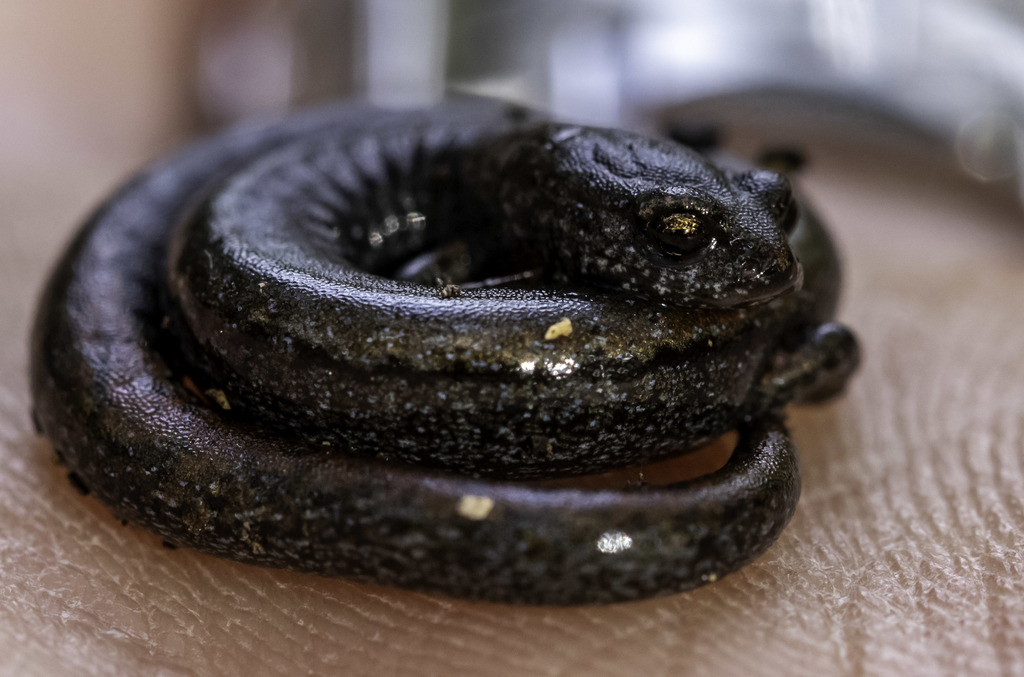
(c) Zack Abbey, some rights reserved (CC BY) · licence
Family: Plethodontidae · Class: Amphibia · Order: Caudata
Batrachoseps nigriventris (Black-Bellied Slender Salamander) is a California animal in the Plethodontidae family.
The black-bellied slender salamander (Batrachoseps nigriventris) is a small, elongate amphibian endemic to California. Adults typically measure 38 to 57 mm (1.5 to 2.2 inches) in snout-vent length, with a total length including tail reaching 89 to 108 mm (3.5 to 4.3 inches). The species exhibits the characteristic slender body form of the genus Batrachoseps, with a narrow head, small limbs, and proportionally long tail. The dorsal surface ranges from dark brown to black, while the ventral surface displays the diagnostic black coloration that gives this species its common name. A lighter dorsal stripe may be present but is often indistinct or absent. The black-bellied slender salamander occurs in a restricted range within the coastal mountains of central California. The species is found primarily in the Santa Lucia Range of Monterey and San Luis Obispo counties, with additional populations documented in the southern Santa Cruz Mountains. Elevational distribution ranges from near sea level to approximately 1,220 meters (4,000 feet). This limited geographic range makes the species one of the more geographically restricted members of the genus Batrachoseps. Habitat requirements include moist environments within mixed evergreen forests, redwood forests, and oak woodlands. The species occurs under rocks, logs, bark, and leaf litter in areas that maintain consistent moisture levels throughout the year. Populations are typically associated with north-facing slopes, canyon bottoms, and areas near intermittent or permanent water sources. The species requires substrates that provide adequate cover and moisture retention, including decomposing organic matter and fractured rock formations. As a lungless salamander, Batrachoseps nigriventris respires entirely through its skin and must maintain adequate moisture levels to survive. The species is primarily nocturnal and becomes active during periods of high humidity, particularly following precipitation. Diet consists of small invertebrates including mites, springtails, small beetles, and other arthropods found in the leaf litter and soil interface. Reproduction occurs through internal fertilization, with females depositing eggs in moist terrestrial locations during late fall and winter months. Clutch sizes typically range from 4 to 12 eggs, which undergo direct development without an aquatic larval stage. Conservation status assessments for the black-bellied slender salamander are limited by insufficient population data and taxonomic uncertainty within the Batrachoseps nigriventris complex. The species faces potential threats from habitat fragmentation due to residential and agricultural development within its coastal range. Climate change poses additional concerns through altered precipitation patterns and increased frequency of drought conditions, which could reduce the moist microhabitats essential for survival. Fire management practices and timber harvesting may also impact habitat quality. The restricted geographic range increases vulnerability to localized threats and environmental changes. Additional research is needed to clarify population trends, habitat requirements, and taxonomic relationships within this species complex to inform appropriate conservation strategies.
Classification
Class: Amphibia · Order: Caudata · Family: Plethodontidae
Frequently asked questions
How is Batrachoseps nigriventris classified?
Batrachoseps nigriventris belongs to class Amphibia, order Caudata, family Plethodontidae.
What family does Batrachoseps nigriventris belong to?
Batrachoseps nigriventris is in the Plethodontidae family.
What is Batrachoseps nigriventris?
The black-bellied slender salamander (Batrachoseps nigriventris) is a small, elongate amphibian endemic to California.
Is Batrachoseps nigriventris found in California?
Yes. Batrachoseps nigriventris is recorded in California in The California Species Project's catalogue.
Related species
Other California species in the same genus, family, or bioregion.
Data from The California Species Project — 14,000+ California species with verified data from CNPS, CDFW, USFWS, and more.