Batrachoseps regius
Kings River Slender Salamander
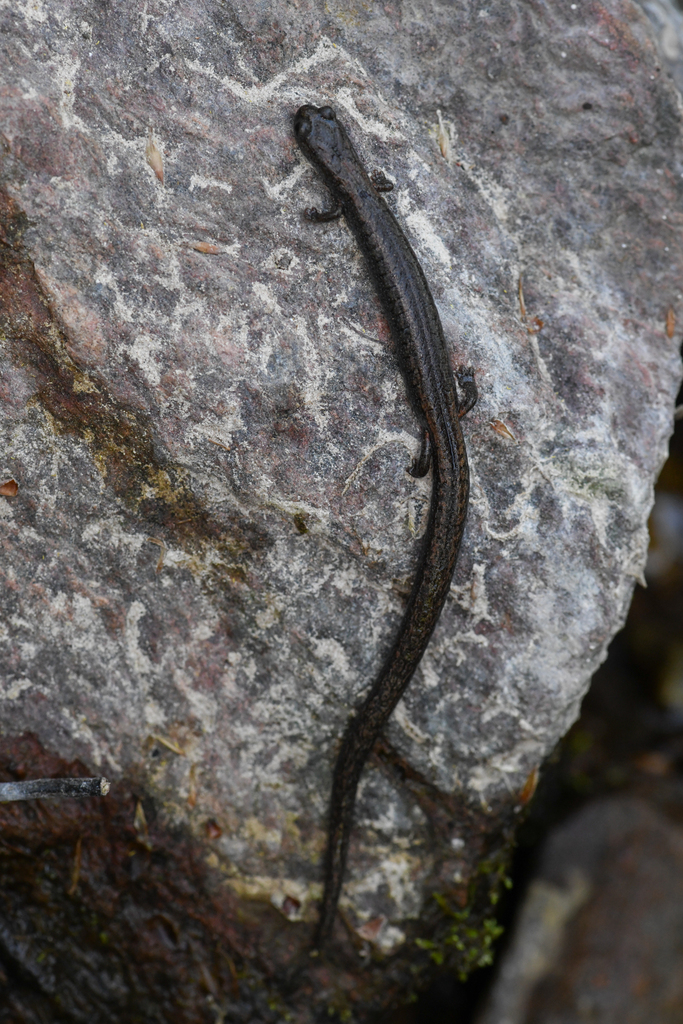
(c) Trevor Van Loon, some rights reserved (CC BY) · licence
Family: Plethodontidae · Class: Amphibia · Order: Caudata
Conservation status: G2G3 S2S3
Batrachoseps regius (Kings River Slender Salamander) is a California animal in the Plethodontidae family.
The Kings River Slender Salamander (Batrachoseps regius) is a small terrestrial salamander endemic to the central Sierra Nevada foothills of California. Adults typically measure 38-51 mm (1.5-2.0 inches) in snout-vent length, with a total length including tail of 76-89 mm (3.0-3.5 inches). The body is elongate and slender with relatively short limbs and a cylindrical tail that comprises approximately half the total body length. Dorsal coloration ranges from reddish-brown to dark brown with a lighter dorsal stripe extending from head to tail tip. The ventral surface is lighter, typically pale gray to cream-colored. Like other members of the genus Batrachoseps, this species has 19-20 trunk vertebrae and four toes on both front and hind feet, distinguishing it from five-toed salamander genera. The species has an extremely limited range, occurring only in the foothills of the central Sierra Nevada in Fresno County, California. The range is centered around the Kings River drainage system, with populations documented at elevations between 200-760 meters (650-2,500 feet). Known localities include areas near Pine Flat Reservoir and surrounding foothill regions. This restricted distribution makes it one of the most geographically limited salamander species in California. Kings River Slender Salamanders inhabit oak woodland and chaparral environments characterized by blue oak (Quercus douglasii), interior live oak (Quercus wislizeni), and associated shrub species including manzanita (Arctostaphylos spp.) and ceanothus (Ceanothus spp.). The species requires specific microhabitat conditions, typically found under rocks, logs, and leaf litter in areas with adequate moisture retention. Suitable habitat includes talus slopes, rocky outcrops, and areas with decomposing organic matter that provide both shelter and foraging opportunities. As lungless salamanders (family Plethodontidae), these animals respire entirely through their skin and require consistently moist conditions. They are primarily active during the cooler months from October through April, becoming surface-active after significant rainfall events. The species is primarily nocturnal, foraging for small invertebrates including springtails (Collembola), mites, small spiders, and other arthropods. Reproduction likely follows the typical plethodontid pattern, with eggs deposited in moist terrestrial sites and undergoing direct development without an aquatic larval stage. Females probably deposit 6-12 eggs in underground chambers or beneath rocks during winter months. The Kings River Slender Salamander is classified as G2G3 S2S3, indicating it is imperiled to vulnerable both globally and within California. The species faces significant conservation challenges due to its extremely limited range and specific habitat requirements. Primary threats include habitat loss from urban development, agricultural conversion, water diversions affecting soil moisture, and climate change impacts including increased temperatures and altered precipitation patterns. Fire management practices and grazing may also impact suitable microhabitat conditions. The small population size and restricted distribution make this species particularly vulnerable to extinction from localized disturbances or environmental changes.
Classification
Class: Amphibia · Order: Caudata · Family: Plethodontidae
Conservation status
G2G3 S2S3
Frequently asked questions
How is Batrachoseps regius classified?
Batrachoseps regius belongs to class Amphibia, order Caudata, family Plethodontidae.
What family does Batrachoseps regius belong to?
Batrachoseps regius is in the Plethodontidae family.
Is Batrachoseps regius protected or of conservation concern?
Batrachoseps regius carries the following status: G2G3 S2S3.
What is Batrachoseps regius?
The Kings River Slender Salamander (Batrachoseps regius) is a small terrestrial salamander endemic to the central Sierra Nevada foothills of California.
Is Batrachoseps regius found in California?
Yes. Batrachoseps regius is recorded in California in The California Species Project's catalogue.
Related species
Other California species in the same genus, family, or bioregion.
Data from The California Species Project — 14,000+ California species with verified data from CNPS, CDFW, USFWS, and more.