Batrachoseps simatus
Kern Canyon slender salamander
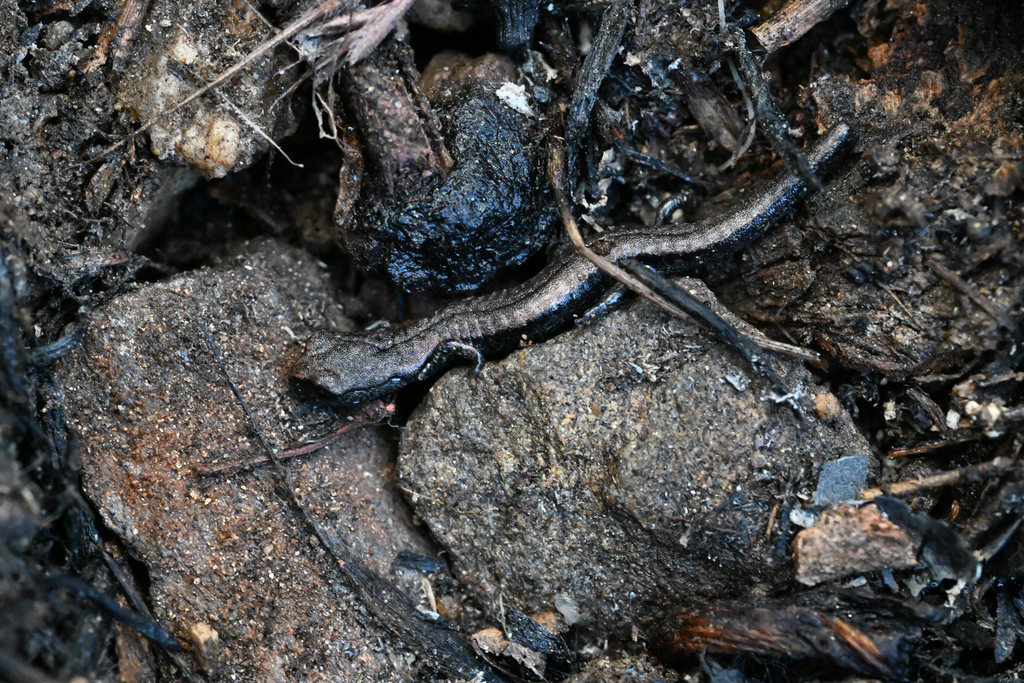
(c) Trevor Van Loon, some rights reserved (CC BY) · licence
Family: Plethodontidae · Class: Amphibia · Order: Caudata
Conservation status: ST · Proposed Threatened · G2G3 S2S3
Batrachoseps simatus (Kern Canyon slender salamander) is a California animal in the Plethodontidae family.
The Kern Canyon slender salamander (Batrachoseps simatus) is a small, terrestrial amphibian endemic to the southern Sierra Nevada of California. Adults typically measure 35 to 50 mm (1.4 to 2.0 inches) in snout-vent length, with a total length including tail reaching 75 to 100 mm (3.0 to 3.9 inches). The body is elongate and slender with a narrow head and relatively short limbs. Coloration consists of a dark brown to black dorsal surface with a lighter brown or reddish-brown dorsal stripe extending from the head to the tail. The ventral surface is typically darker than the dorsal stripe. Like other plethodontid salamanders, this species lacks lungs and breathes entirely through the skin and mouth cavity. The species has an extremely restricted range, occurring only in the Kern River Canyon and adjacent drainages in Kern County, California. The range extends from approximately Fairview north to the vicinity of Johnsondale, encompassing portions of the Sequoia National Forest. Elevational distribution ranges from approximately 450 to 1,525 meters (1,475 to 5,000 feet). Historical records indicate the species may have occurred more broadly within the Kern River drainage, but current populations are fragmented and localized. Kern Canyon slender salamanders inhabit oak woodland, chaparral, and mixed coniferous forest communities. The species requires areas with adequate moisture retention, typically found under logs, rocks, leaf litter, and other surface cover objects. Suitable habitat is characterized by north-facing slopes, rocky talus, and areas near intermittent or permanent water sources. The species shows strong association with canyon bottoms and riparian zones where humidity levels remain elevated during dry periods. Substrate preferences include decomposing organic matter and loose soil that maintains moisture. As a member of the lungless salamander family, Batrachoseps simatus requires constant skin moisture for respiration and is most active during cool, humid conditions. The species is primarily nocturnal and exhibits surface activity during fall and winter months when temperatures are moderate and humidity is higher. Diet consists of small invertebrates including mites, springtails, small beetles, and other arthropods found in leaf litter and soil. Reproduction is terrestrial, with females depositing eggs in moist soil or under cover objects. Development is direct, with young emerging as miniature adults without an aquatic larval stage. Sexual maturity is reached at approximately 2 to 3 years of age. The California Fish and Game Commission listed the Kern Canyon slender salamander as threatened in 1971, and the U.S. Fish and Wildlife Service proposed federal threatened status in 2023. Population estimates are limited, but surveys indicate fewer than 20 known populations remain. Primary threats include habitat loss from development, water diversions that alter riparian moisture regimes, fire suppression activities, recreational vehicle use, and climate change effects on precipitation patterns. The species' narrow habitat requirements and limited dispersal ability make populations particularly vulnerable to local extirpations. Conservation efforts focus on habitat protection within the Sequoia National Forest and monitoring of existing populations.
Classification
Class: Amphibia · Order: Caudata · Family: Plethodontidae
Conservation status
ST · Proposed Threatened · G2G3 S2S3
Frequently asked questions
How is Batrachoseps simatus classified?
Batrachoseps simatus belongs to class Amphibia, order Caudata, family Plethodontidae.
What family does Batrachoseps simatus belong to?
Batrachoseps simatus is in the Plethodontidae family.
Is Batrachoseps simatus protected or of conservation concern?
Batrachoseps simatus carries the following status: ST · Proposed Threatened · G2G3 S2S3.
What is Batrachoseps simatus?
The Kern Canyon slender salamander (Batrachoseps simatus) is a small, terrestrial amphibian endemic to the southern Sierra Nevada of California.
Is Batrachoseps simatus found in California?
Yes. Batrachoseps simatus is recorded in California in The California Species Project's catalogue.
Related species
Other California species in the same genus, family, or bioregion.
Data from The California Species Project — 14,000+ California species with verified data from CNPS, CDFW, USFWS, and more.