Battaristis concinnusella
Concinnus Battaristis
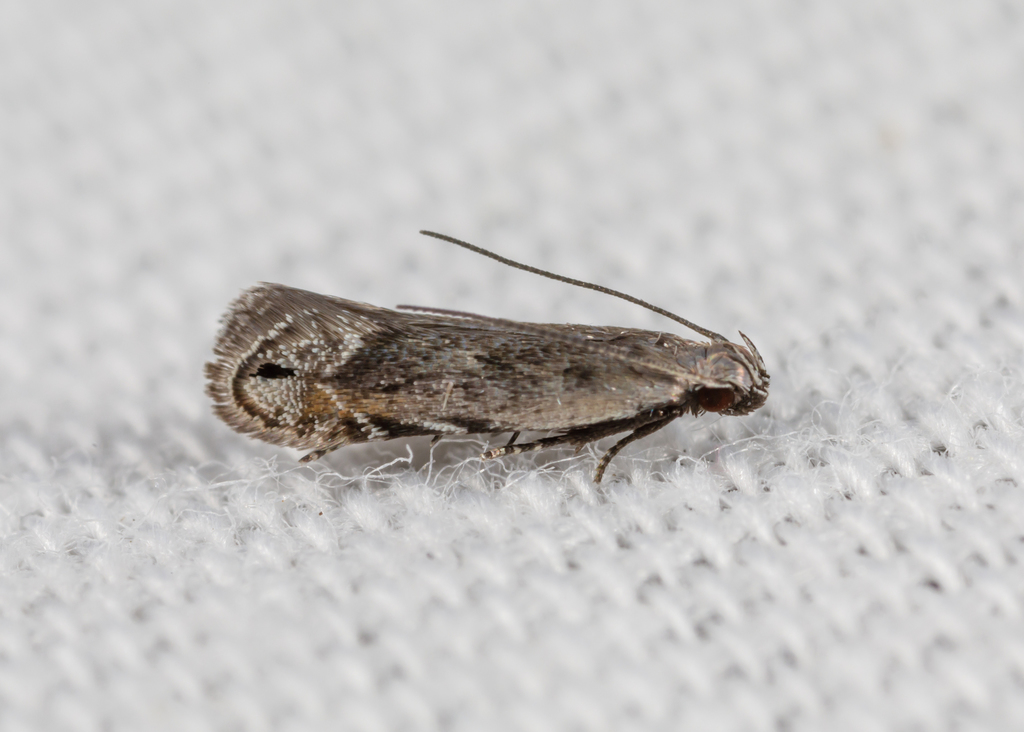
(c) Meghan Cassidy, some rights reserved (CC BY-SA) · licence
Family: Gelechiidae · Class: Insecta · Order: Lepidoptera
Battaristis concinnusella (Concinnus Battaristis) is a California animal in the Gelechiidae family.
Battaristis concinnusella is a small moth in the family Gelechiidae, with a forewing length of approximately 6 mm (0.24 inches). The species exhibits distinctive wing markings including a V-shaped subterminal line and a characteristic black dot at the wing apex, features shared with the closely related Battaristis nigratomella (BugGuide). The forewings display muted earth tones typical of gelechiid moths, providing effective camouflage when at rest on plant surfaces. Positive identification often requires examination of male genitalia structures due to morphological similarities with congeners. This species demonstrates a broad North American distribution, ranging from southern Canada through much of the eastern United States, with scattered records extending westward to California (BugGuide). The presence of California populations represents the western edge of this moth's continental range. Within its distribution, B. concinnusella appears to maintain stable populations across diverse geographic regions, from temperate deciduous forests in the east to more arid habitats in western locations. Battaristis concinnusella inhabits areas where its host plants are abundant, particularly environments supporting Solidago species (goldenrod) and Aster species (BugGuide). These habitats include prairie margins, field edges, woodland openings, and disturbed areas where composite plants flourish. The moth's distribution closely follows the natural range of goldenrod species, which serve as primary larval food sources. Adults are found in both rural and suburban environments where native Asteraceae persist. Adult flight activity extends from April through October, with peak abundance varying by geographic location and local climate conditions (BugGuide). Larvae feed internally within goldenrod and aster tissues, likely as leaf miners or stem borers based on typical gelechiid feeding behavior. The specific larval feeding ecology and developmental biology remain poorly documented in scientific literature. Adults are presumed to be nocturnal, consistent with most gelechiid species, and are attracted to artificial light sources during evening hours. The annual life cycle likely involves overwintering as pupae or late-instar larvae, emerging as adults in spring. Battaristis concinnusella currently holds no federal or state conservation listing status. The species appears stable across its range, benefiting from the widespread distribution of its goldenrod host plants. However, like many native insects dependent on specific plant relationships, populations may face localized pressures from habitat conversion and herbicide applications that eliminate native Asteraceae. The species has been identified on Arkansas's Species of Greatest Conservation Need list, indicating some regional conservation concern, though this designation does not confer regulatory protection (BugGuide). Long-term monitoring data are limited, and the species' specific epithet, derived from Latin meaning 'neat, elegant, clever,' reflects early taxonomic descriptions rather than current conservation assessments. Continued documentation of occurrence records and host plant associations would benefit understanding of this species' ecological requirements and distribution patterns.
Classification
Class: Insecta · Order: Lepidoptera · Family: Gelechiidae
Frequently asked questions
How is Battaristis concinnusella classified?
Battaristis concinnusella belongs to class Insecta, order Lepidoptera, family Gelechiidae.
What family does Battaristis concinnusella belong to?
Battaristis concinnusella is in the Gelechiidae family.
What is Battaristis concinnusella?
Battaristis concinnusella is a small moth in the family Gelechiidae, with a forewing length of approximately 6 mm (0.24 inches).
Is Battaristis concinnusella found in California?
Yes. Battaristis concinnusella is recorded in California in The California Species Project's catalogue.
Related species
Other California species in the same genus, family, or bioregion.
Data from The California Species Project — 14,000+ California species with verified data from CNPS, CDFW, USFWS, and more.