Battaristis concinusella
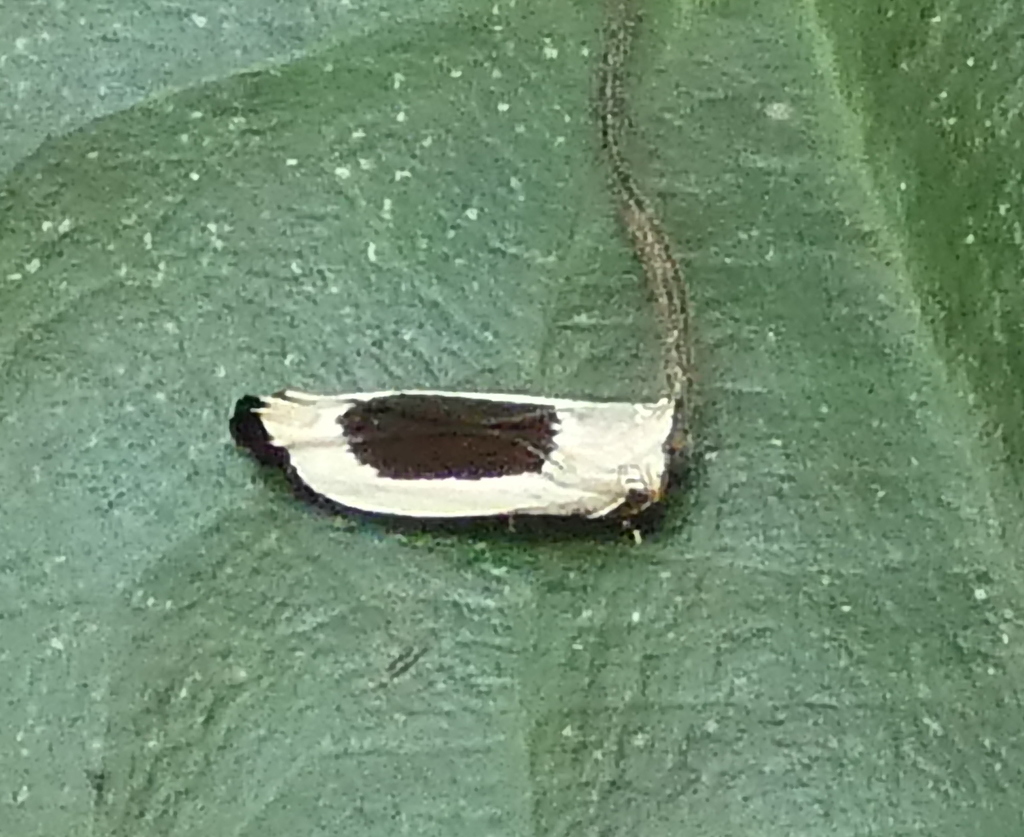
(c) Helio Lourencini, some rights reserved (CC BY) · licence
Family: Gelechiidae · Class: Insecta · Order: Lepidoptera
Battaristis concinusella is a California animal in the Gelechiidae family.
Battaristis concinusella is a small moth species in the family Gelechiidae, commonly known as the Music-loving Moth. This micromoth belongs to a genus of inconspicuous but ecologically important moths found across North America. The species exhibits the typical characteristics of gelechiid moths, with narrow forewings and a slender body adapted for their specialized ecological niche. Physical description details for this species remain poorly documented in the scientific literature. Like other members of the family Gelechiidae, B. concinusella likely possesses narrow, elongated forewings with a wingspan measuring approximately 10-15 millimeters. The forewings typically display muted coloration patterns that provide effective camouflage against bark or plant surfaces. The hindwings are characteristically fringed, a common feature among gelechiid moths that aids in flight dynamics. Battaristis concinusella occurs across a broad range of North America, with confirmed records from California, Delaware, Illinois, and Maryland (Wikipedia). The species appears to have a transcontinental distribution, extending into Canada where it has been documented in British Columbia and other provinces. In California, specific distributional data and county-level occurrence records have not been well documented, representing a significant knowledge gap for this native species. Habitat preferences for B. concinusella have not been thoroughly studied or documented. Based on records from related gelechiid species, this moth likely inhabits a variety of terrestrial ecosystems including deciduous and mixed forests, woodland edges, and potentially disturbed habitats. The species may be associated with specific host plants, though these relationships remain undocumented. Many gelechiid moths are specialized feeders with larvae that develop within plant tissues, often creating galls or mining leaves, but the specific larval ecology of B. concinusella requires further research. Behavioral and ecological information for this species is extremely limited. Adult flight periods, mating behaviors, and reproductive strategies have not been documented in available literature. The larvae likely develop within plant tissues, following the typical gelechiid pattern of concealed feeding, but host plant relationships and larval development timing remain unknown. Adult moths are presumably nocturnal, as is common among gelechiid species, and may be attracted to artificial lights during their active periods. Battaristis concinusella currently has no federal or state conservation listing status. The species' conservation needs cannot be adequately assessed due to insufficient data on population trends, distribution, and ecological requirements. This represents a common challenge in lepidopteran conservation, where many small moth species lack basic biological and distributional information necessary for conservation planning. Scientific documentation for this species remains limited. The information presented here is based on available sources including Wikipedia, iNaturalist, and taxonomic checklists. If you have additional verified information about this species' biology, distribution, or ecology, please contact us to help improve this species account.
Classification
Class: Insecta · Order: Lepidoptera · Family: Gelechiidae
Frequently asked questions
How is Battaristis concinusella classified?
Battaristis concinusella belongs to class Insecta, order Lepidoptera, family Gelechiidae.
What family does Battaristis concinusella belong to?
Battaristis concinusella is in the Gelechiidae family.
What is Battaristis concinusella?
Battaristis concinusella is a small moth species in the family Gelechiidae, commonly known as the Music-loving Moth.
Is Battaristis concinusella found in California?
Yes. Battaristis concinusella is recorded in California in The California Species Project's catalogue.
Related species
Other California species in the same genus, family, or bioregion.
Data from The California Species Project — 14,000+ California species with verified data from CNPS, CDFW, USFWS, and more.