Bedellia somnulentella
Morning-glory Leafminer Moth
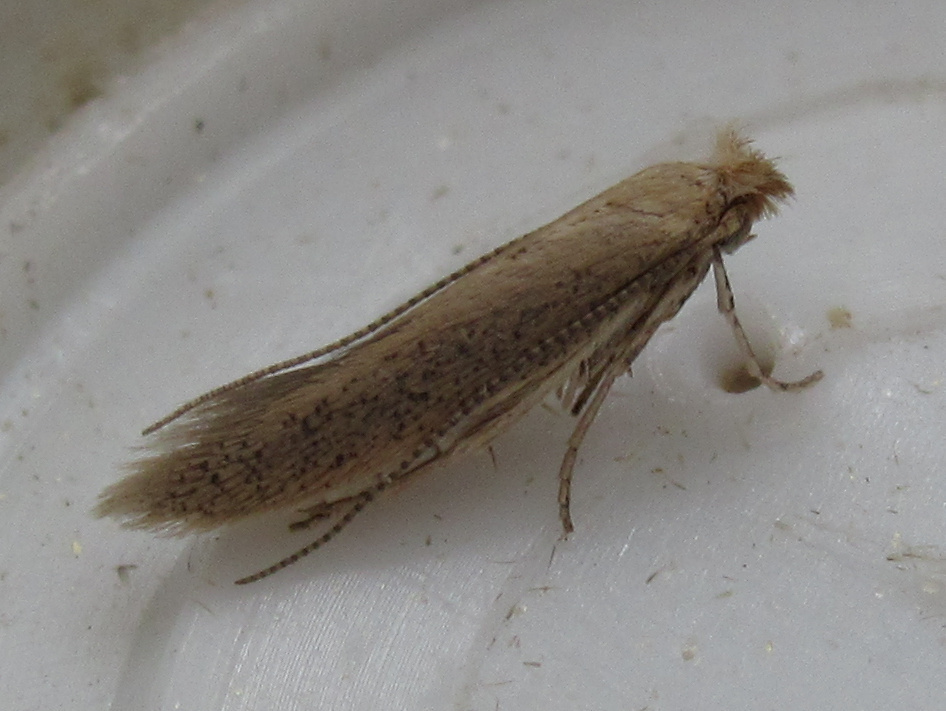
(c) Robert Briggs, some rights reserved (CC BY-SA) · licence
Family: Bedelliidae · Class: Insecta · Order: Lepidoptera
Bedellia somnulentella (Morning-glory Leafminer Moth) is a California animal in the Bedelliidae family.
The Morning-glory Leafminer Moth is a small microlepidopteran belonging to the family Bedelliidae. Adults are diminutive moths with narrow wings and distinctive mining larvae that create characteristic blotch mines in host plant leaves. The species exhibits the typical features of lyonetiid moths, with reduced wing venation and specialized adaptations for their leafmining lifestyle. Bedellia somnulentella has a cosmopolitan distribution and occurs widely across North America, including California. The species has been documented from multiple regions of the continent, from interior Alaska south through the continental United States. In California, the moth likely occurs throughout suitable habitat where host plants are present, though specific county-level distribution data requires further documentation. The species inhabits diverse environments where its host plants grow, including riparian areas, gardens, natural areas with morning glory vines, and disturbed habitats. Host plants span multiple families including Convolvulaceae (morning glories), Betulaceae (birches), and Salicaceae (willows) (Moth Photographers Group). Documented host genera include Betula, Calystegia, Convolvulus, Ipomoea, and Salix (Moth Photographers Group). The moth's ability to utilize hosts from different plant families demonstrates considerable ecological flexibility. Larvae function as blotch miners, creating irregular mines within leaf tissue where they feed and develop (Powell & Opler 2009). The mining behavior represents a specialized feeding strategy that provides protection from predators and environmental conditions. Multiple generations occur annually in most regions, with mining larvae of the first generation appearing in early summer and second generation larvae developing six to eight weeks later (Lepidopterists' Society). The species completes its larval development entirely within the leaf mine, pupating before emergence. Adults emerge from the mines to mate and initiate the next generation. As a cosmopolitan species, Bedellia somnulentella appears to maintain stable populations across its range. The moth benefits from its association with widely distributed host plants, many of which thrive in both natural and human-modified environments. Morning glories and related convolvulaceous plants are common in agricultural areas, gardens, and disturbed habitats, providing abundant larval resources. The species shows no apparent conservation concerns and is not listed under state or federal endangered species legislation. The Morning-glory Leafminer Moth represents a successful example of a specialist herbivore that has achieved broad distribution through host plant flexibility and efficient reproductive strategies. Its mining larvae create distinctive damage patterns that can aid in field identification, while the small adult moths require careful examination for species-level determination. The moth's presence often indicates healthy populations of native and naturalized morning glory species in local ecosystems.
Classification
Class: Insecta · Order: Lepidoptera · Family: Bedelliidae
Frequently asked questions
How is Bedellia somnulentella classified?
Bedellia somnulentella belongs to class Insecta, order Lepidoptera, family Bedelliidae.
What family does Bedellia somnulentella belong to?
Bedellia somnulentella is in the Bedelliidae family.
What is Bedellia somnulentella?
The Morning-glory Leafminer Moth is a small microlepidopteran belonging to the family Bedelliidae.
Is Bedellia somnulentella found in California?
Yes. Bedellia somnulentella is recorded in California in The California Species Project's catalogue.
More California species
This species has no close relatives in our California data — here are other species to explore.
Data from The California Species Project — 14,000+ California species with verified data from CNPS, CDFW, USFWS, and more.