Belostoma saratogae
Saratoga Springs Belostoman Bug
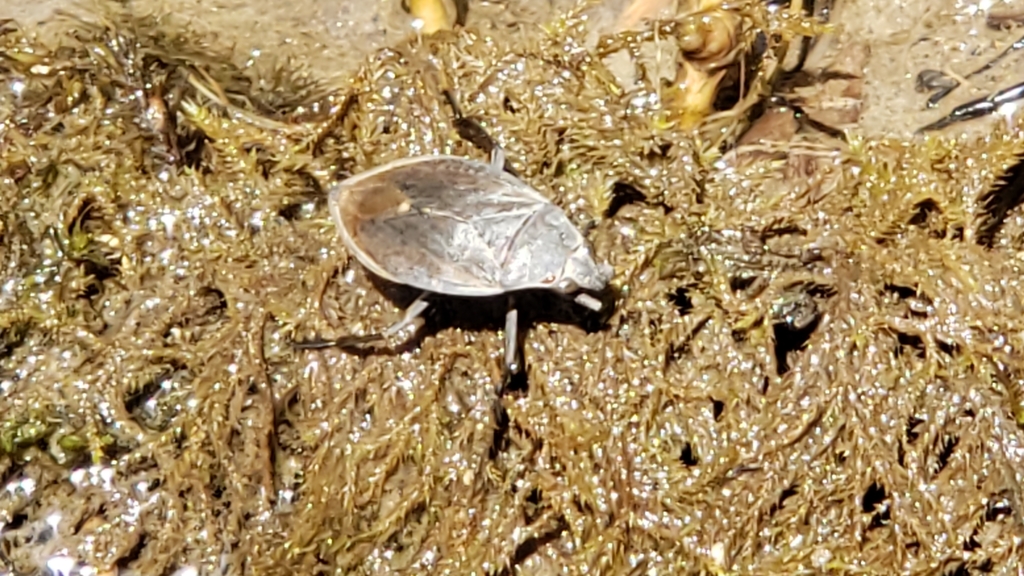
(c) Gavin Slater, some rights reserved (CC BY) · licence
Family: Belostomatidae · Class: Insecta · Order: Hemiptera
Conservation status: G1 S1
Belostoma saratogae (Saratoga Springs Belostoman Bug) is a California animal in the Belostomatidae family.
The Saratoga Springs Belostoman Bug is a critically imperiled aquatic insect endemic to California. As a member of the family Belostomatidae, commonly known as giant water bugs or toe-biters, this species belongs to the order Hemiptera and suborder Heteroptera. Belostomatids are predaceous aquatic insects characterized by their flattened, oval-shaped bodies and powerful raptorial front legs adapted for capturing prey. Belostoma saratogae is known only from California, where it occupies an extremely restricted range. The species' distribution appears to be limited to specific aquatic habitats within the state, making it one of California's most geographically restricted insect species. This narrow endemic distribution contributes significantly to its conservation concern and global ranking. The species inhabits freshwater aquatic environments, likely including springs, pools, or other permanent water sources. As with other Belostomatidae, this species probably requires well-oxygenated water with suitable substrate for egg-laying and adequate prey populations. Belostomatids typically prefer areas with emergent or submerged vegetation that provide hunting grounds and refugia. The specific habitat requirements of B. saratogae have not been extensively documented, but the species' restricted distribution suggests specialized ecological needs. Like other members of its family, the Saratoga Springs Belostoman Bug is likely a voracious predator that hunts by ambushing prey from concealment among aquatic vegetation. Belostomatids typically feed on a variety of aquatic invertebrates, small fish, amphibian larvae, and other insects. These bugs are known for their unique reproductive behavior, where males carry eggs on their backs until hatching, providing parental care uncommon among insects. The species likely undergoes incomplete metamorphosis, developing through several nymphal stages before reaching sexual maturity. The Saratoga Springs Belostoman Bug carries a global conservation rank of G1, indicating it is critically imperiled with typically five or fewer occurrences or very few remaining individuals. The species also holds a state rank of S1 in California, reflecting its critical conservation status within the state (as of December 2025). This ranking places B. saratogae among California's most endangered invertebrates, facing an extremely high risk of extinction. The primary threats to this species likely include habitat modification, water diversion or depletion, pollution, and climate change impacts on its aquatic habitat. Given its apparent dependence on specific spring or aquatic systems, any alteration to water quality, quantity, or flow patterns could severely impact the species. The extremely limited distribution makes the species particularly vulnerable to localized environmental changes or catastrophic events. This species is included on the California Department of Fish and Wildlife's Special Animals List. Conservation efforts would likely focus on protecting and maintaining the integrity of its aquatic habitat and ensuring adequate water resources. However, specific management recommendations await more detailed ecological studies of the species' habitat requirements and population status.
Classification
Class: Insecta · Order: Hemiptera · Family: Belostomatidae
Conservation status
G1 S1
Frequently asked questions
How is Belostoma saratogae classified?
Belostoma saratogae belongs to class Insecta, order Hemiptera, family Belostomatidae.
What family does Belostoma saratogae belong to?
Belostoma saratogae is in the Belostomatidae family.
Is Belostoma saratogae protected or of conservation concern?
Belostoma saratogae carries the following status: G1 S1.
What is Belostoma saratogae?
The Saratoga Springs Belostoman Bug is a critically imperiled aquatic insect endemic to California.
Is Belostoma saratogae found in California?
Yes. Belostoma saratogae is recorded in California in The California Species Project's catalogue.
Related species
Other California species in the same genus, family, or bioregion.
Data from The California Species Project — 14,000+ California species with verified data from CNPS, CDFW, USFWS, and more.