Bicellonycha wickershamorum wickershamorum
Southwest spring firefly
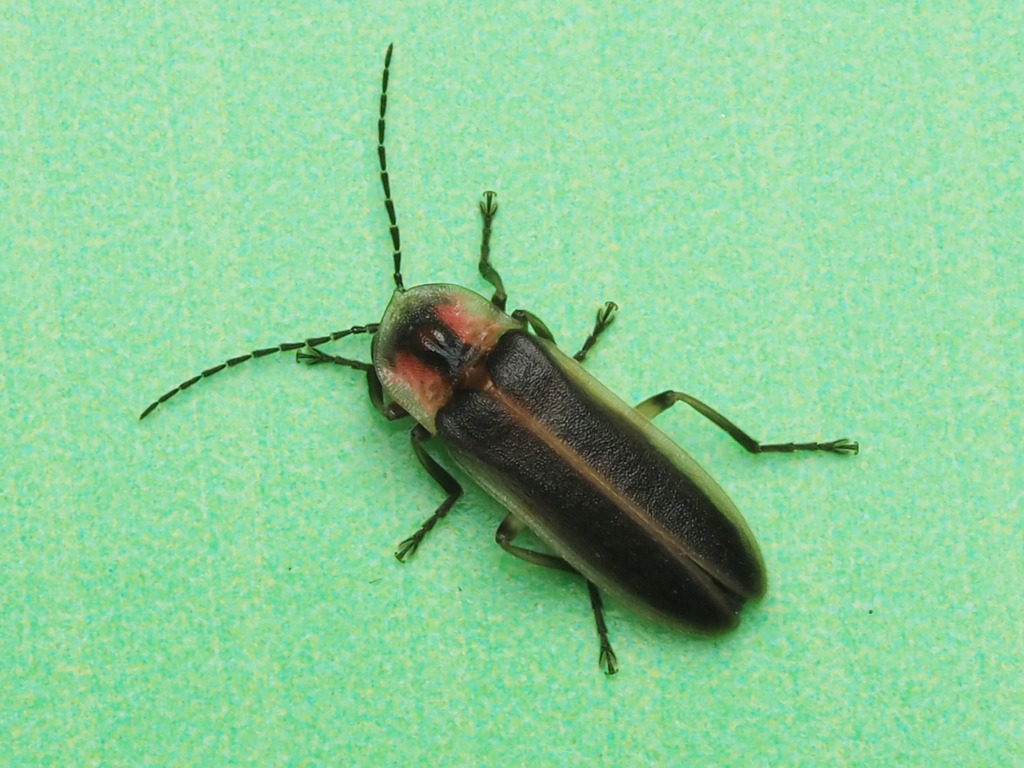
no rights reserved · CC0
Family: Lampyridae · Class: Insecta · Order: Coleoptera
Bicellonycha wickershamorum wickershamorum (Southwest spring firefly) is a California animal in the Lampyridae family.
The Southwest spring firefly (Bicellonycha wickershamorum wickershamorum) is a beetle in the family Lampyridae and the only representative of its genus in the United States. This firefly is endemic to southern Arizona and represents the nominate subspecies of B. wickershamorum, which also includes the more restricted subspecies B. w. piceum (Cicero 1982). Adults measure approximately 6-8 mm in length and display the typical lampyrid body plan with soft, elongated elytra. The species occurs in montane desert habitats of southern Arizona, with documented populations from just over two dozen localities (Xerces Society 2023). Its range extends into Sonora, Mexico, making it a transboundary species. In Arizona, the subspecies is more widespread than B. w. piceum, which is known only from two locations near Morenci. Bicellonycha wickershamorum wickershamorum is a habitat specialist strongly associated with permanent springs and streams in the Madrean Sky Island region. These fireflies require riparian areas and wet meadows in desert mountain ranges, typically where perennial water sources create localized mesic conditions. The species depends on these rare aquatic habitats within an otherwise arid landscape, making it particularly vulnerable to hydrological changes. Adults are active from early June to late July, before summer monsoons, and communicate using a green flash/answer routine. The species exhibits crepuscular and nocturnal activity patterns, with peak activity occurring from dusk to dark during the breeding season. Males produce species-specific flash patterns to attract females, though the detailed flash behavior of this subspecies requires further documentation due to the limited number of observed individuals (Xerces Society 2021). Like other lampyrids, larvae are predatory and likely inhabit moist soil and leaf litter near water sources, though specific larval ecology remains poorly studied. The Southwest spring firefly faces significant conservation challenges and is classified as Vulnerable by the IUCN Red List of Threatened Species (Fallon & Cicero 2021). NatureServe ranks the subspecies as G2G3T2T3 (Imperiled), reflecting its limited distribution and declining populations. Primary threats include habitat loss and degradation from cattle grazing, recreational activities, and copper mining operations. Water diversions and groundwater pumping threaten the permanent springs and streams essential for reproduction. Climate change poses additional risks through increased drought frequency and altered precipitation patterns in the Southwest. In March 2023, the Xerces Society and Center for Biological Diversity submitted a petition to list the species under the U.S. Endangered Species Act. The U.S. Fish and Wildlife Service issued a positive 90-day finding, agreeing that substantial evidence supports the need for further status review. Conservation efforts focus on protecting and restoring riparian habitats, managing grazing impacts, and maintaining hydrological connectivity in spring-fed systems. The species' narrow habitat requirements and limited dispersal ability make population recovery challenging, emphasizing the critical importance of preserving existing water sources in Arizona's desert mountains.
Classification
Class: Insecta · Order: Coleoptera · Family: Lampyridae
Frequently asked questions
How is Bicellonycha wickershamorum wickershamorum classified?
Bicellonycha wickershamorum wickershamorum belongs to class Insecta, order Coleoptera, family Lampyridae.
What family does Bicellonycha wickershamorum wickershamorum belong to?
Bicellonycha wickershamorum wickershamorum is in the Lampyridae family.
What is Bicellonycha wickershamorum wickershamorum?
The Southwest spring firefly (Bicellonycha wickershamorum wickershamorum) is a beetle in the family Lampyridae and the only representative of its genus in the United States.
Is Bicellonycha wickershamorum wickershamorum found in California?
Yes. Bicellonycha wickershamorum wickershamorum is recorded in California in The California Species Project's catalogue.
Related species
Other California species in the same genus, family, or bioregion.
Data from The California Species Project — 14,000+ California species with verified data from CNPS, CDFW, USFWS, and more.