Bipalium adventitium
Wandering Broadhead Planarian
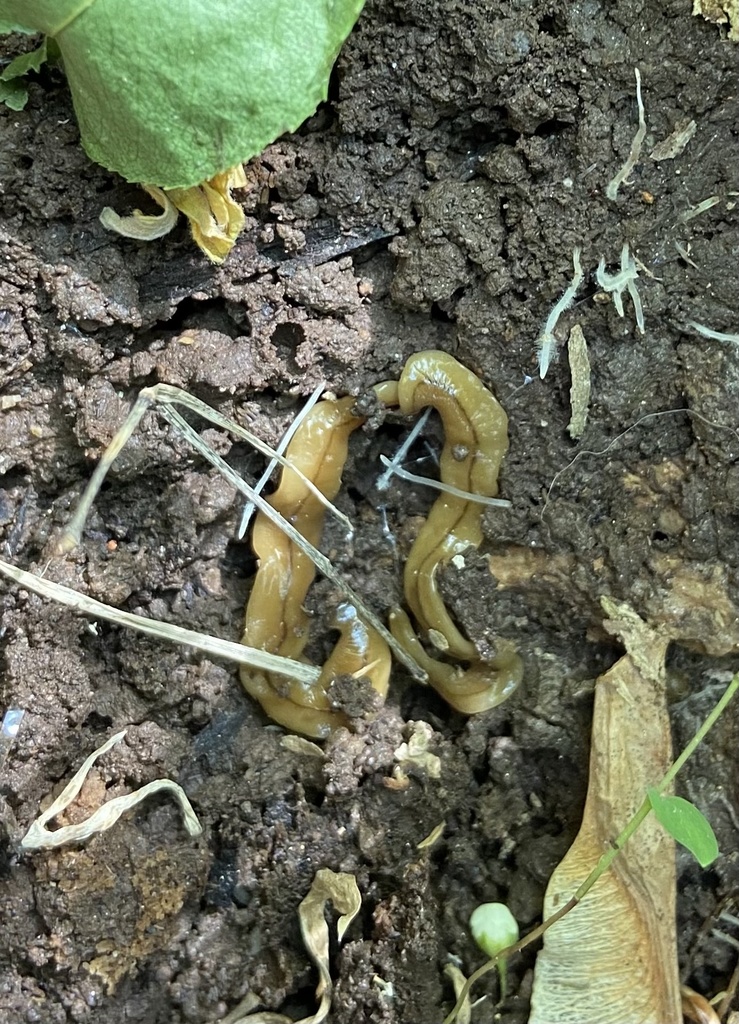
(c) Elissa Totin, some rights reserved (CC BY) · licence
Family: Bipalidae · Class: Turbellaria · Order: Tricladida
Bipalium adventitium (Wandering Broadhead Planarian) is a California animal in the Bipalidae family.
The wandering broadhead planarian is a large predatory terrestrial flatworm native to eastern Asia that has become invasive worldwide. These planarians are commonly called "hammerhead worms" or "broadhead planarians" due to their distinctive semicircular head region that resembles a hammerhead shark when viewed from above. Adults can reach lengths of 20-40 cm (8-16 inches) with some specimens exceeding 50 cm (20 inches). The body is elongated, flattened, and typically brown or tan in coloration with darker longitudinal stripes running along the dorsal surface. The ventral surface features a highly ciliated "creeping sole" that enables the animal to glide smoothly over substrates. Bipalium adventitium has established populations across multiple continents following accidental introduction through international plant and soil trade (NatureServe 2025). In North America, this species was first documented in the early 20th century and has since spread throughout much of the United States, including California. As of 2007, it was one of four confirmed invasive Bipalium species in the United States, along with B. kewense, B. pennsylvanicum, and B. vagum. The species continues to expand its range through human-mediated dispersal. This planarian inhabits moist terrestrial environments including gardens, greenhouses, agricultural areas, and natural forest floors. The species requires consistent moisture and is typically found under logs, rocks, leaf litter, mulch, and potted plants. It thrives in areas with rich organic matter and moderate temperatures, avoiding direct sunlight and dry conditions. Urban and suburban landscapes provide ideal habitat, particularly areas with regular irrigation or natural moisture retention. Bipalium adventitium is a nocturnal predator that feeds primarily on earthworms, slugs, and other soft-bodied invertebrates. The planarian captures prey using its muscular pharynx, which can be extended outside the body to engulf victims. Like other land planarians, it secretes toxic compounds that help subdue prey and may deter potential predators. Reproduction occurs primarily through fragmentation, where portions of the body can regenerate into complete individuals. Sexual reproduction also occurs, with planarians functioning as hermaphrodites that exchange genetic material during mating. This species lacks formal conservation status listings as it is considered an invasive organism rather than a conservation concern. However, its presence raises ecological concerns due to potential impacts on native soil fauna, particularly earthworm populations that serve important ecosystem functions. The species' ability to reproduce asexually and disperse through human activities makes population control challenging. Management efforts focus on preventing further spread through careful inspection of plant materials and soil during transport. Research into biological control methods and ecological impacts on native ecosystems continues, as the long-term consequences of this invasion remain poorly understood.
Classification
Class: Turbellaria · Order: Tricladida · Family: Bipalidae
Frequently asked questions
How is Bipalium adventitium classified?
Bipalium adventitium belongs to class Turbellaria, order Tricladida, family Bipalidae.
What family does Bipalium adventitium belong to?
Bipalium adventitium is in the Bipalidae family.
What is Bipalium adventitium?
The wandering broadhead planarian is a large predatory terrestrial flatworm native to eastern Asia that has become invasive worldwide.
Is Bipalium adventitium found in California?
Yes. Bipalium adventitium is recorded in California in The California Species Project's catalogue.
More California species
This species has no close relatives in our California data — here are other species to explore.
Data from The California Species Project — 14,000+ California species with verified data from CNPS, CDFW, USFWS, and more.