Bison bison
Bison
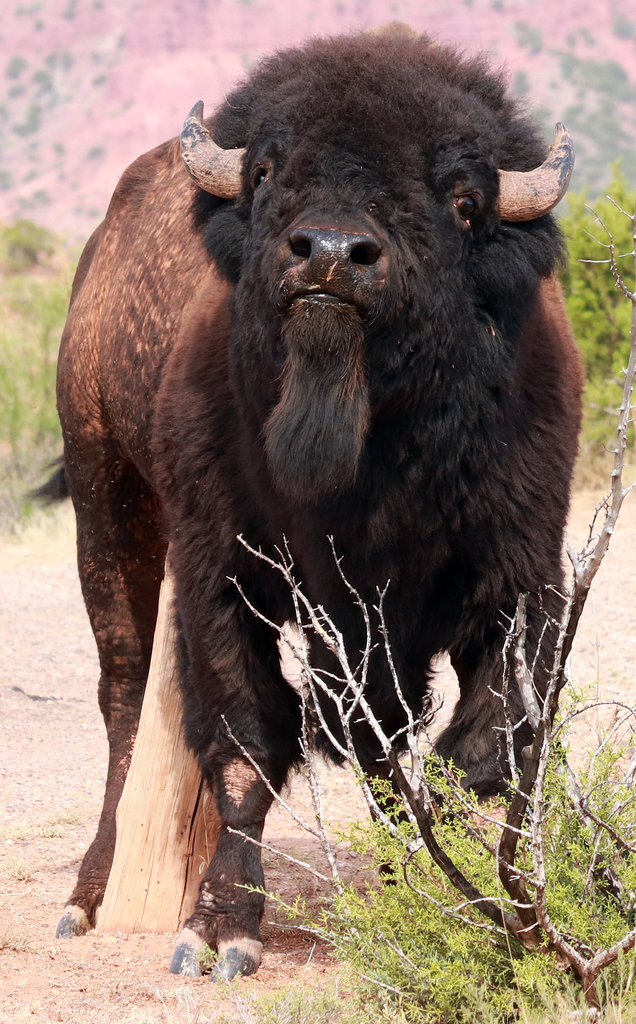
(c) Catherine C. Galley, some rights reserved (CC BY) · licence
Family: Bovidae · Class: Mammalia · Order: Artiodactyla
Bison bison (Bison) is a California animal in the Bovidae family.
The American bison is North America's largest terrestrial mammal, with adult bulls weighing 460 to 988 kilograms (1,000 to 2,200 pounds) and standing 1.5 to 1.8 meters (5 to 6 feet) at the shoulder. Cows are smaller, typically weighing 360 to 544 kilograms (800 to 1,200 pounds). Both sexes possess distinctive curved horns that can reach 60 centimeters (24 inches) in length. The species displays a characteristic hump over the shoulders, composed of muscle and vertebral extensions. The front portion of the body is covered with long, shaggy brown hair that becomes lighter toward the hindquarters. A thick mane extends from the head down the neck, and males develop a pronounced beard. Historically, bison ranged across the Great Plains from Canada to Mexico and from the Rocky Mountains to the eastern deciduous forests. The species once numbered an estimated 30 to 60 million individuals across North America. In California, bison were not native but small populations exist today in managed herds on Catalina Island and at several private ranches. The Catalina Island herd was established in 1924 for a film production and has persisted as a managed population. Bison inhabit grasslands, prairies, and open woodlands, preferring areas with native grasses and seasonal water sources. They are adapted to elevations from sea level to 2,400 meters (8,000 feet). The species requires large territories, with herds traditionally migrating seasonally between summer and winter ranges. Bison create wallows by rolling in dirt, which serve as dust baths and leave distinctive circular depressions in the landscape. Bison are highly social ungulates that form herds segregated by sex for most of the year. Cows and calves remain together in maternal herds, while bulls form bachelor groups or remain solitary. During the breeding season from July through September, bulls join female herds and engage in competition for mating rights. Gestation lasts approximately 285 days, with females typically producing a single calf in late spring. Calves are reddish-brown at birth and nurse for 7 to 13 months. Bison are primarily grazers, consuming grasses, sedges, and forbs. They use their massive heads and strong neck muscles to sweep snow aside during winter to access vegetation beneath. The species experienced near extinction by 1900, with fewer than 1,000 individuals remaining in North America due to overhunting and habitat conversion. Conservation efforts beginning in the early 20th century established protected herds in national parks and refuges. Current North American populations total approximately 500,000 animals, though most exist in commercial herds. Fewer than 30,000 bison remain in conservation herds that maintain genetic diversity and ecological function. The species is not federally listed under the Endangered Species Act, as most populations are considered livestock rather than wildlife. Primary conservation challenges include habitat fragmentation, genetic management, and disease transmission concerns with domestic cattle.
Classification
Class: Mammalia · Order: Artiodactyla · Family: Bovidae
Frequently asked questions
How is Bison bison classified?
Bison bison belongs to class Mammalia, order Artiodactyla, family Bovidae.
What family does Bison bison belong to?
Bison bison is in the Bovidae family.
What is Bison bison?
The American bison is North America's largest terrestrial mammal, with adult bulls weighing 460 to 988 kilograms (1,000 to 2,200 pounds) and standing 1.5 to 1.8 meters (5 to 6 feet) at the shoulder.
Is Bison bison found in California?
Yes. Bison bison is recorded in California in The California Species Project's catalogue.
Related species
Other California species in the same genus, family, or bioregion.
Data from The California Species Project — 14,000+ California species with verified data from CNPS, CDFW, USFWS, and more.