Blastobasis glandulella
Acorn Moth
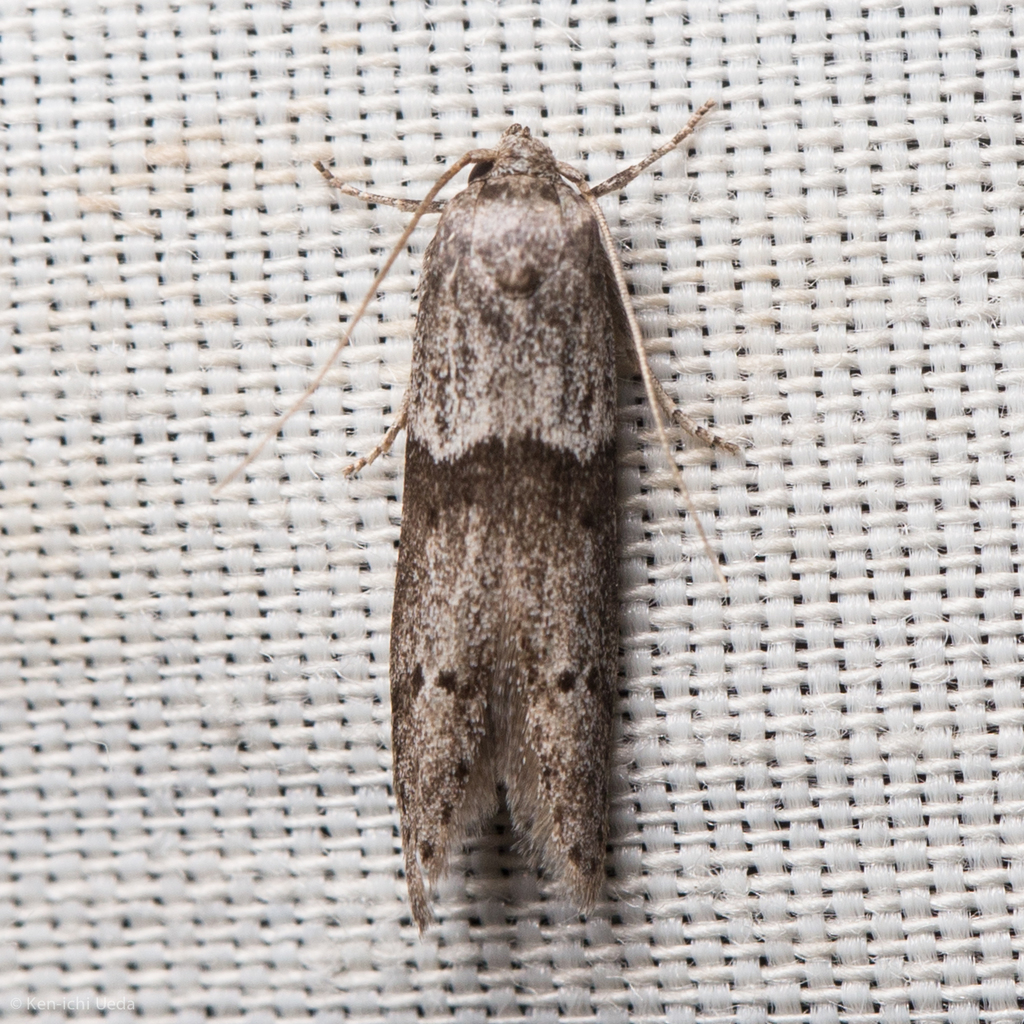
(c) Ken-ichi Ueda, some rights reserved (CC BY) · licence
Family: Blastobasidae · Class: Insecta · Order: Lepidoptera
Blastobasis glandulella (Acorn Moth) is a California animal in the Blastobasidae family.
Blastobasis glandulella, commonly known as the Acorn Moth, is a small moth in the family Blastobasidae. Adults are diminutive insects with forewings measuring approximately 6-8 mm in length. The forewings typically display a mottled brown and gray coloration with subtle darker markings, providing effective camouflage against tree bark and natural substrates. The hindwings are generally lighter, often pale gray to whitish. Like other blastobasid moths, B. glandulella has narrow wings and a slender body profile characteristic of the family. The species occurs across a broad range in North America, with records from the eastern United States extending westward. In California, the Acorn Moth has been documented in scattered locations, though its full distribution within the state remains incompletely mapped. BugGuide reports indicate the species has been recorded from various California counties, suggesting a wider distribution than previously documented. The species also occurs in other western states and extends into the eastern portions of North America, indicating a transcontinental range. Blastobasis glandulella inhabits areas where oak trees are present, as suggested by its common name. The species is typically associated with oak woodlands, mixed forests containing oak species, and riparian areas with mature oak trees. Adults are attracted to artificial lights and can be found at elevations ranging from sea level to montane zones. The moth appears to prefer areas with established oak stands rather than young or disturbed forests. As with many blastobasid moths, the larval biology of B. glandulella involves feeding within plant materials, likely including acorns, oak galls, or decaying organic matter associated with oak trees. The specific host relationships and larval feeding habits require further documentation, though the common name suggests a strong association with oak acorns. Adults are active during warmer months, with peak activity likely occurring in late spring through early fall. The species appears to be nocturnal, as evidenced by its attraction to artificial lights during collecting efforts. Currently, Blastobasis glandulella has no special conservation status at federal or state levels. The species is not listed under the Endangered Species Act, nor does it appear on California's list of species of special concern. However, like many small moths, population trends and conservation needs are poorly understood due to limited systematic surveys. The species may face localized threats from oak woodland habitat loss, particularly in areas experiencing urban development or agricultural conversion. Climate change effects on oak ecosystems could potentially impact this oak-associated species, though specific vulnerabilities have not been assessed. Detailed ecological studies of this species remain limited. The information presented here synthesizes available sources including BugGuide observations and regional moth surveys. Research gaps exist regarding specific host plant relationships, larval ecology, population dynamics, and distribution patterns within California. Enhanced documentation of this species' biology and distribution would improve understanding of its conservation status and ecological role in oak woodland ecosystems.
Classification
Class: Insecta · Order: Lepidoptera · Family: Blastobasidae
Frequently asked questions
How is Blastobasis glandulella classified?
Blastobasis glandulella belongs to class Insecta, order Lepidoptera, family Blastobasidae.
What family does Blastobasis glandulella belong to?
Blastobasis glandulella is in the Blastobasidae family.
What is Blastobasis glandulella?
Blastobasis glandulella, commonly known as the Acorn Moth, is a small moth in the family Blastobasidae.
Is Blastobasis glandulella found in California?
Yes. Blastobasis glandulella is recorded in California in The California Species Project's catalogue.
Related species
Other California species in the same genus, family, or bioregion.
Data from The California Species Project — 14,000+ California species with verified data from CNPS, CDFW, USFWS, and more.