Blastobasis tarda
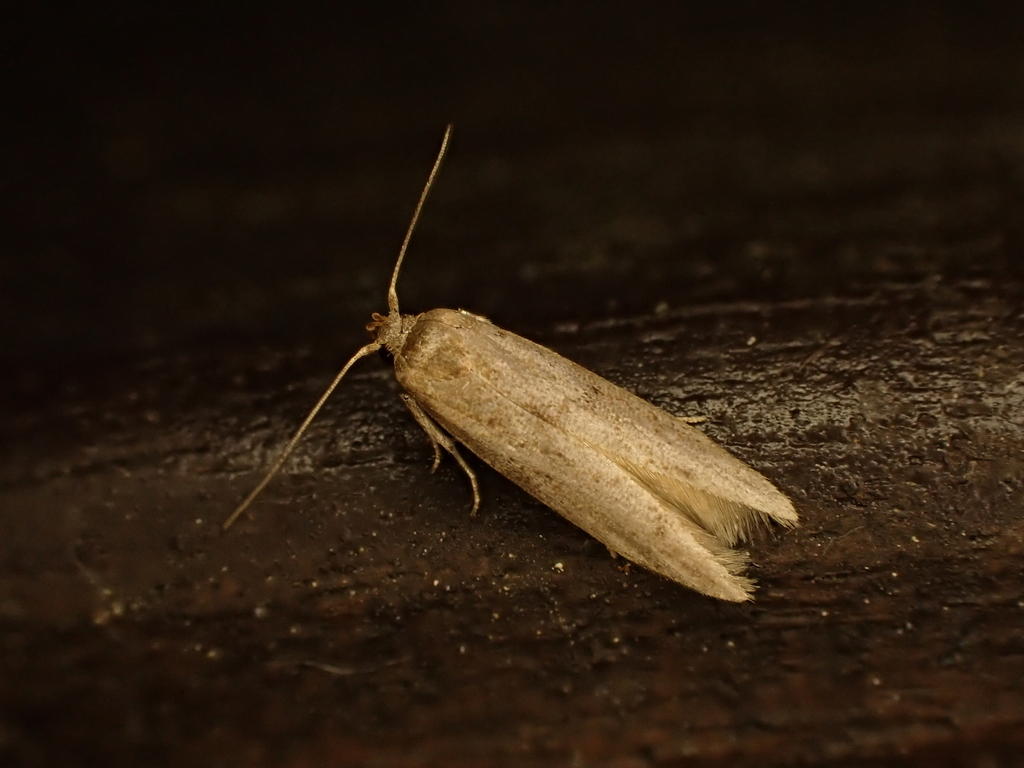
(c) Saryu Mae 前 朝琉, some rights reserved (CC BY) · licence
Family: Blastobasidae · Class: Insecta · Order: Lepidoptera
Blastobasis tarda is a California animal in the Blastobasidae family.
Blastobasis tarda is a small moth in the family Blastobasidae, commonly known as scavenger moths. This species represents one of several non-native Blastobasis species established in North America, having been introduced from Australia (BugGuide 2025). The moth belongs to a family characterized by small size and scavenging habits, though specific morphological details for B. tarda have not been extensively documented in the scientific literature. The current range of Blastobasis tarda in North America remains poorly documented. As a non-native species originally from Australia, its establishment and distribution patterns in California and other western states require further investigation. The species is listed among non-native arthropods that have become established in North America, but specific locality records and the extent of its current range have not been comprehensively mapped. Habitat requirements for Blastobasis tarda have not been well characterized in the North American context. Members of the Blastobasidae family typically inhabit diverse environments where they can access their preferred food sources. The specific microhabitat preferences, elevation range, and vegetation associations for this species in its introduced range remain undocumented in available scientific literature. Like other members of the Blastobasidae, Blastobasis tarda likely exhibits scavenging behavior as both larvae and adults. Family members are known to feed on decaying organic matter, including dead plant material, animal remains, and various detritus. The larval stage probably develops in accumulations of organic debris, while adults may be attracted to fermenting substances. Specific host plants, breeding behavior, seasonal activity patterns, and life cycle timing for B. tarda have not been documented in detail. The reproductive biology and voltinism (number of generations per year) in the California climate remain unknown. Blastobasis tarda does not appear on federal or state endangered species lists and lacks formal conservation status designation. As a non-native species, it is not considered a conservation priority, and population trends are not monitored. The ecological impact of this introduced species on native ecosystems has not been assessed. Unlike some invasive species, B. tarda has not been identified as causing significant agricultural or environmental damage, though comprehensive impact studies are lacking. The limited scientific documentation available for this species reflects the broader challenge of studying small, inconspicuous moths that may not have obvious economic importance. Most Blastobasidae species receive little research attention unless they become agricultural pests or are discovered to have unique ecological roles. The establishment of B. tarda in North America adds to the continent's growing list of non-native Lepidoptera, but its long-term ecological significance remains uncertain without dedicated study of its population dynamics, host relationships, and potential interactions with native species.
Classification
Class: Insecta · Order: Lepidoptera · Family: Blastobasidae
Frequently asked questions
How is Blastobasis tarda classified?
Blastobasis tarda belongs to class Insecta, order Lepidoptera, family Blastobasidae.
What family does Blastobasis tarda belong to?
Blastobasis tarda is in the Blastobasidae family.
What is Blastobasis tarda?
Blastobasis tarda is a small moth in the family Blastobasidae, commonly known as scavenger moths.
Is Blastobasis tarda found in California?
Yes. Blastobasis tarda is recorded in California in The California Species Project's catalogue.
Related species
Other California species in the same genus, family, or bioregion.
Data from The California Species Project — 14,000+ California species with verified data from CNPS, CDFW, USFWS, and more.