Bodianus pulcher
California Sheephead
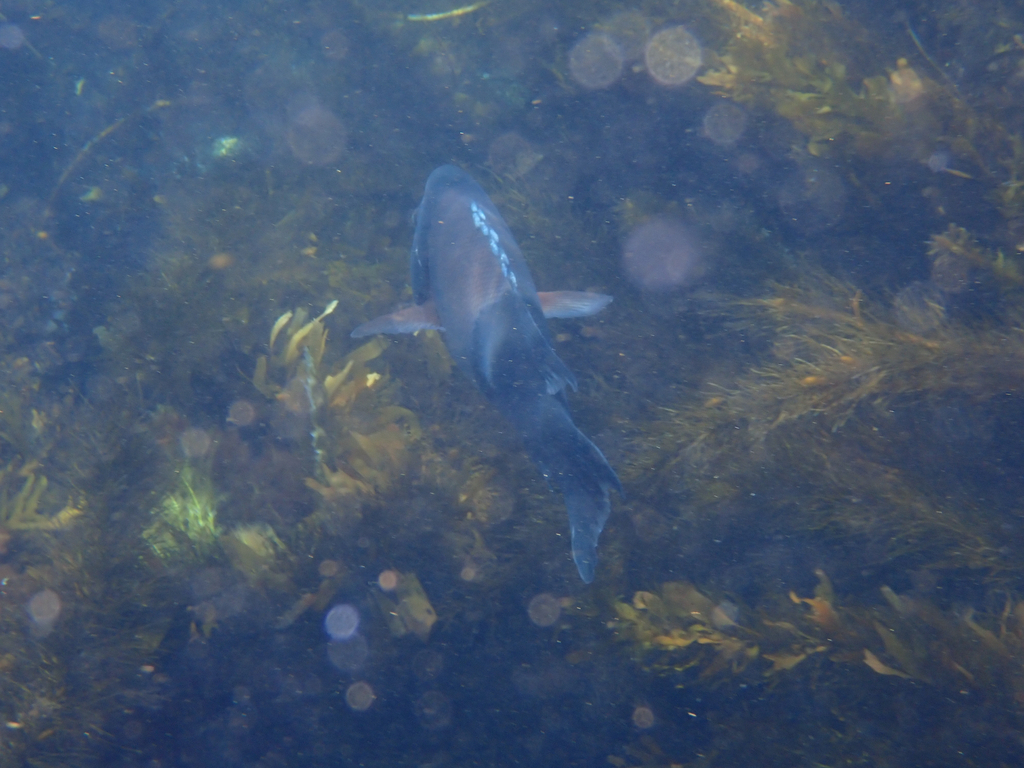
(c) eklemp, some rights reserved (CC BY) · licence
Family: Labridae · Class: Actinopterygii · Order: Perciformes
Bodianus pulcher (California Sheephead) is a California animal in the Labridae family.
The California sheephead is a large, sexually dimorphic marine fish in the wrasse family Labridae. Adult males are distinctive with black heads and tails separated by a bright red midsection, reaching lengths up to 91 cm (36 inches) and weights exceeding 18 kg (40 pounds). Females and juveniles are uniformly pinkish-red with smaller body sizes, typically not exceeding 50 cm (20 inches). All individuals possess prominent canine teeth and thick lips, with males developing a pronounced forehead hump with age. The species exhibits protogynous hermaphroditism, with females transforming into males as they mature. California sheephead occur along the Pacific coast from Monterey Bay, California, to Baja California Sur, Mexico. According to the California Department of Fish and Wildlife, the species is most abundant south of Point Conception in Santa Barbara County. Primary populations are concentrated around the Channel Islands and along mainland rocky reefs from central California through southern California waters. The species inhabits rocky reefs, kelp forests, and hard-bottom areas from shallow subtidal zones to depths of approximately 183 meters (600 feet). California sheephead prefer areas with complex topography providing shelter and foraging opportunities. Adults typically occur in deeper waters than juveniles, which are commonly found in shallower reef areas and kelp beds. Water temperatures between 14-22°C (57-72°F) define their optimal habitat range. California sheephead are active daytime predators specializing in hard-shelled invertebrates. Their diet consists primarily of sea urchins, mollusks, crabs, and lobsters, which they crush with their powerful pharyngeal teeth. Research indicates the species exhibits distinct daily activity patterns, foraging over sandy areas during daylight hours at average depths of 21 meters, then moving to rocky reef refugia at night at depths averaging 15 meters. Home ranges average approximately 2 hectares based on tracking studies. Spawning occurs from summer through early fall, with males establishing territories and harems of females. Females can live over 50 years, while the sex change to male typically occurs between ages 7-20 depending on local population dynamics. The California sheephead supports both recreational and commercial fisheries, with fishing concentrated primarily south of Point Conception. The species is managed under California's Marine Life Management Act, with regulations including minimum size limits, bag limits, and seasonal closures during spawning periods. Current stock assessments indicate the population is in a precautionary management zone, requiring catch reductions when biomass falls below 60% of unfished levels. Primary management concerns include overfishing pressure, habitat degradation from coastal development, and climate change impacts on kelp forest ecosystems. The large size, slow growth, and late maturation of this species make populations particularly vulnerable to overexploitation, necessitating continued monitoring and adaptive management strategies.
Classification
Class: Actinopterygii · Order: Perciformes · Family: Labridae
Frequently asked questions
How is Bodianus pulcher classified?
Bodianus pulcher belongs to class Actinopterygii, order Perciformes, family Labridae.
What family does Bodianus pulcher belong to?
Bodianus pulcher is in the Labridae family.
What is Bodianus pulcher?
The California sheephead is a large, sexually dimorphic marine fish in the wrasse family Labridae.
Is Bodianus pulcher found in California?
Yes. Bodianus pulcher is recorded in California in The California Species Project's catalogue.
More California species
This species has no close relatives in our California data — here are other species to explore.
Data from The California Species Project — 14,000+ California species with verified data from CNPS, CDFW, USFWS, and more.