Bogertophis rosaliae
Baja California Ratsnake
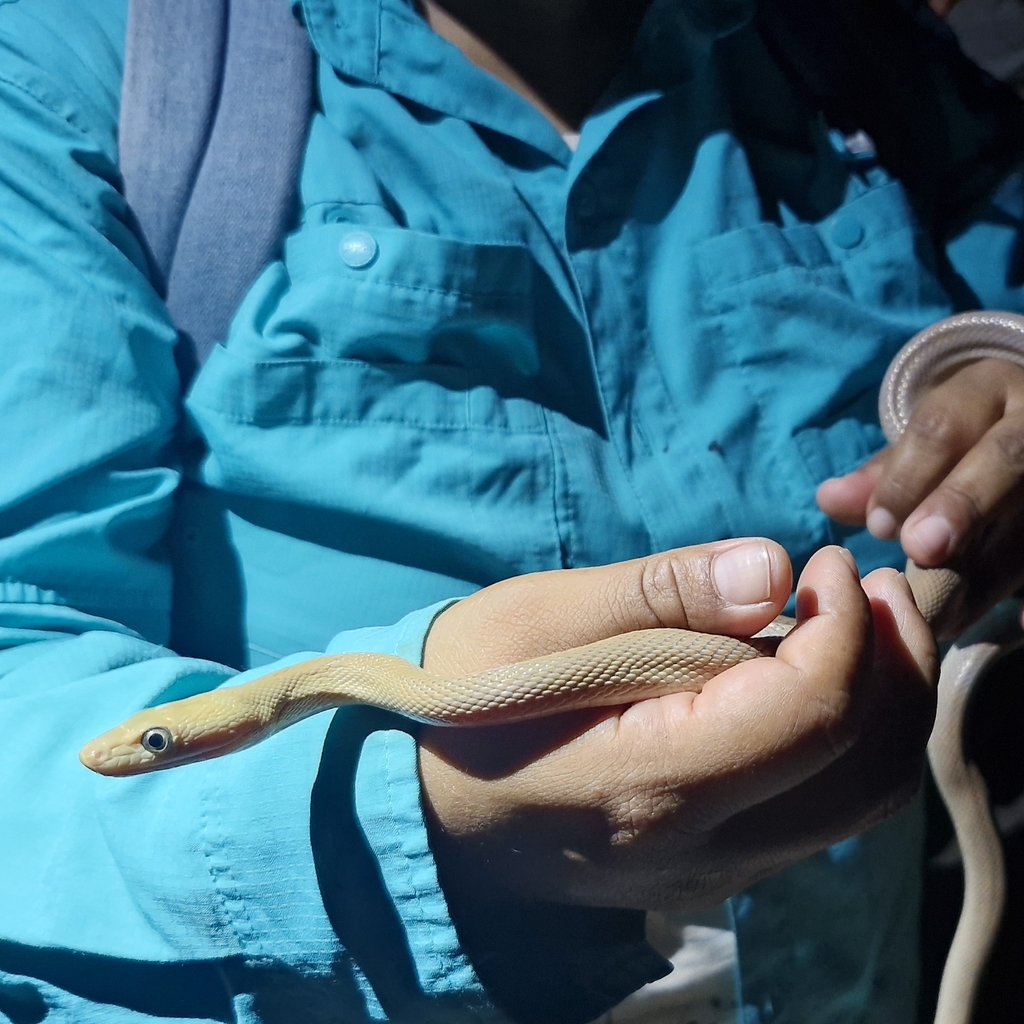
(c) Diego Maldonado de la Torre, some rights reserved (CC BY) · licence
Family: Colubridae · Class: Reptilia · Order: Squamata
Conservation status: WL · G4 S1
Bogertophis rosaliae (Baja California Ratsnake) is a California animal in the Colubridae family.
The Baja California ratsnake is a medium to large-sized constrictor native to the Baja California Peninsula. Adults typically reach 91 to 152 centimeters (3 to 5 feet) in total length, with some individuals exceeding 183 centimeters (6 feet). The species exhibits significant color variation, ranging from light gray to brown or reddish-brown dorsally, with darker brown or black blotches arranged in four longitudinal rows along the body. The ventral surface is cream to yellow with dark checkered markings. Juveniles display more distinct banding patterns that fade with age. The head is relatively small compared to the robust body, and the scales are smooth with a slight sheen. Historically, Bogertophis rosaliae ranged throughout much of the Baja California Peninsula from the United States-Mexico border south to the Cape region. In California, the species occurs only in the extreme southern portion of the state, primarily in San Diego County. Current distribution is limited to isolated populations in desert mountain ranges and adjacent foothills. The species has experienced significant range contraction from its historical distribution, particularly in the northern portions of its range. Baja California ratsnakes inhabit arid and semi-arid environments, including desert scrub, chaparral, and oak woodlands. They are most commonly found in rocky areas, canyon bottoms, and arroyos where permanent or seasonal water sources are present. Elevation ranges from near sea level to approximately 1,219 meters (4,000 feet). The species shows strong associations with granite boulder formations and dense vegetation that provide shelter and prey habitat. Adults frequently utilize rodent burrows, rock crevices, and dense shrubs for thermoregulation and protection. This primarily nocturnal and crepuscular species is an accomplished climber, often found in shrubs and low trees while foraging. Diet consists mainly of small mammals, particularly rodents, but also includes birds, lizards, and their eggs. Reproduction occurs through oviposition, with females laying clutches of 3 to 12 eggs in late spring or early summer. Eggs are deposited in protected locations such as rotting logs, rock crevices, or loose soil. The species exhibits seasonal activity patterns, with peak activity during spring and fall months when temperatures are moderate. The Baja California ratsnake is designated as a California Watch List species, reflecting concerns about population stability and limited distribution within the state. The species holds a global rank of G4 (apparently secure globally) but a state rank of S1 (critically imperiled in California). Primary threats include habitat loss and fragmentation from urban development, particularly in coastal San Diego County. Additional concerns include road mortality, collection for the pet trade, and climate change impacts on desert ecosystems. Fire suppression activities may also affect habitat quality by altering natural vegetation communities. Conservation efforts focus on habitat protection and monitoring of known populations to assess long-term trends.
Classification
Class: Reptilia · Order: Squamata · Family: Colubridae
Conservation status
WL · G4 S1
Frequently asked questions
How is Bogertophis rosaliae classified?
Bogertophis rosaliae belongs to class Reptilia, order Squamata, family Colubridae.
What family does Bogertophis rosaliae belong to?
Bogertophis rosaliae is in the Colubridae family.
Is Bogertophis rosaliae protected or of conservation concern?
Bogertophis rosaliae carries the following status: WL · G4 S1.
What is Bogertophis rosaliae?
The Baja California ratsnake is a medium to large-sized constrictor native to the Baja California Peninsula.
Is Bogertophis rosaliae found in California?
Yes. Bogertophis rosaliae is recorded in California in The California Species Project's catalogue.
Related species
Other California species in the same genus, family, or bioregion.
Data from The California Species Project — 14,000+ California species with verified data from CNPS, CDFW, USFWS, and more.