Boisea rubrolineata
Western Boxelder Bug
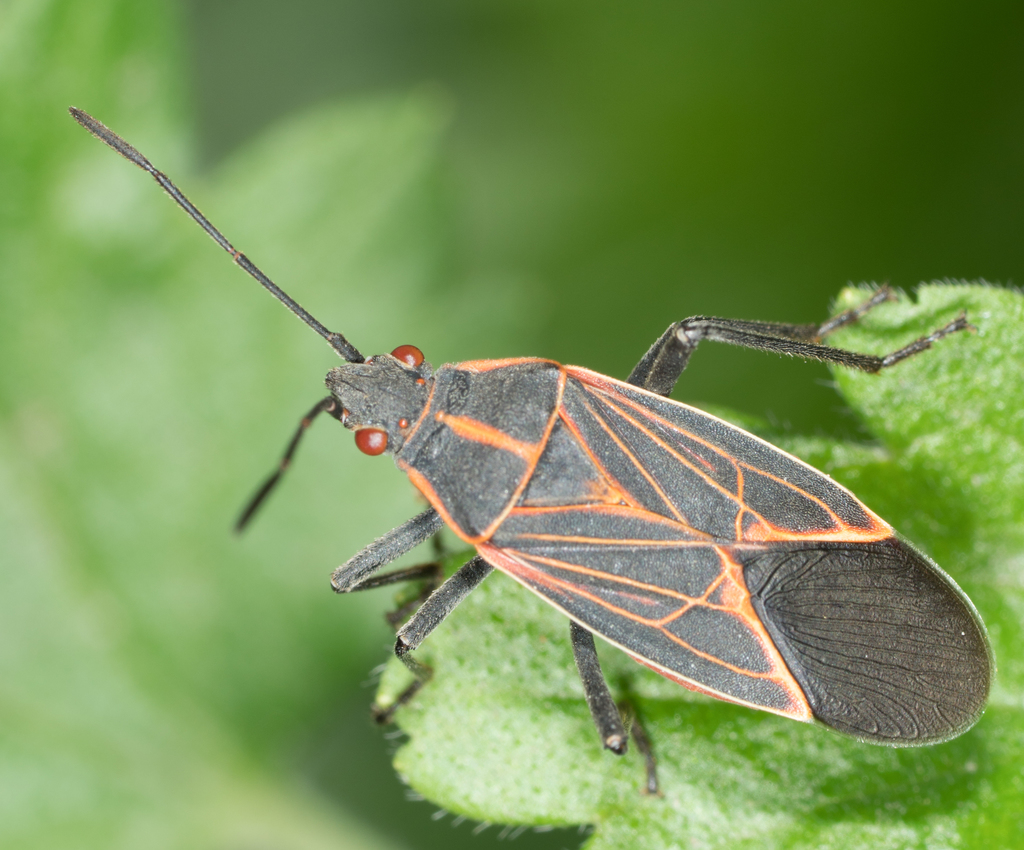
no rights reserved · CC0
Family: Rhopalidae · Class: Insecta · Order: Hemiptera
Boisea rubrolineata (Western Boxelder Bug) is a California animal in the Rhopalidae family.
The Western Boxelder Bug is a medium-sized true bug in the family Rhopalidae, measuring approximately 11-14 millimeters (0.4-0.6 inches) in length. Adults display a distinctive black coloration with bright orange-red markings along the wing edges and body segments. The forewings are held flat against the body when at rest, creating an elongated oval silhouette. Nymphs are bright red with developing wing pads and lack the fully developed wings of adults. This species occurs throughout western North America, with its range extending from British Columbia south through California, Nevada, Utah, and into northern Mexico. In California, the Western Boxelder Bug is found throughout most of the state, from coastal regions to inland valleys and foothill areas. The species is particularly common in urban and suburban environments where host trees are planted ornamentally. Western Boxelder Bugs inhabit areas where their primary host plants are present, specifically trees in the maple family (Sapindaceae). According to BugGuide, the species feeds primarily on boxelder trees (Acer negundo), but also utilizes other maple species including silver maple and occasionally ash trees. They are commonly found in riparian corridors, urban parks, residential areas, and anywhere these deciduous trees occur. The species tolerates a wide range of elevations from sea level to moderate mountain elevations. These bugs are gregarious, often forming large aggregations, particularly during fall months when adults seek overwintering sites. They feed by inserting their piercing-sucking mouthparts into seeds, leaves, and tender bark of host trees, consuming plant fluids. Western Boxelder Bugs undergo incomplete metamorphosis with five nymphal stages before reaching adulthood. Mating typically occurs in spring, with females laying clusters of red eggs on host tree bark, leaves, or in soil crevices. The species produces one to two generations per year depending on climate conditions. During autumn, adults aggregate in large numbers on the sunny sides of buildings, rocks, and tree trunks as they prepare for winter dormancy. They often enter human structures through cracks and crevices, seeking protected overwintering sites. While they do not reproduce indoors, their presence can become a nuisance when they emerge en masse during warm winter days or in spring. The Western Boxelder Bug is not listed under any federal or state conservation programs and maintains stable populations throughout its range. The species has likely benefited from urban landscaping that includes boxelder and maple trees, potentially expanding its distribution in developed areas. Climate change may affect seasonal timing and distribution patterns, but current populations appear secure. The species occasionally reaches outbreak levels in areas with abundant host trees, but these population fluctuations are considered natural and do not indicate conservation concern.
Classification
Class: Insecta · Order: Hemiptera · Family: Rhopalidae
Frequently asked questions
How is Boisea rubrolineata classified?
Boisea rubrolineata belongs to class Insecta, order Hemiptera, family Rhopalidae.
What family does Boisea rubrolineata belong to?
Boisea rubrolineata is in the Rhopalidae family.
What is Boisea rubrolineata?
The Western Boxelder Bug is a medium-sized true bug in the family Rhopalidae, measuring approximately 11-14 millimeters (0.4-0.6 inches) in length.
Is Boisea rubrolineata found in California?
Yes. Boisea rubrolineata is recorded in California in The California Species Project's catalogue.
Related species
Other California species in the same genus, family, or bioregion.
Data from The California Species Project — 14,000+ California species with verified data from CNPS, CDFW, USFWS, and more.