Bombus flavifrons
Yellow-fronted Bumble Bee
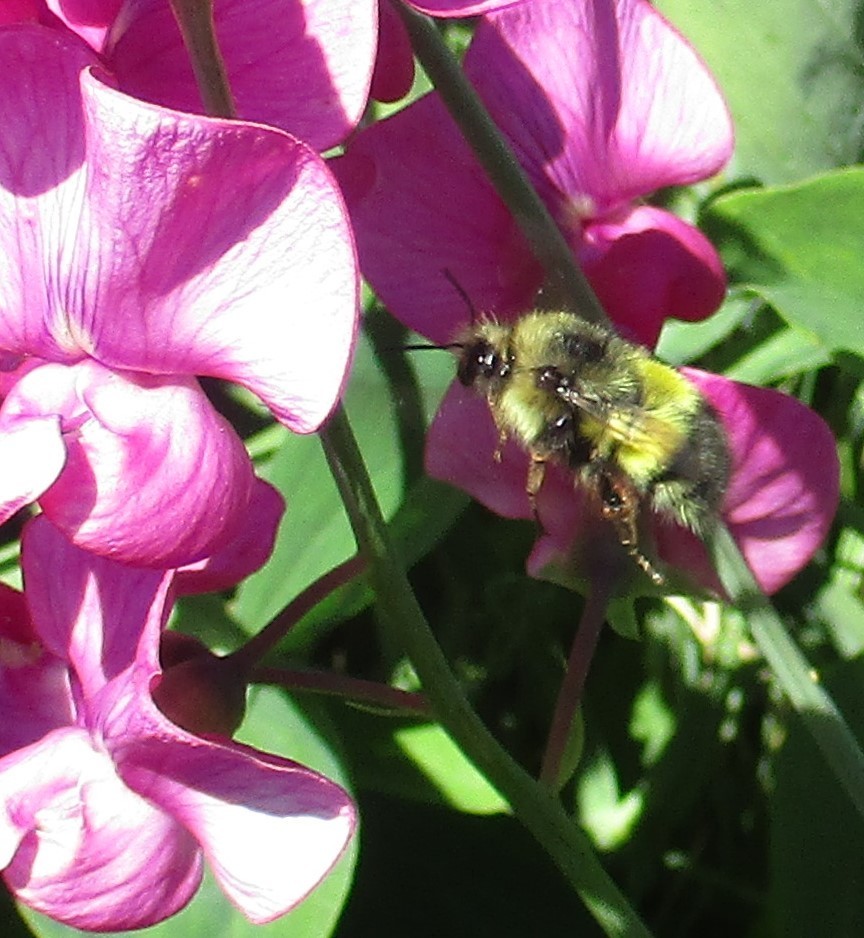
(c) sprcrkwild, some rights reserved (CC BY) · licence
Family: Apidae · Class: Insecta · Order: Hymenoptera
Bombus flavifrons (Yellow-fronted Bumble Bee) is a California animal in the Apidae family.
Bombus flavifrons is a medium-sized bumble bee native to western North America. Workers measure 10-13 mm (0.4-0.5 inches) in length, while queens are notably larger at 15-18 mm (0.6-0.7 inches). The species is characterized by its distinctive yellow face and frontal hair, from which it derives its common name. The thorax displays yellow hair on the anterior portion, while the abdomen shows a pattern of black hair on the first three segments, with yellow hair on the fourth segment and white to pale yellow hair on the terminal segments. Males are smaller than workers and exhibit similar coloration patterns but with more pronounced yellow markings. This species occurs throughout much of western North America, with its range extending from British Columbia south through the western United States. In California, B. flavifrons is found primarily in mountainous and subalpine regions, including the Sierra Nevada, Cascade Range, and northern Coast Ranges. The species typically occurs at elevations ranging from 1,200 to 3,400 meters (4,000 to 11,200 feet), though it may be found at lower elevations in northern portions of its range. Bombus flavifrons inhabits diverse montane ecosystems, including subalpine meadows, forest clearings, and alpine zones. The species demonstrates a preference for areas with abundant wildflower resources, particularly in grassland and meadow habitats within woodland and forest landscapes (Xerces Society 2021). Nesting typically occurs underground in abandoned rodent burrows or other natural cavities, where colonies establish in late spring following snowmelt. The species exhibits typical bumble bee social behavior, with overwintered queens emerging in late spring to establish new colonies. Queens forage extensively on early-blooming plants to build energy reserves before beginning nest construction and egg-laying. Worker production peaks in mid-summer, with colonies reaching maximum size of 100-400 individuals. The species demonstrates broad foraging preferences, visiting flowers across multiple plant families including Asteraceae, Fabaceae, and Rosaceae. Important forage plants include lupines (Lupinus spp.), penstemons (Penstemon spp.), and various thistle species (Cirsium spp.) (Xerces Society 2021). Flight period extends from May through September, with peak activity occurring during July and August in most locations. Bombus flavifrons currently lacks federal or state listing status, though it has been included in regional conservation assessments. According to IUCN evaluation, the species maintains approximately 79% of its historic range size, with persistence in current range areas at 132% relative to historic occupancy (Xerces Society 2014). While not experiencing the severe declines documented in some western bumble bee species, B. flavifrons faces ongoing threats from habitat modification, climate change impacts on montane ecosystems, and potential pathogen transmission from managed bee operations. The species benefits from conservation efforts focused on protecting high-elevation meadow systems and maintaining diverse wildflower communities in mountain environments.
Classification
Class: Insecta · Order: Hymenoptera · Family: Apidae
Frequently asked questions
How is Bombus flavifrons classified?
Bombus flavifrons belongs to class Insecta, order Hymenoptera, family Apidae.
What family does Bombus flavifrons belong to?
Bombus flavifrons is in the Apidae family.
What is Bombus flavifrons?
Bombus flavifrons is a medium-sized bumble bee native to western North America.
Is Bombus flavifrons found in California?
Yes. Bombus flavifrons is recorded in California in The California Species Project's catalogue.
Related species
Other California species in the same genus, family, or bioregion.
Data from The California Species Project — 14,000+ California species with verified data from CNPS, CDFW, USFWS, and more.