Bombus franklini
Franklin's bumble bee
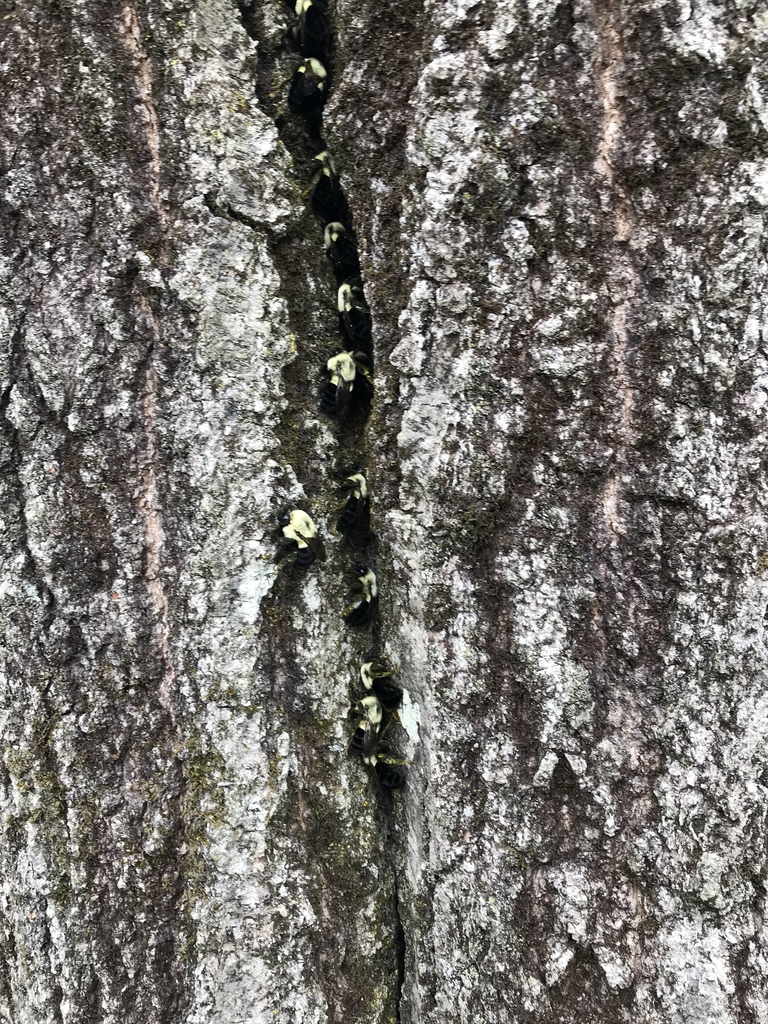
no rights reserved · CC0
Family: Apidae · Class: Insecta · Order: Hymenoptera
Conservation status: Endangered · G1 SH
Bombus franklini (Franklin's bumble bee) is a California animal in the Apidae family.
Franklin's bumble bee is a medium-sized social bee endemic to a highly restricted range in the Klamath Mountain region. Queens measure approximately 15-18 mm in length, while workers are smaller at 10-14 mm. The species exhibits the typical bumble bee body plan with dense, plush hair covering a robust thorax and abdomen. Coloration patterns include yellow and black banding, though specific morphological details distinguishing it from closely related species in the subgenus Bombus require expert identification. This species has one of the most limited distributions of any North American bumble bee, occurring only in southern Oregon and northern California between the Coast and Sierra-Cascade Ranges. The range encompasses Douglas, Jackson, and Josephine counties in Oregon and Siskiyou and Trinity counties in California, covering approximately 13,000 square miles (USFWS). Historical elevations ranged from 540 feet (162 m) in northern localities to above 7,800 feet (2,340 m) in the southern portion of its range (Xerces Society). Franklin's bumble bee inhabits grassy coastal prairies and coast range mountain meadows, particularly areas near seeps and wet meadow environments (USFWS). The species requires diverse floral resources for nectaring throughout the colony cycle and relatively protected areas for breeding and sheltering. Habitat must support both the nutritional needs of developing colonies and provide suitable overwintering sites for queens. Like other bumble bees, this species exhibits eusocial behavior with annual colony cycles. New queens emerge in late summer, mate, and overwinter individually before establishing colonies the following spring. Workers forage on native flowering plants throughout the active season, with colonies reaching peak size in mid-summer before producing new queens and males. The species was historically considered flexible regarding habitat requirements and was widely distributed throughout its range. Franklin's bumble bee was listed as federally endangered, representing a dramatic decline from its historical status. The species has experienced severe population crashes since the late 1990s, with surveys conducted from 2001-2006 uncovering only one individual despite extensive searching (Xerces Society). Primary threats include exotic diseases introduced through commercial bumble bee trafficking for greenhouse pollination, particularly the microsporidium Nosema bombi (Xerces Society). Additional threats likely include habitat loss, pesticide use, and climate change impacts on montane meadow ecosystems. The California Department of Fish and Wildlife originally advanced the species to candidate status on June 18, 2019. Following legal challenges, candidacy was temporarily stayed in February 2021 but was reinstated on September 30, 2022 after a successful appeal. Current conservation efforts focus on habitat protection and surveys to determine if any populations persist. The species may already be extinct, as no confirmed sightings have occurred in recent years despite targeted search efforts across its historical range.
Classification
Class: Insecta · Order: Hymenoptera · Family: Apidae
Conservation status
Endangered · G1 SH
Frequently asked questions
How is Bombus franklini classified?
Bombus franklini belongs to class Insecta, order Hymenoptera, family Apidae.
What family does Bombus franklini belong to?
Bombus franklini is in the Apidae family.
Is Bombus franklini protected or of conservation concern?
Bombus franklini carries the following status: Endangered · G1 SH.
What is Bombus franklini?
Franklin's bumble bee is a medium-sized social bee endemic to a highly restricted range in the Klamath Mountain region.
Is Bombus franklini found in California?
Yes. Bombus franklini is recorded in California in The California Species Project's catalogue.
Related species
Other California species in the same genus, family, or bioregion.
Data from The California Species Project — 14,000+ California species with verified data from CNPS, CDFW, USFWS, and more.