Bombus mixtus
Fuzzy-Horned Bumble Bee
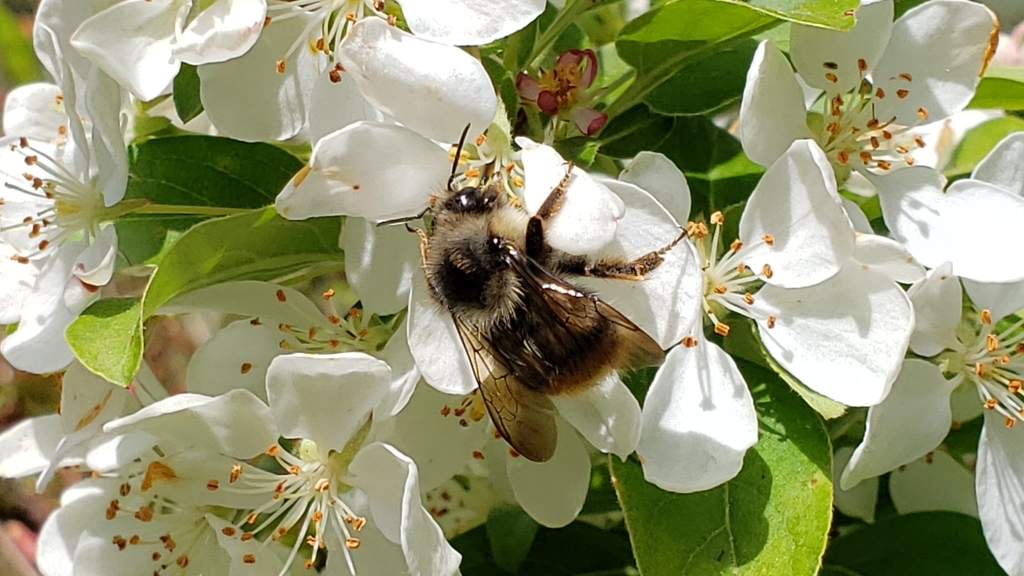
(c) Gavin Slater, some rights reserved (CC BY) · licence
Family: Apidae · Class: Insecta · Order: Hymenoptera
Bombus mixtus (Fuzzy-Horned Bumble Bee) is a California animal in the Apidae family.
The fuzzy-horned bumble bee is a medium-sized social bee with distinctive characteristics that aid in field identification. Workers typically measure 12-17 mm in length, with queens reaching up to 20 mm. The species displays the typical robust, fuzzy bumble bee body form with dense plumage that varies from golden-yellow to brown coloration. The common name "fuzzy-horned" likely refers to the distinctive antennal characteristics, though specific morphological details distinguishing this species from closely related bumble bees require microscopic examination by specialists. Bombus mixtus occurs across western North America, with distribution extending from British Columbia south through California and eastward into the Rocky Mountain region. In California, the species has been documented throughout much of the state, from coastal areas to montane environments. The fuzzy-horned bumble bee demonstrates considerable elevational tolerance, occurring from sea level to high mountain meadows. According to recent IUCN assessments, the species shows relatively stable population trends with current range size at 51.94% of historic range and current relative abundance at 263.61% of historic values (Xerces Society 2014). This species inhabits diverse habitats including grasslands, meadows, shrublands, woodland edges, and montane environments. The Pacific Northwest Bumble Bee Atlas documents associations with shrub/scrub habitats, and the species has been observed visiting flowers in early seral prairie and oak savanna environments (U.S. Fish and Wildlife Service 2005). Like other bumble bees, B. mixtus requires proximity to suitable nesting sites, typically underground cavities such as abandoned rodent burrows, and access to diverse flowering plants throughout the active season. Fuzzy-horned bumble bees are generalist foragers, visiting a wide variety of flowering plants for nectar and pollen. They have been documented as important pollinators of native wildflowers, including Kincaid's lupine (Lupinus sulphureus ssp. kincaidii), where they serve as critical outcrossing pollinators alongside other small bumble bee species (U.S. Fish and Wildlife Service 2005). The species exhibits the typical bumble bee annual colony cycle, with overwintered queens emerging in spring to establish new colonies. Workers appear throughout the growing season, with peak activity varying by elevation and local climate conditions. The conservation status of B. mixtus appears relatively secure compared to several other western North American bumble bee species. The species received a preliminary IUCN classification of Least Concern based on population trend analyses showing stable or increasing abundance (Xerces Society 2014). However, like all bumble bees, the species faces potential threats from habitat loss, pesticide exposure, disease transmission, and climate change impacts on flowering plant communities. The species benefits from conservation efforts focused on maintaining diverse flowering resources and protecting natural grassland and shrubland habitats throughout its range.
Classification
Class: Insecta · Order: Hymenoptera · Family: Apidae
Frequently asked questions
How is Bombus mixtus classified?
Bombus mixtus belongs to class Insecta, order Hymenoptera, family Apidae.
What family does Bombus mixtus belong to?
Bombus mixtus is in the Apidae family.
What is Bombus mixtus?
The fuzzy-horned bumble bee is a medium-sized social bee with distinctive characteristics that aid in field identification.
Is Bombus mixtus found in California?
Yes. Bombus mixtus is recorded in California in The California Species Project's catalogue.
Related species
Other California species in the same genus, family, or bioregion.
Data from The California Species Project — 14,000+ California species with verified data from CNPS, CDFW, USFWS, and more.