Bombus sitkensis
Sitka Bumble Bee
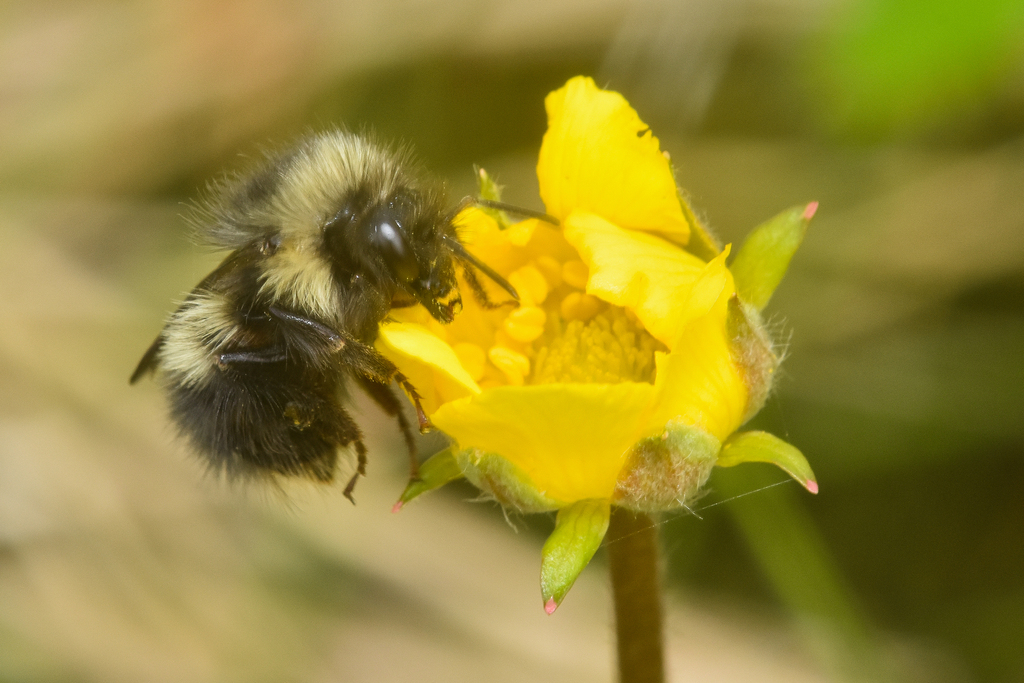
no rights reserved · CC0
Family: Apidae · Class: Insecta · Order: Hymenoptera
Bombus sitkensis (Sitka Bumble Bee) is a California animal in the Apidae family.
The Sitka bumble bee is a medium-sized social bee species native to western North America. Workers typically measure 10-15 mm in length, while queens are larger at 15-20 mm. The species exhibits the characteristic robust, fuzzy body plan of bumble bees, with dense plumage that aids in thermoregulation. Sitka bumble bees display variable coloration patterns, with yellow and black banding across the thorax and abdomen, though specific color patterns can vary among individuals and populations. Historically, Bombus sitkensis occurred throughout much of western North America, with populations documented across Alaska, western Canada, and the northwestern United States including Washington, Oregon, Idaho, and northern California. According to the IUCN assessment, the species' current range size is approximately 32% of its historic range (Xerces Society 2014). The species remains present in 89% of its historically occupied areas, though with reduced abundance in many locations. Sitka bumble bees inhabit diverse ecosystems including agricultural areas, grasslands and meadows, riparian zones, shrublands, and woodland forests (Xerces Society 2021). The species demonstrates considerable ecological flexibility, utilizing various elevation zones from lowland valleys to montane environments. Colonies are typically established in underground cavities, abandoned rodent burrows, or other sheltered locations that provide protection from weather and predators. Like other bumble bee species, Sitka bumble bees are eusocial insects with an annual colony cycle. Queens emerge from hibernation in spring to establish new colonies, initially foraging alone to provision the first brood of workers. Colony development follows the typical bumble bee pattern, with worker populations building through summer before producing reproductive individuals in late summer and fall. The species exhibits generalist foraging behavior, visiting flowers from multiple plant families. Documented plant associations include Cirsium, Castilleja, Trifolium, Vicia, Delphinium, and Penstemon species, among others (Xerces Society 2021). Workers collect both nectar for energy and pollen for protein to feed developing larvae. The Sitka bumble bee is currently classified as Least Concern by the IUCN, though the species has experienced notable population declines. IUCN assessments indicate the species has declined by an average of 34% from historic levels, with current relative abundance at approximately 76% of historic values (Xerces Society 2014). Primary threats likely include habitat loss and fragmentation, pesticide exposure, disease transmission from managed bees, and climate change impacts on floral resources and suitable nesting sites. Like other bumble bee species, Bombus sitkensis may be susceptible to pathogens including Vairimorpha bombi, Crithidia bombi, and various viruses that have been documented affecting North American bumble bee populations. While not currently listed under federal or state endangered species legislation, continued monitoring is important given the documented population trends and ongoing threats to pollinator communities across western North America.
Classification
Class: Insecta · Order: Hymenoptera · Family: Apidae
Frequently asked questions
How is Bombus sitkensis classified?
Bombus sitkensis belongs to class Insecta, order Hymenoptera, family Apidae.
What family does Bombus sitkensis belong to?
Bombus sitkensis is in the Apidae family.
What is Bombus sitkensis?
The Sitka bumble bee is a medium-sized social bee species native to western North America.
Is Bombus sitkensis found in California?
Yes. Bombus sitkensis is recorded in California in The California Species Project's catalogue.
Related species
Other California species in the same genus, family, or bioregion.
Data from The California Species Project — 14,000+ California species with verified data from CNPS, CDFW, USFWS, and more.