Bombus sonorus
Sonoran Bumble Bee
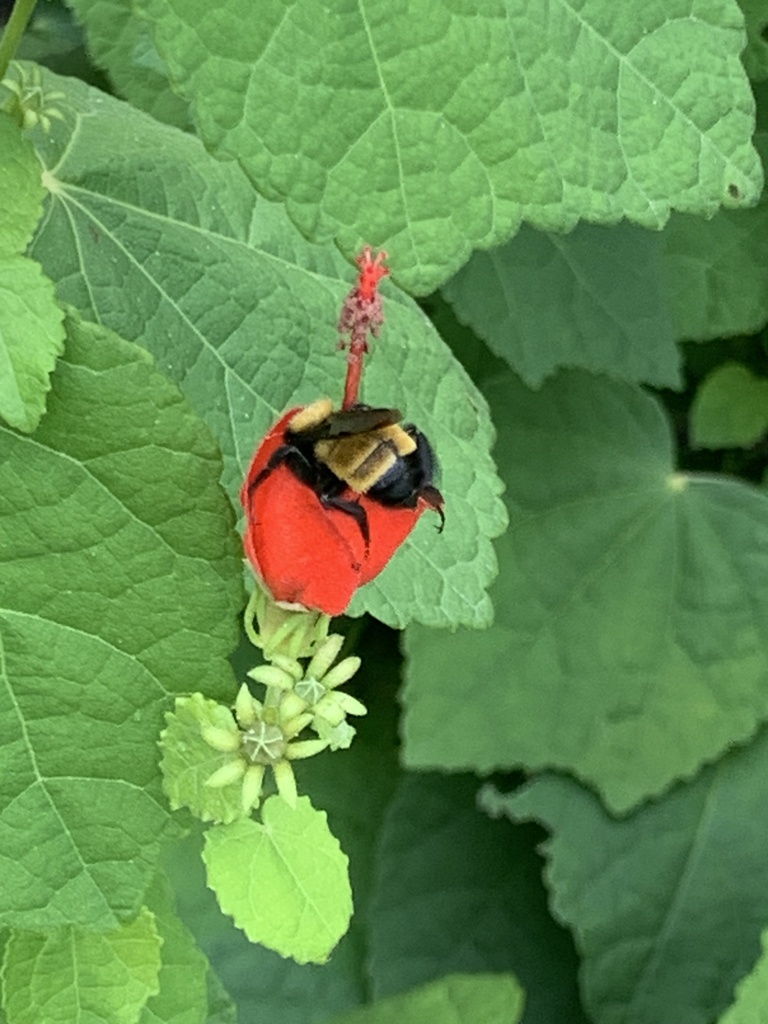
(c) beth_snow, some rights reserved (CC BY) · licence
Family: Apidae · Class: Insecta · Order: Hymenoptera
Bombus sonorus (Sonoran Bumble Bee) is a California animal in the Apidae family.
The Sonoran bumble bee is a large, robust bee characterized by distinctive black and yellow striping patterns. Workers typically measure 12-18 mm in length, while queens are notably larger at 18-22 mm. The species displays a predominantly black body with bright yellow bands across the thorax and anterior portions of the abdomen, distinguishing it from other regional bumble bee species. The dense, plumose body hair provides insulation necessary for foraging in varied temperature conditions. Bombus sonorus occurs throughout southwestern North America, with its range extending from southern Arizona and New Mexico into northwestern Mexico. Within California, the species is primarily documented from desert regions of Riverside, San Bernardino, and Imperial counties. The subspecies was historically more common in the Central Valley of California but now appears to be largely absent from this region (Xerces Society 2014). This desert-adapted subspecies inhabits arid and semi-arid environments, including Sonoran Desert scrub, desert washes, and riparian areas. The species demonstrates remarkable altitudinal mobility, with B. pensylvanicus sonorus capable of ascending up to 1,000 vertical meters daily while foraging (Schmidt and Jacobson 2005). Elevation ranges typically span from desert floors to foothill elevations, though specific altitudinal limits require further documentation. The species shows preference for areas with diverse native flowering resources throughout its active period. Sonoran bumble bees are social insects living in annual colonies founded by overwintered queens. Foraging activities focus on nectar and pollen collection from desert wildflowers and shrubs. Like other bumble bees, colonies likely establish nests in abandoned rodent burrows or similar underground cavities. The species demonstrates typical bumble bee foraging behavior, with workers traveling distances of 600-1,700 meters from colonies under normal conditions, though maximum foraging distances can exceed 11 kilometers when resources are scarce near nest sites. The Sonoran bumble bee faces significant conservation challenges, with regional IUCN assessments indicating endangered status. Analysis shows the species has experienced a 67.51% average decline, with current relative abundance at only 2.32% of historic values and persistence in current range reduced to 20.48% of historic occupancy (Xerces Society 2014). The species qualifies as endangered under IUCN criteria EN A2bc due to documented population declines and range contractions. Primary threats include habitat loss from urban development, agricultural conversion, and climate change impacts on desert ecosystems. The species is included among bumble bees of conservation concern by the Xerces Society, which has designated it as a target species for Project Bumble Bee conservation efforts. Additional research is needed to better understand current population status, specific habitat requirements, and effective conservation strategies for this imperiled desert pollinator.
Classification
Class: Insecta · Order: Hymenoptera · Family: Apidae
Frequently asked questions
How is Bombus sonorus classified?
Bombus sonorus belongs to class Insecta, order Hymenoptera, family Apidae.
What family does Bombus sonorus belong to?
Bombus sonorus is in the Apidae family.
What is Bombus sonorus?
The Sonoran bumble bee is a large, robust bee characterized by distinctive black and yellow striping patterns.
Is Bombus sonorus found in California?
Yes. Bombus sonorus is recorded in California in The California Species Project's catalogue.
Related species
Other California species in the same genus, family, or bioregion.
Data from The California Species Project — 14,000+ California species with verified data from CNPS, CDFW, USFWS, and more.