Bombus vancouverensis
Vancouver Bumble Bee
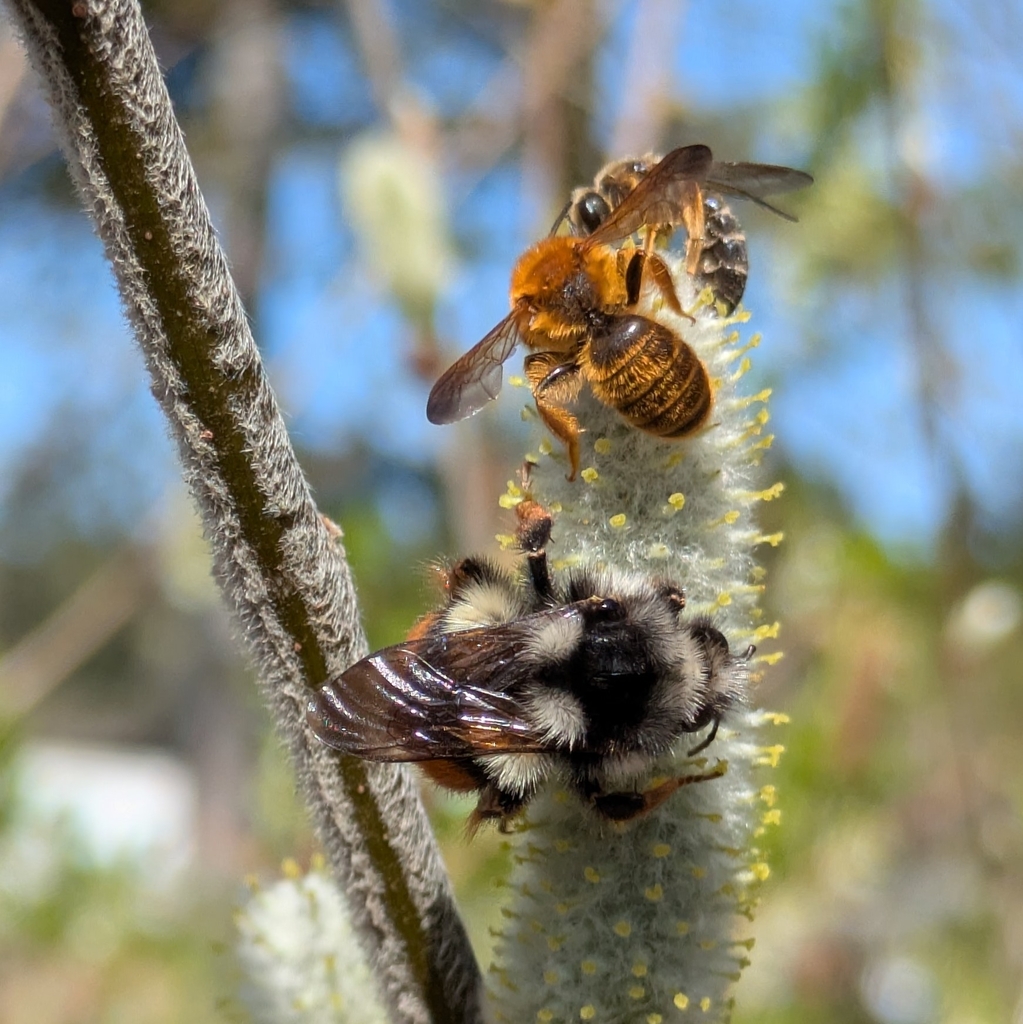
(c) Jan Smith, some rights reserved (CC BY) · licence
Family: Apidae · Class: Insecta · Order: Hymenoptera
Bombus vancouverensis (Vancouver Bumble Bee) is a California animal in the Apidae family.
The Vancouver bumble bee is a medium-sized native bee species found along the Pacific Coast of North America. Workers measure approximately 10-15 mm in length, with queens reaching 16-20 mm. The species displays the typical bumble bee body plan with dense, branched hairs (plumose setae) covering a robust thorax and abdomen. Coloration consists of yellow and black banding patterns, though specific color patterns distinguishing this species from closely related taxa require microscopic examination of morphological features. Historically, Bombus vancouverensis ranged from British Columbia south through Washington, Oregon, and into northern California. The species occurs within approximately 500 kilometers of the Pacific Coast, inhabiting both coastal and inland areas at varying elevations. Current distribution appears to follow this historical pattern, though comprehensive population surveys are limited. The Vancouver bumble bee occupies diverse habitat types including open grassy prairies, urban parks and gardens, chaparral and shrub areas, and mountain meadows (NatureServe 2025). This habitat flexibility allows the species to persist in both natural and human-modified landscapes. Like other bumble bee species, B. vancouverensis requires three essential habitat components: diverse native floral resources available throughout the active season, suitable nesting sites, and appropriate overwintering habitat for mated queens. The species follows the typical bumble bee annual cycle. Mated queens emerge from winter diapause in spring and establish colonies in underground cavities, abandoned rodent burrows, or other protected sites. Queens initially forage alone while establishing the nest and caring for the first brood of workers. As worker populations grow, foraging responsibilities shift to the worker caste while queens focus on egg production. Workers are generalist pollinators, visiting a wide variety of flowering plants for nectar and pollen. Colony-specific foraging distances typically range from 275 meters to 750 meters from the nest, though maximum distances of over 11 kilometers have been recorded when nearby resources are scarce. New queens and males are produced in late summer, mate, and only the fertilized queens survive winter to establish new colonies the following spring. Bombus vancouverensis currently holds a global conservation status of G5TNR (globally secure, subspecies not ranked) according to NatureServe (2025). The species is not federally listed under the Endangered Species Act as of December 2025. However, like many Pacific Coast bumble bee species, B. vancouverensis faces ongoing threats from habitat loss, pesticide exposure, climate change, and potential pathogen spillover from commercial bumble bee operations. While this species appears more stable than some declining bumble bee taxa in the region, continued monitoring is warranted given documented declines in related Pacific Northwest bumble bee species. The Pacific Northwest Bumble Bee Atlas has begun collecting systematic survey data to better understand current population status and distribution patterns across the region.
Classification
Class: Insecta · Order: Hymenoptera · Family: Apidae
Frequently asked questions
How is Bombus vancouverensis classified?
Bombus vancouverensis belongs to class Insecta, order Hymenoptera, family Apidae.
What family does Bombus vancouverensis belong to?
Bombus vancouverensis is in the Apidae family.
What is Bombus vancouverensis?
The Vancouver bumble bee is a medium-sized native bee species found along the Pacific Coast of North America.
Is Bombus vancouverensis found in California?
Yes. Bombus vancouverensis is recorded in California in The California Species Project's catalogue.
Related species
Other California species in the same genus, family, or bioregion.
Data from The California Species Project — 14,000+ California species with verified data from CNPS, CDFW, USFWS, and more.