Bombus vandykei
Van Dyke's Bumble Bee
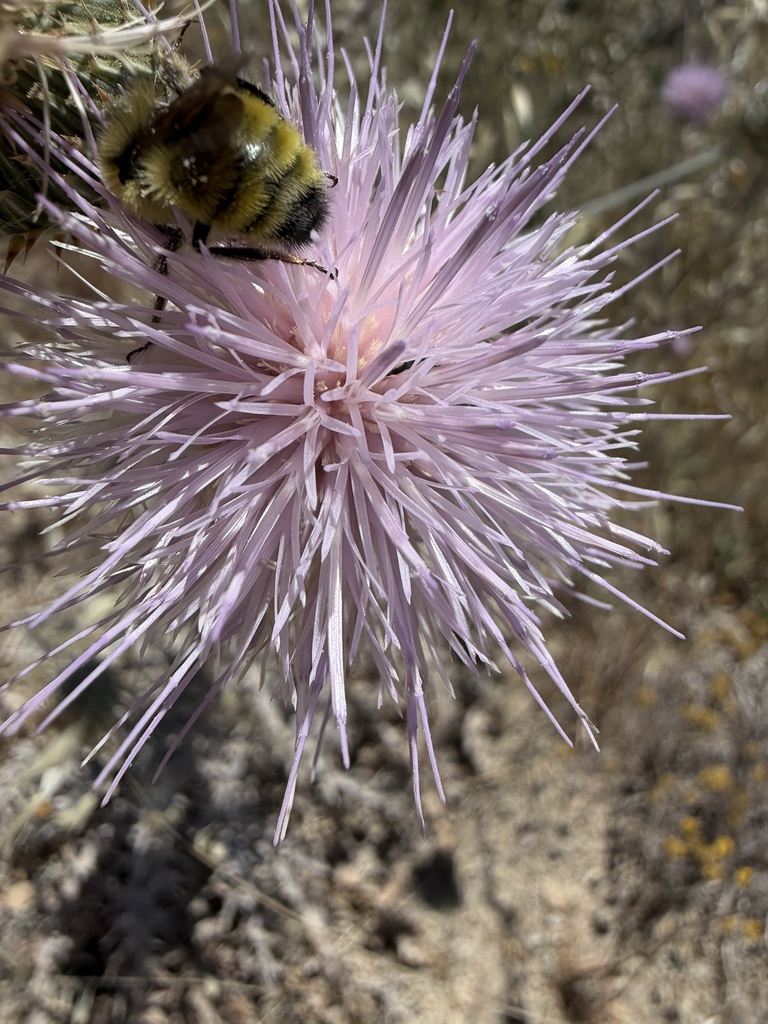
(c) Ike Ikemori, some rights reserved (CC BY) · licence
Family: Apidae · Class: Insecta · Order: Hymenoptera
Bombus vandykei (Van Dyke's Bumble Bee) is a California animal in the Apidae family.
Van Dyke's bumble bee is a medium-sized social bee with workers measuring 8 to 25 mm in length. The species displays the characteristic bumble bee body plan with dense, branched hairs (plumose setae) covering the head, thorax, and abdomen. Hair color and patterns on these body regions are important diagnostic features for field identification. Like other bumble bees, females carry balls of moist pollen on specialized structures (corbiculae) on their upper hind legs, while males are often dusted with dry pollen from their foraging activities. Van Dyke's bumble bee occurs from southern Washington through California, representing a Pacific coastal distribution pattern. The species belongs to the subgenus Pyrobombus and maintains a relatively stable range compared to some declining western bumble bee species. According to NatureServe, the species has a global conservation rank of G4, indicating it is apparently secure globally (NatureServe 2021). Within California, the species has been documented in various counties, though specific distributional details require further documentation. This species inhabits diverse habitats including grasslands, meadows, shrublands, woodlands, and forest edges. Van Dyke's bumble bee demonstrates flexibility in habitat use, foraging in both natural and managed landscapes. The species shows associations with agricultural areas, developed lands, and riparian zones. Elevation ranges and specific microhabitat requirements have not been comprehensively documented in published literature. Van Dyke's bumble bee exhibits the typical annual colony cycle of temperate bumble bees. New queens emerge from hibernation in spring to establish colonies, with the colony-founding, buildup, and reproductive phases occurring from spring through late summer. Workers and males are produced during the active season, followed by the production of new queens that mate and overwinter. Male bees do not return to the nest and require nighttime roosting sites, often sleeping tucked under flower clusters of plants such as Cleveland sage (Salvia clevelandii) or mountain coyote mint (Monardella odoratissima) (California Native Plant Society 2020). The species demonstrates broad floral associations, visiting plants in multiple genera including Cirsium, Delphinium, Penstemon, Trifolium, and Vicia (Xerces Society 2021). Peak activity periods and specific phenological patterns require additional study. Van Dyke's bumble bee currently maintains stable populations without federal or state listing status. The species appears to be faring better than some western bumble bee species that have experienced severe declines, such as Franklin's bumble bee (Bombus franklini) and the western bumble bee (Bombus occidentalis) (NatureServe 2021). However, like other bumble bee species, Van Dyke's bumble bee faces potential threats from habitat loss, pesticide exposure, disease, and climate change. The species benefits from diverse floral resources throughout its flight season and appears adaptable to various landscape types. Conservation efforts focused on maintaining diverse flowering plant communities and reducing pesticide use support populations of this and other native bumble bee species. Comprehensive population monitoring and ecological studies would enhance understanding of this species' conservation needs and population trends.
Classification
Class: Insecta · Order: Hymenoptera · Family: Apidae
Frequently asked questions
How is Bombus vandykei classified?
Bombus vandykei belongs to class Insecta, order Hymenoptera, family Apidae.
What family does Bombus vandykei belong to?
Bombus vandykei is in the Apidae family.
What is Bombus vandykei?
Van Dyke's bumble bee is a medium-sized social bee with workers measuring 8 to 25 mm in length.
Is Bombus vandykei found in California?
Yes. Bombus vandykei is recorded in California in The California Species Project's catalogue.
Related species
Other California species in the same genus, family, or bioregion.
Data from The California Species Project — 14,000+ California species with verified data from CNPS, CDFW, USFWS, and more.