Bombus vosnesenskii
Yellow-faced Bumble Bee
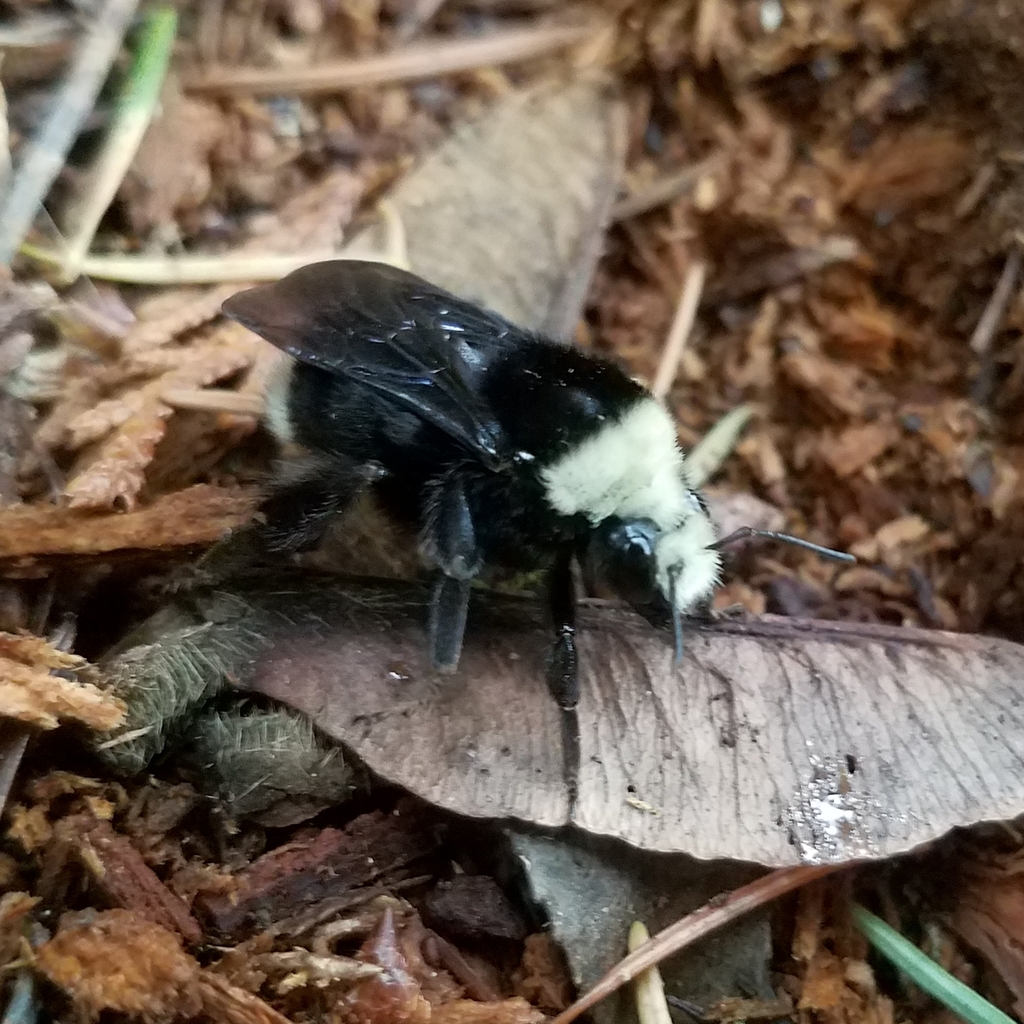
no rights reserved · CC0
Family: Apidae · Class: Insecta · Order: Hymenoptera
Bombus vosnesenskii (Yellow-faced Bumble Bee) is a California animal in the Apidae family.
The yellow-faced bumble bee is a medium to large social bee species measuring 8-22 mm in length depending on caste. Workers are the smallest at 8-16 mm, males measure 10-16 mm, and queens are the largest at 15-22 mm. The species exhibits the characteristic bumble bee coloration with dense, branched hairs covering the body. The face displays prominent yellow hairs, giving the species its common name, while the thorax shows yellow coloration that extends well behind the wing bases. The abdomen typically features yellow bands on the second and sometimes third segments, with the remainder being black, and the tip displays white or pale yellow hairs. Bombus vosnesenskii occurs along the Pacific Coast from British Columbia south to Baja California, Mexico. In California, the species ranges from sea level to approximately 2,400 meters elevation and is found throughout most of the state, including coastal areas, the Central Valley, Sierra Nevada foothills, and southern California mountains. The species has experienced range expansions in some urban areas, particularly around San Francisco, where it has become the dominant bumble bee species. This species inhabits diverse habitats including coastal scrub, chaparral, oak woodlands, mixed conifer forests, grasslands, and urban gardens. Yellow-faced bumble bees demonstrate significant habitat flexibility, thriving in both natural and human-modified landscapes. They are commonly found in areas with abundant floral resources and suitable nesting sites, typically within 100 meters of high-quality foraging habitat. Nesting occurs in underground cavities such as abandoned rodent burrows, under logs, or beneath rocks in both forested and open habitats. Yellow-faced bumble bees are generalist foragers, visiting a wide variety of native and non-native flowering plants throughout their active season from February through October. Queens emerge from overwintering sites in late winter to early spring and establish colonies that can grow to contain 200-400 individuals by late summer (Williams et al. 2014). The species exhibits a typical bumble bee annual cycle, with only mated queens surviving winter in loose organic material in shaded areas. Workers and males die with the onset of cold weather. The species demonstrates strong flight capabilities and foraging ranges extending up to 1.5 kilometers from nest sites (Jha & Kremen 2013). Bombus vosnesenskii is not federally or state listed and is considered relatively stable compared to other western North American bumble bee species. However, like other pollinators, the species faces threats from habitat loss, pesticide exposure, disease, and climate change. In urban areas such as San Francisco, B. vosnesenskii has shown competitive advantages over other bumble bee species (Williams et al. 2014), potentially excluding later-emerging species like B. caliginosus and B. sitkensis from limited nesting sites (Evans et al. 2008). The species serves as an important pollinator for both native plants and agricultural crops, making its conservation significant for ecosystem function and food security. Current populations appear stable across most of the range, though continued monitoring is recommended given the documented declines in other western bumble bee species.
Classification
Class: Insecta · Order: Hymenoptera · Family: Apidae
Frequently asked questions
How is Bombus vosnesenskii classified?
Bombus vosnesenskii belongs to class Insecta, order Hymenoptera, family Apidae.
What family does Bombus vosnesenskii belong to?
Bombus vosnesenskii is in the Apidae family.
What is Bombus vosnesenskii?
The yellow-faced bumble bee is a medium to large social bee species measuring 8-22 mm in length depending on caste.
Is Bombus vosnesenskii found in California?
Yes. Bombus vosnesenskii is recorded in California in The California Species Project's catalogue.
Related species
Other California species in the same genus, family, or bioregion.
Data from The California Species Project — 14,000+ California species with verified data from CNPS, CDFW, USFWS, and more.