Bombycilla cedrorum
Cedar Waxwing
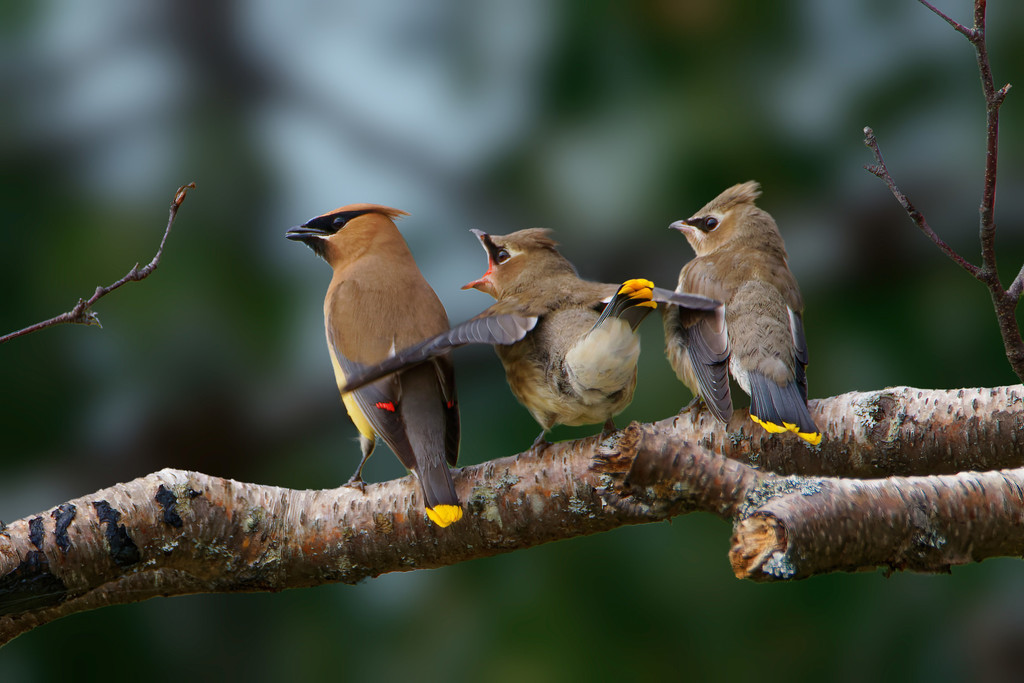
(c) Christian Back, some rights reserved (CC BY) · licence
Family: Bombycillidae · Class: Aves · Order: Passeriformes
Bombycilla cedrorum (Cedar Waxwing) is a California animal in the Bombycillidae family.
The Cedar Waxwing is a medium-sized songbird measuring 14 to 18 cm (5.5 to 7.1 inches) in length with a wingspan of 22 to 30 cm (8.7 to 11.8 inches). Adults weigh between 30 to 40 grams (1.1 to 1.4 ounces). The species exhibits distinctive plumage with a silky brown head and crest, pale yellow belly, and gray-brown back. A black mask extends from the bill through the eye, bordered by a thin white line. The tail displays a prominent bright yellow terminal band. Secondary flight feathers often bear small, waxy red tips that give the species its common name, though these appendages may be absent in younger birds. Cedar Waxwings breed across most of Canada and the northern United States, with their range extending south through the western mountains to Guatemala. In California, the species occurs as both a breeding resident and winter visitor throughout much of the state. They are found from sea level to elevations exceeding 3,000 meters (9,800 feet) in the Sierra Nevada and other mountain ranges. Year-round populations exist in suitable habitat across northern and central California, while southern regions primarily host wintering birds from September through April. The species inhabits a variety of woodland and edge environments, showing particular affinity for areas with abundant fruit-bearing trees and shrubs. Preferred habitats include riparian forests, oak woodlands, coniferous forests, parks, orchards, and residential areas with mature trees. Cedar Waxwings are commonly found in second-growth forests and forest edges where berry-producing plants are plentiful. They adapt well to human-modified landscapes that provide suitable nesting sites and food resources. Cedar Waxwings are highly social birds that form flocks year-round, with winter aggregations sometimes numbering in the hundreds. Their diet consists primarily of fruit, particularly during fall and winter months, supplemented by insects during the breeding season. Common food sources include berries from cedar, cherry, elderberry, dogwood, and hawthorn. The species exhibits nomadic behavior, following fruit availability across the landscape. Breeding occurs from June through August, later than most North American songbirds. Pairs construct cup-shaped nests in tree forks, typically 1.2 to 15 meters (4 to 50 feet) above ground. Females lay 2 to 6 eggs, with an average clutch size of 3 to 4 eggs. Incubation lasts 11 to 13 days, and nestlings fledge after 11 to 18 days. Cedar Waxwings are classified as a species of Least Concern by the International Union for Conservation of Nature. According to the North American Breeding Bird Survey, populations have remained relatively stable across most of their range over the past five decades, with some regional fluctuations. The species benefits from its adaptability to human-modified environments and diverse diet. However, localized threats include pesticide use in agricultural areas, window strikes, and habitat loss from urban development. Climate change may affect the timing and distribution of fruit resources, potentially impacting foraging patterns and breeding success.
Classification
Class: Aves · Order: Passeriformes · Family: Bombycillidae
Frequently asked questions
How is Bombycilla cedrorum classified?
Bombycilla cedrorum belongs to class Aves, order Passeriformes, family Bombycillidae.
What family does Bombycilla cedrorum belong to?
Bombycilla cedrorum is in the Bombycillidae family.
What is Bombycilla cedrorum?
The Cedar Waxwing is a medium-sized songbird measuring 14 to 18 cm (5.5 to 7.1 inches) in length with a wingspan of 22 to 30 cm (8.7 to 11.8 inches).
Is Bombycilla cedrorum found in California?
Yes. Bombycilla cedrorum is recorded in California in The California Species Project's catalogue.
Related species
Other California species in the same genus, family, or bioregion.
Data from The California Species Project — 14,000+ California species with verified data from CNPS, CDFW, USFWS, and more.