Bombylius major
Greater Bee Fly
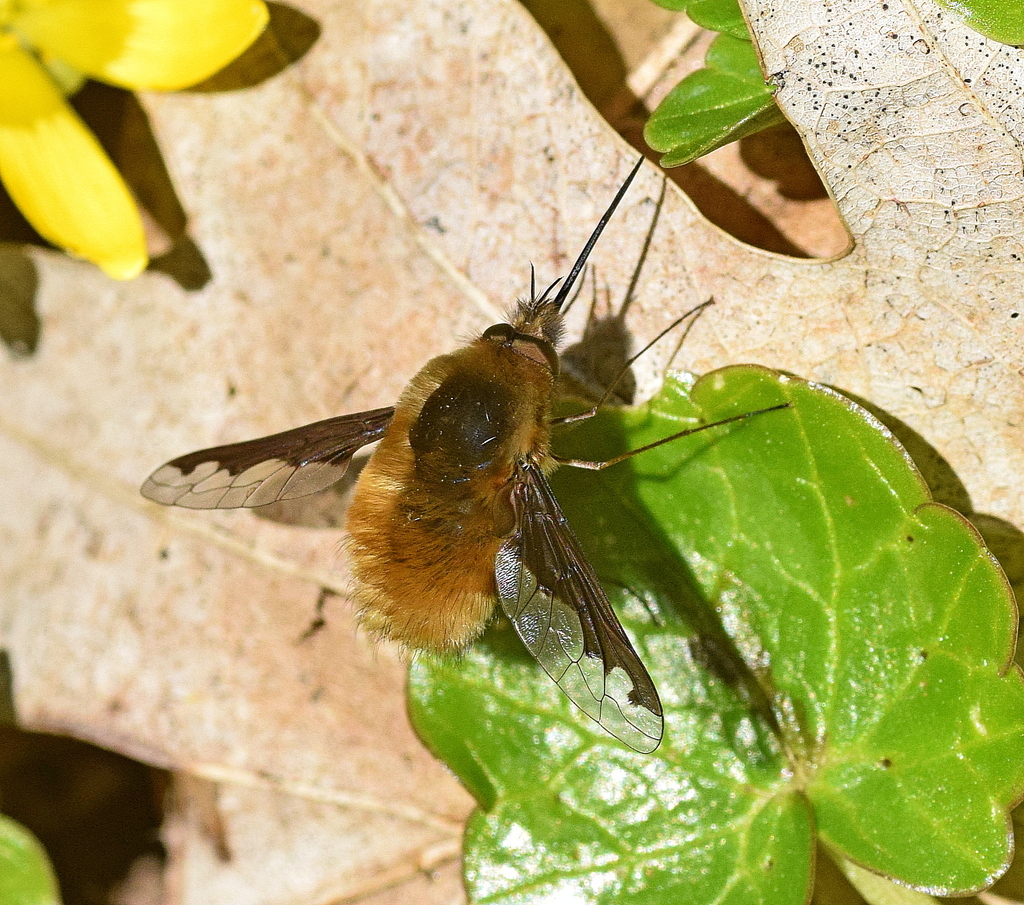
(c) Kostas Zontanos, some rights reserved (CC BY) · licence
Family: Bombyliidae · Class: Insecta · Order: Diptera
Bombylius major (Greater Bee Fly) is a California animal in the Bombyliidae family.
The Greater Bee Fly (Bombylius major) is a distinctive dipteran in the family Bombyliidae, characterized by its robust, fuzzy appearance and hovering flight behavior. Adults measure approximately 8-15 mm in length with a dense covering of yellowish to brownish pile (hair-like structures) that gives them a bee-like appearance. The species displays prominent forward-projecting proboscis and large, dark compound eyes. According to BugGuide, the pile coloration does not include white, as white-piled specimens previously classified as B. major have been transferred to B. anthophilus (BugGuide 2025). Bombylius major has an extensive distribution throughout most of North America, ranging from Canada south through the United States to Baja California, Mexico, and extending across Eurasia (BugGuide 2025). This widespread distribution makes it one of the most broadly distributed bee fly species in North America. In California, the species occurs across multiple habitat types and elevation zones. The species primarily inhabits woodlands and woodland edges, favoring areas with mixed vegetation that provide both nectar sources and suitable ground-nesting bee populations (BugGuide 2025). Adults are commonly observed in forest clearings, riparian corridors, and suburban areas with mature trees. The species shows preference for areas with sandy or loose soil substrates that support their host species. Adults exhibit a distinctive flight season from March through May, with peak abundance typically occurring in April (BugGuide 2025). The species demonstrates hovering behavior while feeding, using their long proboscis to extract nectar from flowers of herbaceous plants. This feeding behavior makes them effective pollinators; B. major has been documented visiting golden paintbrush (Castilleja levisecta) flowers alongside other native pollinators (Federal Register 2023). The reproductive biology of B. major involves a complex parasitoid relationship with solitary ground-nesting bees. Larvae function as parasitoids of bee larvae, particularly targeting species in the genus Andrena (Andrenidae) (BugGuide 2025). Female bee flies exhibit specialized egg-laying behavior, resting on bare ground and collecting fine sand and dust particles in specialized tufts of hair at the abdominal tip, called dust baskets. This collected material is used during the egg-laying process to facilitate proper egg placement in host bee burrows. Bombylius major currently holds no federal or state conservation listing status and appears to maintain stable populations across its range. The species benefits from its broad distribution, diverse habitat tolerance, and generalist feeding habits as adults. However, like many native pollinators, populations may face pressures from habitat fragmentation, pesticide use, and declining populations of their ground-nesting bee hosts. The species' role as both pollinator and parasitoid places it within complex ecological networks that require diverse, intact habitats to maintain stable population dynamics.
Classification
Class: Insecta · Order: Diptera · Family: Bombyliidae
Frequently asked questions
How is Bombylius major classified?
Bombylius major belongs to class Insecta, order Diptera, family Bombyliidae.
What family does Bombylius major belong to?
Bombylius major is in the Bombyliidae family.
What is Bombylius major?
The Greater Bee Fly (Bombylius major) is a distinctive dipteran in the family Bombyliidae, characterized by its robust, fuzzy appearance and hovering flight behavior.
Is Bombylius major found in California?
Yes. Bombylius major is recorded in California in The California Species Project's catalogue.
Related species
Other California species in the same genus, family, or bioregion.
Data from The California Species Project — 14,000+ California species with verified data from CNPS, CDFW, USFWS, and more.