Bondia comonana
Prune limb borer
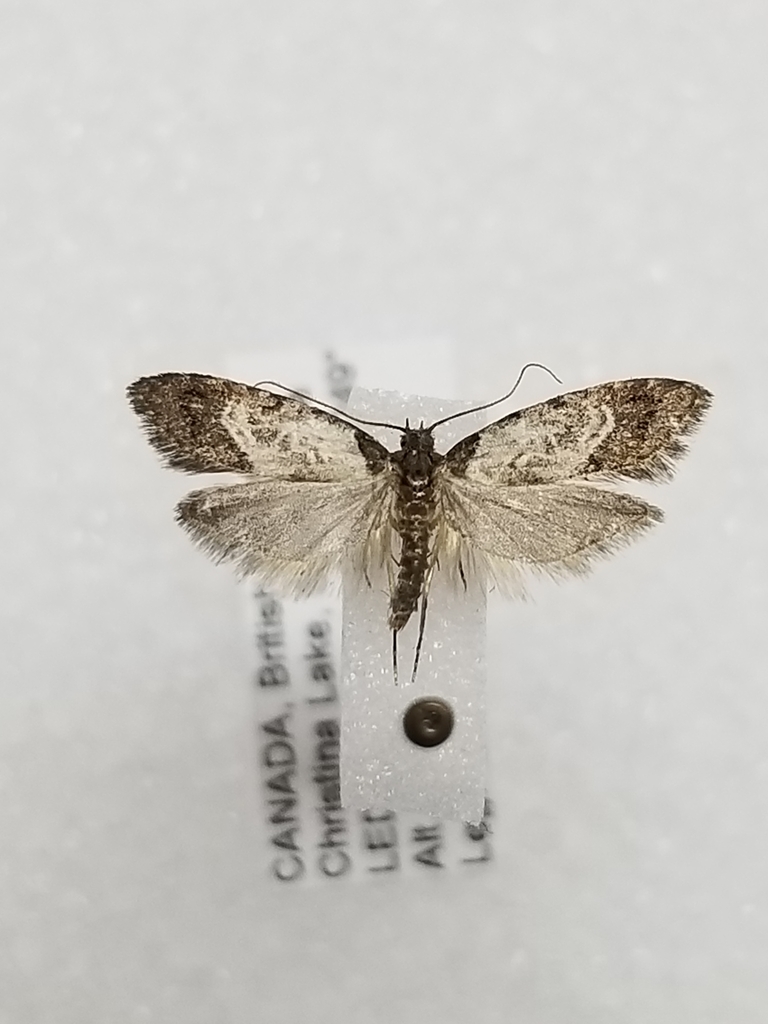
(c) Dave, some rights reserved (CC BY) · licence
Family: Carposinidae · Class: Insecta · Order: Lepidoptera
Bondia comonana (Prune limb borer) is a California animal in the Carposinidae family.
The prune limb borer (Bondia comonana) is a small moth in the family Carposinidae, a group known for wood-boring larvae that tunnel into tree branches and trunks. Adults typically measure 8 to 12 millimeters (0.3 to 0.5 inches) in wingspan, with forewings that are grayish-brown to dark brown in coloration. The forewings often display subtle darker markings and may have a mottled appearance that provides camouflage against tree bark. The hindwings are typically lighter, ranging from pale gray to whitish. Like other carposinid moths, the antennae are thread-like and the body is relatively robust compared to the wing size. The prune limb borer is native to western North America, with documented populations in California, Oregon, and Washington. Within California, the species has been recorded from the Central Valley and coastal regions, particularly in areas where its host plants are abundant. The distribution appears to be closely tied to the presence of stone fruit trees and related native Prunus species. This species inhabits orchards, riparian woodlands, and areas where Prunus species occur naturally or in cultivation. The larvae require living wood tissue for development, typically boring into branches and smaller trunks of their host plants. Adults are found in the same general habitat as their larval hosts, often remaining close to infested trees. Elevation range appears to be primarily below 1,000 meters (3,280 feet), corresponding to optimal growing conditions for stone fruit crops. Adult prune limb borers are active during late spring and summer months, typically from May through August. Males are attracted to pheromone-producing females for mating. After mating, females deposit eggs singly on the bark of host plants, often selecting branch crotches or areas with rough bark texture. Larvae hatch and immediately begin boring into the wood tissue, creating galleries as they feed. Development from egg to adult typically requires one full year, with larvae overwintering within their galleries. The boring activity of larvae can cause branch dieback and structural weakness in affected limbs. The species is primarily associated with stone fruit trees, including commercial varieties of plum, prune, apricot, and cherry. Native host plants include wild cherry (Prunus emarginata) and other indigenous Prunus species found in California's natural ecosystems. Larval feeding creates characteristic entry holes and may produce frass or sawdust-like material at tunnel entrances. The prune limb borer is not currently listed under federal or state endangered species legislation. As an agricultural pest species, it receives attention primarily from integrated pest management programs in stone fruit orchards. Population trends are not systematically monitored, though the species appears to maintain stable populations where suitable host plants are available. Management typically focuses on cultural practices such as pruning and removal of infested wood, rather than conservation efforts.
Classification
Class: Insecta · Order: Lepidoptera · Family: Carposinidae
Frequently asked questions
How is Bondia comonana classified?
Bondia comonana belongs to class Insecta, order Lepidoptera, family Carposinidae.
What family does Bondia comonana belong to?
Bondia comonana is in the Carposinidae family.
What is Bondia comonana?
The prune limb borer (Bondia comonana) is a small moth in the family Carposinidae, a group known for wood-boring larvae that tunnel into tree branches and trunks.
Is Bondia comonana found in California?
Yes. Bondia comonana is recorded in California in The California Species Project's catalogue.
More California species
This species has no close relatives in our California data — here are other species to explore.
Data from The California Species Project — 14,000+ California species with verified data from CNPS, CDFW, USFWS, and more.