Borkhausenia nefrax
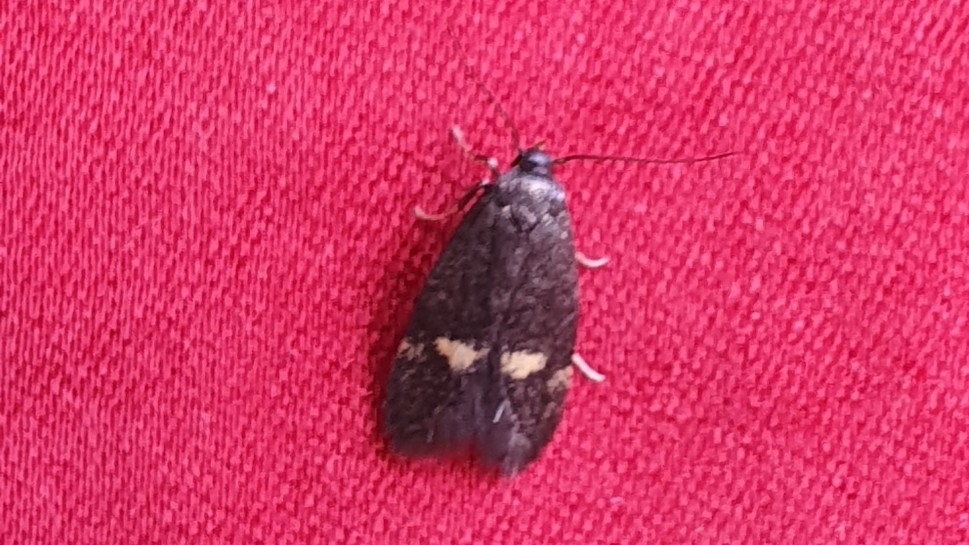
(c) Julien Lepage, some rights reserved (CC BY) · licence
Family: Oecophoridae · Class: Insecta · Order: Lepidoptera
Borkhausenia nefrax is a California animal in the Oecophoridae family.
Borkhausenia nefrax is a small moth species belonging to the family Oecophoridae, a diverse group of concealer moths found worldwide. This species represents one of the lesser-known members of the genus Borkhausenia, which comprises small to medium-sized moths typically characterized by narrow forewings and distinctive wing patterns. Adult moths in this genus generally measure 8 to 15 mm in forewing length, with wingspan typically ranging from 16 to 30 mm, though specific measurements for B. nefrax have not been extensively documented in the literature. The taxonomic placement of Borkhausenia nefrax within the order Lepidoptera reflects its position among the micromoths, a paraphyletic group that includes numerous families of small moths. The Oecophoridae family, to which this species belongs, contains over 3,000 described species globally, with members found on every continent except Antarctica. The genus Borkhausenia was established to accommodate species with specific morphological characteristics, including particular genitalic structures and wing venation patterns that distinguish them from related genera within the subfamily. Detailed information regarding the current distribution and range of Borkhausenia nefrax remains limited in accessible scientific literature. Many species within the Oecophoridae family exhibit restricted ranges or are known from only a few localities, often reflecting limited survey effort rather than actual rarity. The specific geographic distribution of B. nefrax in California, if present in the state, requires further documentation through systematic lepidopteran surveys. Habitat preferences for Borkhausenia nefrax have not been comprehensively documented. Members of the Oecophoridae family typically inhabit diverse environments, from forest understories to grasslands and scrublands. Many species in this family are associated with specific host plants, with larvae often feeding as concealed feeders within plant tissues, including stems, seeds, or decaying organic matter. Some species are found in association with fungal growths or detritus. The life cycle and behavioral ecology of Borkhausenia nefrax remain poorly understood. Like other Oecophoridae species, this moth likely undergoes complete metamorphosis, with eggs developing into larvae that feed within or on plant material before pupating and emerging as adults. Flight periods, mating behaviors, and specific larval feeding habits require additional study. Many species in this family are nocturnal, with adults attracted to artificial lights during evening hours. The conservation status of Borkhausenia nefrax has not been formally assessed by major conservation organizations. The species lacks federal or state listing status, and its global conservation rank remains unassigned. This absence of status designation likely reflects insufficient data rather than confirmed security. Many microlepidoptera species face challenges from habitat loss, pesticide use, and climate change, though the specific threats affecting B. nefrax cannot be determined without additional ecological research. Comprehensive surveys of California's lepidopteran fauna would help clarify the status and distribution of this and other poorly known moth species.
Classification
Class: Insecta · Order: Lepidoptera · Family: Oecophoridae
Frequently asked questions
How is Borkhausenia nefrax classified?
Borkhausenia nefrax belongs to class Insecta, order Lepidoptera, family Oecophoridae.
What family does Borkhausenia nefrax belong to?
Borkhausenia nefrax is in the Oecophoridae family.
What is Borkhausenia nefrax?
Borkhausenia nefrax is a small moth species belonging to the family Oecophoridae, a diverse group of concealer moths found worldwide.
Is Borkhausenia nefrax found in California?
Yes. Borkhausenia nefrax is recorded in California in The California Species Project's catalogue.
Related species
Other California species in the same genus, family, or bioregion.
Data from The California Species Project — 14,000+ California species with verified data from CNPS, CDFW, USFWS, and more.