Botaurus exilis
Least Bittern
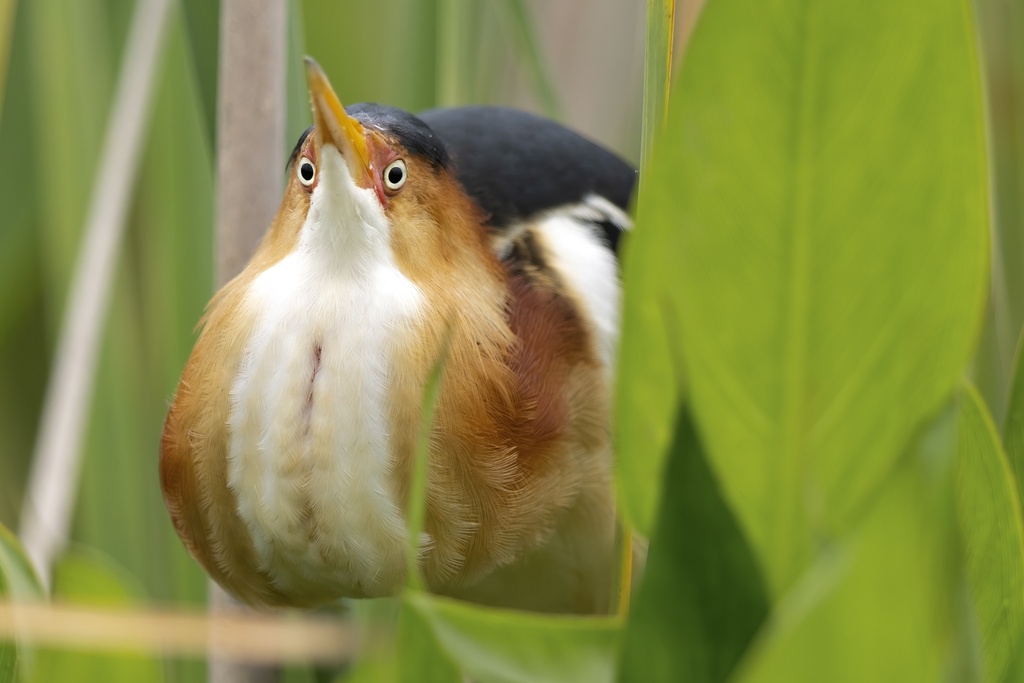
(c) Matt Felperin, some rights reserved (CC BY) · licence
Family: Ardeidae · Class: Aves · Order: Pelecaniformes
Conservation status: G4 S2
Botaurus exilis (Least Bittern) is a California animal in the Ardeidae family.
The Least Bittern is the smallest heron species in North America, measuring 28 to 36 cm (11 to 14 inches) in length with a wingspan of 41 to 46 cm (16 to 18 inches). Adults weigh 60 to 95 grams (2.1 to 3.4 ounces). Males display striking plumage with a black crown and back contrasting against buff-colored sides and neck. The wings show distinctive light patches visible in flight. Females and juveniles are brownish with streaked backs and lighter underparts. Both sexes possess long, pointed bills adapted for spearing prey and elongated toes for gripping marsh vegetation. The species ranges across much of North America, from southern Canada to Central America. In California, Least Bitterns historically occurred throughout the Central Valley and coastal regions but have experienced significant range contraction. Current breeding populations are concentrated in the Sacramento-San Joaquin Delta, San Francisco Bay salt ponds, and scattered locations in Southern California including the Salton Sea region. The species is a partial migrant, with some California populations resident year-round while others migrate south in winter. Least Bitterns inhabit freshwater and brackish marshes with dense emergent vegetation, particularly cattail (Typha species) and bulrush (Scirpus species) stands. They require water depths of 15 to 61 cm (6 to 24 inches) with at least 50% vegetative cover. The species shows strong preference for marsh edges and openings within cattail beds where prey concentrates. Optimal habitat includes a mosaic of open water, dense cover, and shallow foraging areas. These secretive birds are primarily crepuscular, most active during dawn and dusk periods. Their diet consists mainly of small fish, frogs, aquatic insects, crayfish, and occasionally small snakes and mice. Least Bitterns employ a freeze posture when threatened, pointing their bills upward and compressing their bodies to blend with vertical marsh vegetation. Breeding occurs from April through August in California. Females construct platform nests 15 to 30 cm (6 to 12 inches) above water level, typically placing them in cattail clumps. Clutch size ranges from 2 to 7 eggs, with an average of 4 to 5. Incubation lasts 17 to 20 days, and young fledge after 25 to 35 days. The Least Bittern holds no federal listing status but is classified as a Species of Special Concern in California, reflecting the state's S2 rank indicating imperiled status. According to the North American Breeding Bird Survey, populations have declined by approximately 1.8% annually range-wide since 1966. Primary threats include wetland habitat loss and degradation, water level fluctuations from water management, invasive plant species that alter marsh structure, and urban development pressure on remaining wetland areas. Climate change poses additional challenges through altered precipitation patterns and temperature increases affecting marsh hydrology. Conservation efforts focus on wetland restoration, water level management in existing habitats, and invasive species control.
Classification
Class: Aves · Order: Pelecaniformes · Family: Ardeidae
Conservation status
G4 S2
Frequently asked questions
How is Botaurus exilis classified?
Botaurus exilis belongs to class Aves, order Pelecaniformes, family Ardeidae.
What family does Botaurus exilis belong to?
Botaurus exilis is in the Ardeidae family.
Is Botaurus exilis protected or of conservation concern?
Botaurus exilis carries the following status: G4 S2.
What is Botaurus exilis?
The Least Bittern is the smallest heron species in North America, measuring 28 to 36 cm (11 to 14 inches) in length with a wingspan of 41 to 46 cm (16 to 18 inches).
Is Botaurus exilis found in California?
Yes. Botaurus exilis is recorded in California in The California Species Project's catalogue.
Related species
Other California species in the same genus, family, or bioregion.
Data from The California Species Project — 14,000+ California species with verified data from CNPS, CDFW, USFWS, and more.