Botaurus lentiginosus
American Bittern
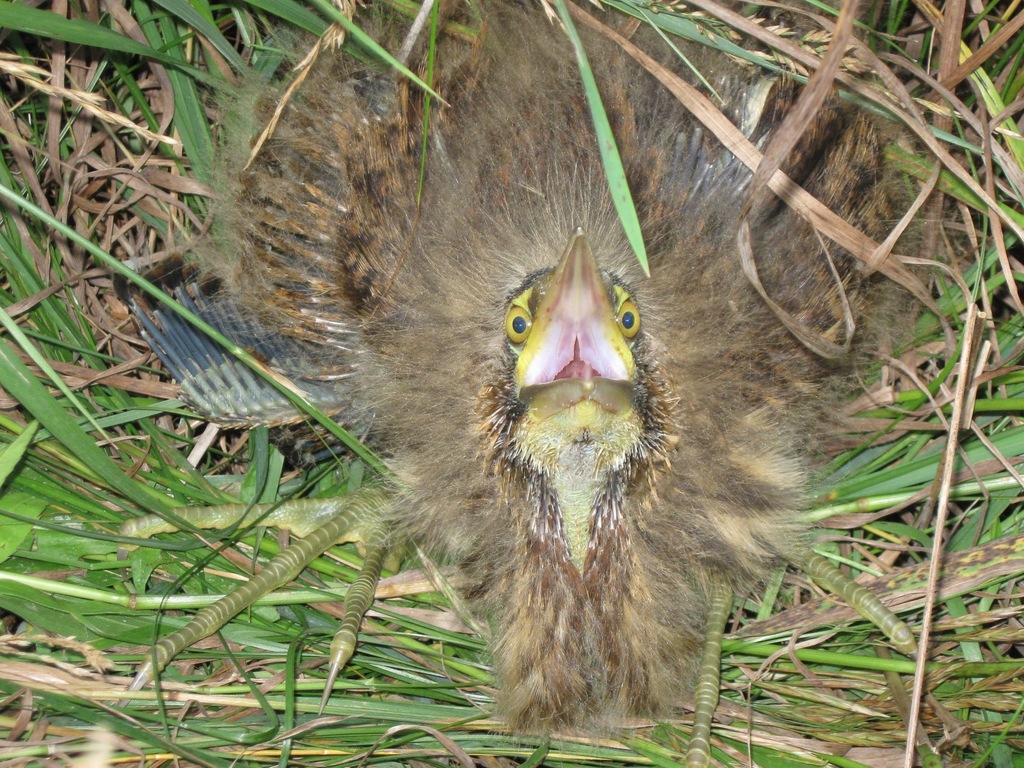
no rights reserved · CC0
Family: Ardeidae · Class: Aves · Order: Pelecaniformes
Conservation status: G5 S3S4
Botaurus lentiginosus (American Bittern) is a California animal in the Ardeidae family.
The American bittern is a medium-sized wading bird measuring 58-85 cm (23-33 inches) in length with a wingspan of 92-115 cm (36-45 inches). Adults weigh between 370-1,072 grams (0.8-2.4 pounds). The species displays cryptic brown and buff plumage with heavy dark streaking throughout the body and wings. The neck and underparts show prominent vertical dark brown stripes on a buff background. The bill is yellow to yellow-green, relatively thick and pointed, measuring 7-9 cm (2.8-3.5 inches) in length. Males and females appear similar, though males average slightly larger. Juveniles resemble adults but show more rufous tones and less distinct streaking patterns. Historically, American bitterns bred throughout much of North America from southern Canada to the northern United States. In California, the species occurs primarily as a year-round resident and winter visitor in the Central Valley, with breeding populations documented in the Sacramento-San Joaquin Delta, San Francisco Bay Area, and scattered locations in northeastern California. According to the North American Breeding Bird Survey, California populations have experienced declining trends since the 1960s, with current breeding range significantly reduced from historical distribution. American bitterns inhabit freshwater and brackish wetlands with dense emergent vegetation, particularly cattail (Typha species) and bulrush (Scirpus species) marshes. The species requires water depths of 15-60 cm (6-24 inches) and extensive stands of tall emergent cover for nesting and foraging. Suitable habitat includes natural wetlands, managed waterfowl areas, and constructed treatment wetlands. Breeding territories typically encompass 0.5-2 hectares of appropriate marsh habitat. American bitterns are secretive, solitary birds that rely on camouflage and concealment behaviors. When threatened, individuals freeze with bills pointed upward, aligning body posture with vertical marsh vegetation. The species is primarily crepuscular and nocturnal in activity patterns. Diet consists primarily of fish, frogs, aquatic invertebrates, small mammals, and reptiles. Males produce distinctive low-frequency booming calls during breeding season, audible up to 0.8 km (0.5 miles) away. Breeding occurs from April through July in California. Females construct platform nests 15-40 cm above water level in dense emergent vegetation. Clutch size ranges from 2-5 eggs, with incubation lasting 24-28 days. Young fledge at 6-7 weeks but remain dependent on adults for several additional weeks. The American bittern is not federally listed but receives protection under the Migratory Bird Treaty Act. According to NatureServe, the species has a global conservation status of G4 (apparently secure) but faces regional declines. In California, American bitterns are considered a species of special concern due to habitat loss and population trends. Primary threats include wetland habitat loss and degradation, water diversions affecting marsh hydrology, invasive plant species altering vegetation structure, and urban development pressure on remaining wetland areas. The North American Bird Conservation Initiative identifies American bitterns as a species of continental concern, emphasizing the need for wetland conservation and restoration efforts. Conservation efforts focus on protecting and restoring emergent marsh habitats, maintaining appropriate water levels in managed wetlands, and controlling invasive vegetation that reduces habitat quality.
Classification
Class: Aves · Order: Pelecaniformes · Family: Ardeidae
Conservation status
G5 S3S4
Frequently asked questions
How is Botaurus lentiginosus classified?
Botaurus lentiginosus belongs to class Aves, order Pelecaniformes, family Ardeidae.
What family does Botaurus lentiginosus belong to?
Botaurus lentiginosus is in the Ardeidae family.
Is Botaurus lentiginosus protected or of conservation concern?
Botaurus lentiginosus carries the following status: G5 S3S4.
What is Botaurus lentiginosus?
The American bittern is a medium-sized wading bird measuring 58-85 cm (23-33 inches) in length with a wingspan of 92-115 cm (36-45 inches).
Is Botaurus lentiginosus found in California?
Yes. Botaurus lentiginosus is recorded in California in The California Species Project's catalogue.
Related species
Other California species in the same genus, family, or bioregion.
Data from The California Species Project — 14,000+ California species with verified data from CNPS, CDFW, USFWS, and more.