Brachydesmus superus
Compact Flat-backed Millipede
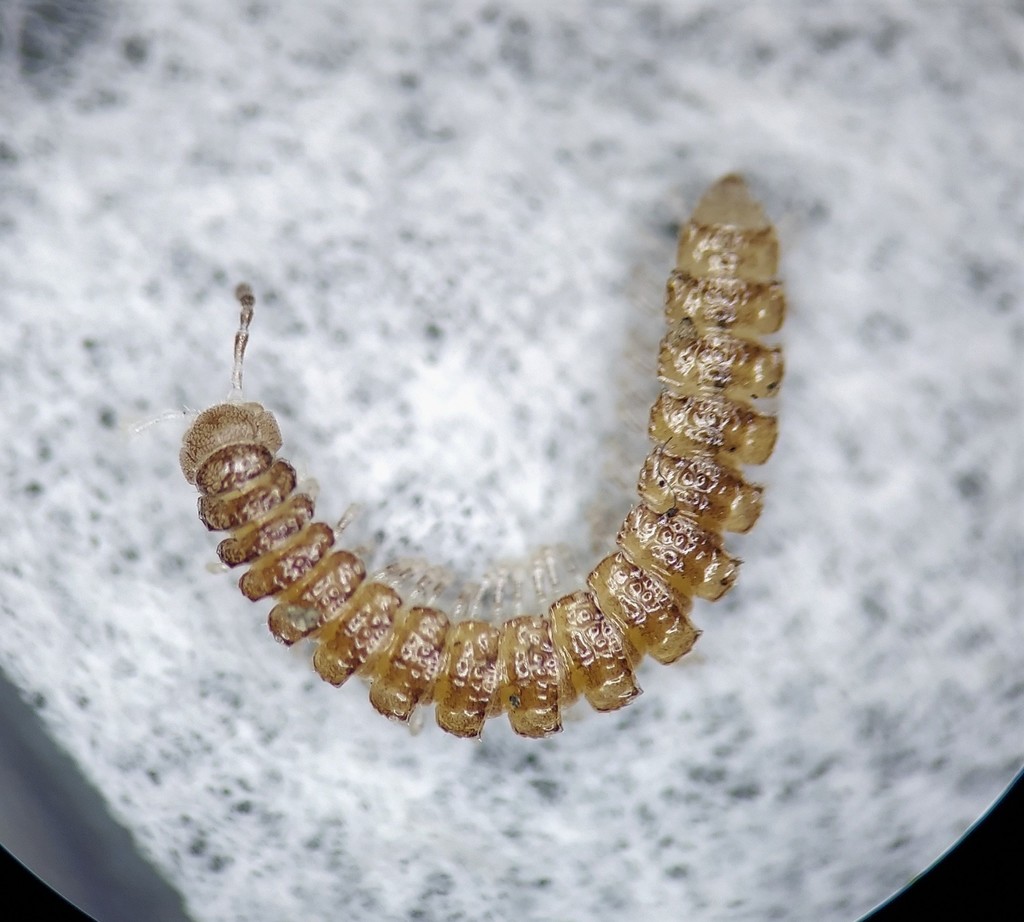
(c) Derek Hennen, some rights reserved (CC BY) · licence
Family: Polydesmidae · Class: Diplopoda · Order: Polydesmida
Brachydesmus superus (Compact Flat-backed Millipede) is a California animal in the Polydesmidae family.
Brachydesmus superus is a small millipede belonging to the family Polydesmidae within the order Polydesmida. This species exhibits the characteristic flat-backed body form typical of polydesmid millipedes, with segmented body sections bearing lateral projections called paranota that extend outward from each segment. Adults typically measure 10-20 mm in length, though specific morphometric data for this species remains limited in published literature. The range and distribution of B. superus in California have not been comprehensively documented in available scientific literature. Current knowledge of polydesmid millipede distributions in North America suggests these arthropods often occupy restricted geographic ranges, but specific locality records for B. superus require further field survey work to establish definitive boundaries. Like other members of the Polydesmidae, B. superus likely inhabits terrestrial environments where moisture levels remain relatively stable. Polydesmid millipedes typically occur in leaf litter, under decaying logs, beneath stones, and in soil layers rich in organic matter. These microhabitats provide the humid conditions necessary for millipede survival, as their exoskeleton offers limited protection against desiccation. The species probably favors areas with established vegetation that creates shade and retains soil moisture. As a detritivorous arthropod, B. superus feeds primarily on decomposing organic matter including fallen leaves, decaying wood fragments, and other plant debris. This feeding behavior contributes to nutrient cycling in terrestrial ecosystems by breaking down complex organic compounds into simpler forms available to plants and other organisms. Reproductive biology follows the typical millipede pattern, with females depositing eggs in soil chambers or organic substrates. Development proceeds through multiple molts, with juveniles gradually acquiring additional body segments and legs until reaching adult form. The conservation status of B. superus has not been formally assessed by state or federal agencies. No listing status exists under the Endangered Species Act, and the species does not appear on California Department of Fish and Wildlife tracking lists as of December 2025. This absence from conservation databases likely reflects limited research attention rather than confirmed population stability. Many invertebrate species, particularly soil-dwelling arthropods like millipedes, remain understudied regarding population trends and conservation needs. Scientific documentation for this species remains limited despite searches of major taxonomic and conservation databases. Knowledge gaps exist regarding specific habitat requirements, population distribution, reproductive ecology, and potential threats. The taxonomic validity and relationship to closely related Brachydesmus species may require molecular analysis to clarify species boundaries. We welcome contributions of verified scientific data, photographs, or field observations to enhance this species account. Additional research is needed to assess conservation status and develop appropriate management recommendations for B. superus populations in California.
Classification
Class: Diplopoda · Order: Polydesmida · Family: Polydesmidae
Frequently asked questions
How is Brachydesmus superus classified?
Brachydesmus superus belongs to class Diplopoda, order Polydesmida, family Polydesmidae.
What family does Brachydesmus superus belong to?
Brachydesmus superus is in the Polydesmidae family.
What is Brachydesmus superus?
Brachydesmus superus is a small millipede belonging to the family Polydesmidae within the order Polydesmida.
Is Brachydesmus superus found in California?
Yes. Brachydesmus superus is recorded in California in The California Species Project's catalogue.
Related species
Other California species in the same genus, family, or bioregion.
Data from The California Species Project — 14,000+ California species with verified data from CNPS, CDFW, USFWS, and more.