Brachymelecta californica
California Digger-cuckoo Bee
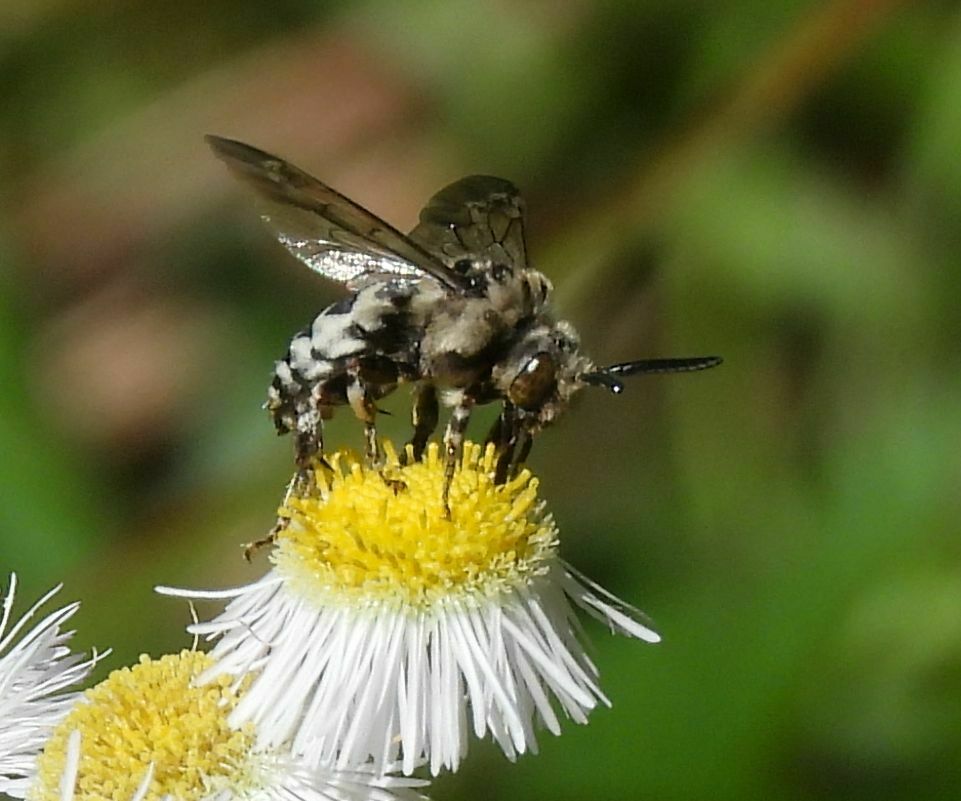
(c) ncb1221, some rights reserved (CC BY) · licence
Family: Apidae · Class: Insecta · Order: Hymenoptera
Brachymelecta californica (California Digger-cuckoo Bee) is a California animal in the Apidae family.
The California Digger-cuckoo Bee (Brachymelecta californica) is a medium-sized cleptoparasitic bee in the family Apidae, tribe Melectini. Females measure 8 to 14 mm in length, while males are slightly larger at 9 to 18 mm. The species displays a distinctive black and white coloration pattern, with medially broken bands of appressed white or rarely pale brown hairs across the terga (abdominal segments). Like all members of the Melectini tribe, this species lacks a scopa (pollen-carrying structure), reflecting its parasitic lifestyle (BugGuide 2025). The California Digger-cuckoo Bee is endemic to western North America, with its range extending along the Pacific Coast from central California northward. According to NatureServe, the species has a range extent exceeding 2.5 million square kilometers, indicating a relatively broad distribution across suitable habitat (NatureServe 2025). Within California, the species occurs in various locations including the Carrizo Plain, though comprehensive distributional surveys remain limited. This species inhabits arid and semi-arid environments typical of California's interior valleys and coastal ranges. Based on photographic records, the species has been documented in grassland and shrubland habitats, often in areas with sandy or well-drained soils that support ground-nesting bee communities. The species appears to be active during spring and early summer months, coinciding with the flight periods of its host species. As a cleptoparasitic bee, Brachymelecta californica does not collect pollen or nectar for its own offspring. Instead, females locate the nests of solitary ground-nesting bees, enter the host's brood cells, and lay their eggs alongside or in place of the host's eggs. The developing Brachymelecta larvae then consume the host's provisions and may also consume the host larva. The specific host relationships for B. californica have not been comprehensively documented, though related Brachymelecta species typically parasitize various ground-nesting bees in the families Andrenidae, Halictidae, and Colletidae. Adults are occasionally observed visiting flowers, likely feeding on nectar for their own energy requirements rather than collecting resources for offspring. The conservation status of the California Digger-cuckoo Bee has not been formally evaluated at federal or state levels. Like many specialized parasitic species, B. californica faces indirect threats through impacts to its host bee populations. Habitat loss from urban development, agricultural intensification, and altered land management practices may affect both the species and its hosts. Climate change could alter the timing of host bee emergence, potentially disrupting the synchronization required for successful parasitism. The species' dependence on healthy populations of ground-nesting bees makes it particularly vulnerable to factors affecting native bee communities, including pesticide use, habitat fragmentation, and competition from non-native species. Scientific documentation for this species remains limited, and comprehensive studies of its ecology, host relationships, and population status are needed to better understand its conservation requirements.
Classification
Class: Insecta · Order: Hymenoptera · Family: Apidae
Frequently asked questions
How is Brachymelecta californica classified?
Brachymelecta californica belongs to class Insecta, order Hymenoptera, family Apidae.
What family does Brachymelecta californica belong to?
Brachymelecta californica is in the Apidae family.
What is Brachymelecta californica?
The California Digger-cuckoo Bee (Brachymelecta californica) is a medium-sized cleptoparasitic bee in the family Apidae, tribe Melectini.
Is Brachymelecta californica found in California?
Yes. Brachymelecta californica is recorded in California in The California Species Project's catalogue.
Related species
Other California species in the same genus, family, or bioregion.
Data from The California Species Project — 14,000+ California species with verified data from CNPS, CDFW, USFWS, and more.