Brachyramphus perdix
Long-billed Murrelet
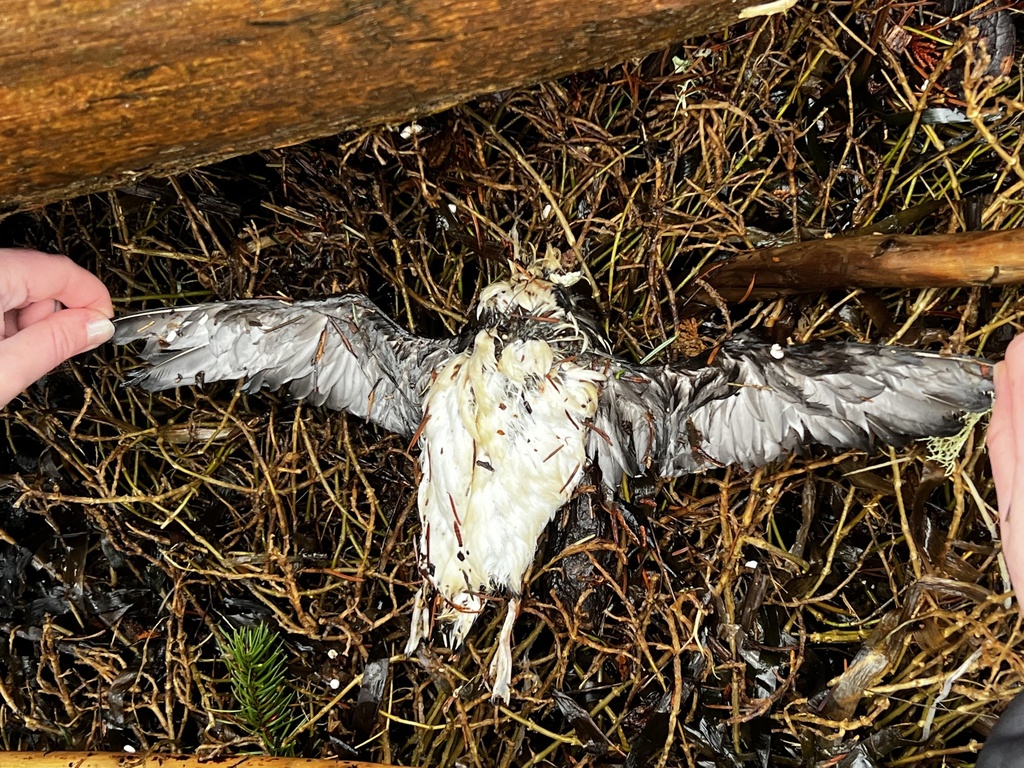
(c) Aiva Noringseth, some rights reserved (CC BY) · licence
Family: Alcidae · Class: Aves · Order: Charadriiformes
Brachyramphus perdix (Long-billed Murrelet) is a California animal in the Alcidae family.
The Long-billed Murrelet is a small seabird in the auk family (Alcidae) that inhabits the North Pacific Ocean. Adults measure approximately 25-28 cm (9.8-11.0 inches) in length with a wingspan of 40-43 cm (15.7-16.9 inches) and weigh 160-220 grams (5.6-7.8 ounces). During breeding season, adults display dark brownish-black upperparts with white underparts heavily barbled with dark brown markings. The species exhibits a relatively long, thin bill compared to its close relative, the Marbled Murrelet. Non-breeding plumage shows darker upperparts and cleaner white underparts with reduced barring. Juveniles resemble non-breeding adults but with more pronounced scaling on the back. The Long-billed Murrelet breeds primarily along the coastlines of the Sea of Okhotsk, Kamchatka Peninsula, and the Commander Islands. During winter months, the species migrates south along the Pacific coast, with regular occurrences recorded in California waters from October through April. Most California records come from offshore waters between Monterey Bay and Point Reyes, though individuals have been documented as far south as Orange County. The species is considered a rare but regular winter visitor to California's nearshore marine environment. Long-billed Murrelets inhabit pelagic marine waters, typically remaining within 50 kilometers of shore during winter. The species shows preference for areas with upwelling currents that concentrate prey species. Unlike tree-nesting Marbled Murrelets, Long-billed Murrelets nest on the ground in coastal areas, selecting sites on cliff ledges, rocky slopes, and tundra vegetation near the breeding colonies. During the non-breeding season in California waters, they are most commonly observed in areas with depths ranging from 20-100 meters. The species feeds primarily on small schooling fish including anchovies, sardines, and juvenile rockfish, along with euphausiid shrimp and other marine invertebrates. Long-billed Murrelets are pursuit divers, using their wings for underwater propulsion while hunting prey. Breeding occurs from May through August in northern Pacific colonies, with females typically laying a single egg in ground scrapes lined with vegetation. The species exhibits colonial nesting behavior, often in association with other alcid species. Pairs share incubation duties for approximately 30 days, with chicks fledging after 35-40 days. The Long-billed Murrelet is not federally listed under the Endangered Species Act, nor does it hold special status in California as of December 2025. However, the species faces conservation challenges in its breeding range due to habitat degradation, introduced predators at nesting colonies, and climate change impacts on marine food webs. Bycatch in fishing operations and oil spill risks pose additional threats throughout its range. Population trends remain difficult to assess due to the species' pelagic nature and remote breeding locations, though some breeding colonies have experienced documented declines due to predation by introduced mammals.
Classification
Class: Aves · Order: Charadriiformes · Family: Alcidae
Frequently asked questions
How is Brachyramphus perdix classified?
Brachyramphus perdix belongs to class Aves, order Charadriiformes, family Alcidae.
What family does Brachyramphus perdix belong to?
Brachyramphus perdix is in the Alcidae family.
What is Brachyramphus perdix?
The Long-billed Murrelet is a small seabird in the auk family (Alcidae) that inhabits the North Pacific Ocean.
Is Brachyramphus perdix found in California?
Yes. Brachyramphus perdix is recorded in California in The California Species Project's catalogue.
Related species
Other California species in the same genus, family, or bioregion.
Data from The California Species Project — 14,000+ California species with verified data from CNPS, CDFW, USFWS, and more.