Bradynotes obesa
Slow Mountain Grasshopper
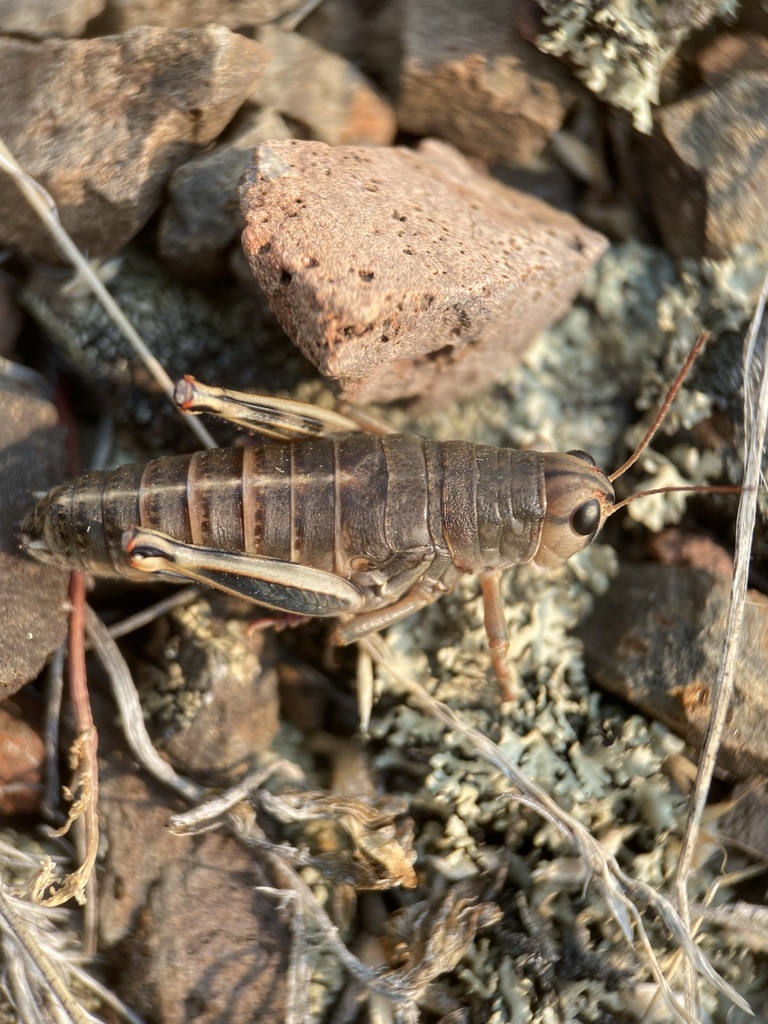
(c) Matt Berger, some rights reserved (CC BY) · licence
Family: Acrididae · Class: Insecta · Order: Orthoptera
Bradynotes obesa (Slow Mountain Grasshopper) is a California animal in the Acrididae family.
The Slow Mountain Grasshopper (Bradynotes obesa) is a member of the family Acrididae found in western North America. This species is part of the genus Bradynotes, which includes several subspecies or forms that have been recognized by taxonomists, including B. obesa caurus and B. obesa referta, though the taxonomic relationships within this group require further study. Bradynotes obesa exhibits the typical grasshopper body plan with well-developed hind legs adapted for jumping. Like other members of the Acrididae family, it possesses chewing mouthparts and antennae that are generally shorter than the body length. The common name "Slow Mountain Grasshopper" suggests this species may be less active or agile compared to other grasshopper species, though specific behavioral studies documenting this characteristic are limited. The species occurs in mountainous regions of the western United States, with records indicating its presence in California and potentially other western states. The U.S. Fish and Wildlife Service maintains taxonomic records for this species and its subspecies, suggesting it may be of conservation interest or part of broader biodiversity monitoring efforts. However, specific distribution data and county-level occurrence records have not been well documented in available literature. Habitat preferences for Bradynotes obesa have not been thoroughly characterized in published studies. Based on its common name and the general ecology of related grasshopper species, it likely inhabits montane environments, potentially including meadows, grasslands, or open areas within forested landscapes at higher elevations. Many Acrididae species are associated with specific plant communities that provide both food resources and appropriate microhabitats for reproduction and development. Like other grasshoppers, Bradynotes obesa is presumably herbivorous, feeding on various grasses and forbs within its habitat. Specific host plant relationships and dietary preferences have not been documented. The species likely follows a typical orthopteran life cycle with egg, nymphal, and adult stages, though detailed information about reproduction, seasonal activity patterns, and development is lacking in current literature. The conservation status of the Slow Mountain Grasshopper is not well established. While the species appears in U.S. Fish and Wildlife Service taxonomic databases, it does not currently hold federal protection status under the Endangered Species Act. The lack of comprehensive population data and ecological studies makes it difficult to assess conservation needs or population trends. As with many invertebrate species, particularly those in montane environments, climate change and habitat modification could pose potential threats, but specific vulnerabilities have not been evaluated. Scientific documentation for this species remains limited. The information presented here is based on available taxonomic records and general knowledge of grasshopper ecology. If you have additional verified information about this species' biology, distribution, or ecology, please contact Species List Pro to help improve this species account.
Classification
Class: Insecta · Order: Orthoptera · Family: Acrididae
Frequently asked questions
How is Bradynotes obesa classified?
Bradynotes obesa belongs to class Insecta, order Orthoptera, family Acrididae.
What family does Bradynotes obesa belong to?
Bradynotes obesa is in the Acrididae family.
What is Bradynotes obesa?
The Slow Mountain Grasshopper (Bradynotes obesa) is a member of the family Acrididae found in western North America.
Is Bradynotes obesa found in California?
Yes. Bradynotes obesa is recorded in California in The California Species Project's catalogue.
Related species
Other California species in the same genus, family, or bioregion.
Data from The California Species Project — 14,000+ California species with verified data from CNPS, CDFW, USFWS, and more.