Branchinecta conservatio
Conservancy fairy shrimp
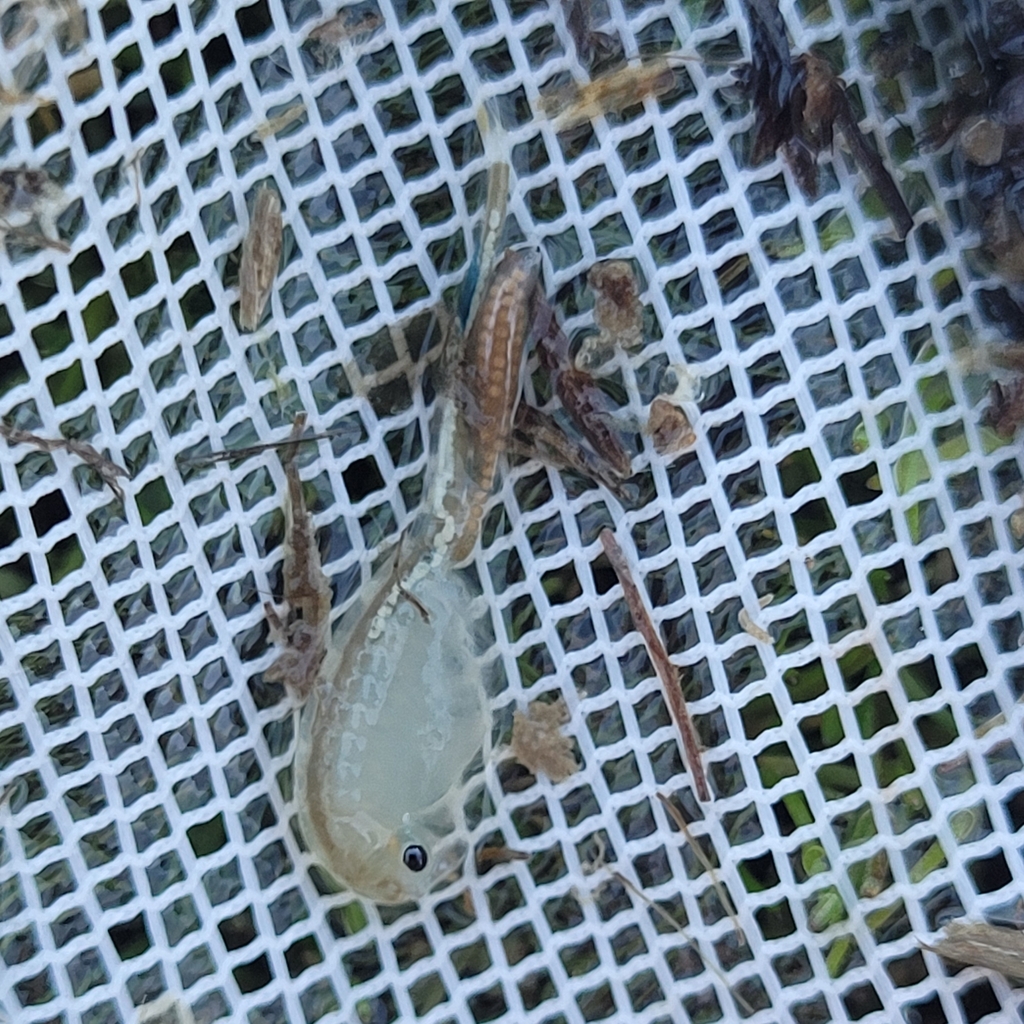
(c) Konshau Duman, some rights reserved (CC BY) · licence
Family: Branchinectidae · Class: Branchiopoda · Order: Anostraca
Conservation status: Endangered · G2 S2
Branchinecta conservatio (Conservancy fairy shrimp) is a California animal in the Branchinectidae family.
The Conservancy fairy shrimp is a small freshwater crustacean belonging to the ancient order Anostraca. Adults measure 0.12 to 1.5 inches (3 to 38 mm) in length, with slender bodies and large, stalked compound eyes. Like other fairy shrimp, they possess eleven pairs of phyllopods that function both as swimming legs and gills. Males are distinguished by specialized antennae characteristics, while females can be identified by the size and shape of their brood pouch. Unlike marine shrimp, fairy shrimp lack a hard outer shell and swim upside down using a wavelike beating motion of their legs. Conservancy fairy shrimp are endemic to California and extremely rare, with only 10 known populations as of December 2025 (USFWS). The species is primarily restricted to California's Central Valley, ranging from Tehama County in the north to Merced County in the south. One outlying population exists in Ventura County's Interior Coast Ranges. This limited distribution reflects severe habitat loss throughout their historical range. The species exclusively inhabits vernal pools, particularly large, turbid freshwater pools called playa pools. These temporary wetlands fill with winter and spring rains and typically dry completely by late summer. Conservancy fairy shrimp require relatively large vernal pools that hold water long enough for their complete life cycle, generally 2 to 12 inches in depth. Pool water must remain fresh throughout the hydroperiod, as the species cannot tolerate saline conditions. Conservancy fairy shrimp exhibit typical fairy shrimp ecology and behavior. Reproduction begins when seasonal rainfall fills pools and initiates egg hatching from dormant cysts. Individuals hatch and mature within 7 to 14 days of pool filling, depending on water temperature. The species feeds on algae, diatoms, and particulate organic matter suspended in the water column. During their brief active period, typically lasting several weeks to a few months, adults reproduce and females produce drought-resistant cysts. These cysts either drop to the pool bottom or remain in the female's brood sac until death. The cysts can withstand temperature extremes and prolonged drying periods, allowing the species to survive between suitable wet years. The U.S. Fish and Wildlife Service listed the Conservancy fairy shrimp as endangered under the Endangered Species Act, with critical habitat designated on February 10, 2006 (USFWS). The species was named for The Nature Conservancy, which has protected several vernal pool ecosystems supporting fairy shrimp populations. Primary threats include habitat loss from agricultural conversion and urban development, altered hydrology from water diversions and flood control, invasive plant species that change pool dynamics, and climate change affecting precipitation patterns. The species' extremely limited distribution and small population size make it particularly vulnerable to extinction. Most remaining populations are now protected within conservation areas, though ongoing monitoring and habitat management remain critical for species survival.
Classification
Class: Branchiopoda · Order: Anostraca · Family: Branchinectidae
Conservation status
Endangered · G2 S2
Frequently asked questions
How is Branchinecta conservatio classified?
Branchinecta conservatio belongs to class Branchiopoda, order Anostraca, family Branchinectidae.
What family does Branchinecta conservatio belong to?
Branchinecta conservatio is in the Branchinectidae family.
Is Branchinecta conservatio protected or of conservation concern?
Branchinecta conservatio carries the following status: Endangered · G2 S2.
What is Branchinecta conservatio?
The Conservancy fairy shrimp is a small freshwater crustacean belonging to the ancient order Anostraca.
Is Branchinecta conservatio found in California?
Yes. Branchinecta conservatio is recorded in California in The California Species Project's catalogue.
Related species
Other California species in the same genus, family, or bioregion.
Data from The California Species Project — 14,000+ California species with verified data from CNPS, CDFW, USFWS, and more.