Branchinecta lynchi
Vernal pool fairy shrimp
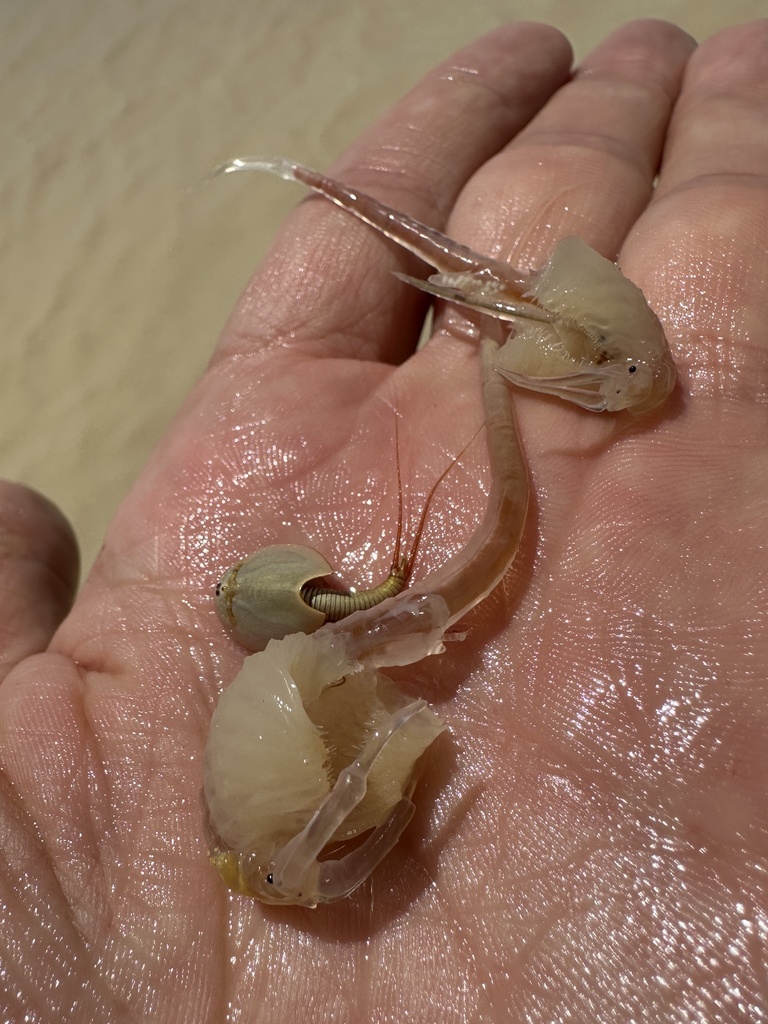
(c) Matt Berger, some rights reserved (CC BY) · licence
Family: Branchinectidae · Class: Branchiopoda · Order: Anostraca
Conservation status: Threatened · G3 S3
Branchinecta lynchi (Vernal pool fairy shrimp) is a California animal in the Branchinectidae family.
The vernal pool fairy shrimp is a small freshwater crustacean measuring 3 to 38 millimeters (0.12 to 1.5 inches) in length, belonging to the ancient order Anostraca. Like other anostracans, it possesses stalked compound eyes and eleven pairs of phyllopods that function as both swimming legs and gills. Males are distinguished by their modified second antennae, while females can be identified by the size and shape of their brood pouch. The translucent body allows internal structures to be visible, and the species swims in a characteristic upside-down position. Vernal pool fairy shrimp are endemic to California and southern Oregon, with the widest geographic range among federally listed vernal pool crustaceans (USFWS 2024). The species currently occurs in 32 counties across California's Central Valley, central coast, and southern California, extending from Shasta County in the north to Tulare County in the south, and along the central coast range from northern Solano County to San Benito County. An isolated population exists in Jackson County, southern Oregon. Since listing, surveys have expanded the known range, with the species now documented in 13 of 17 recognized vernal pool regions. This species inhabits ephemeral freshwater pools that fill seasonally with winter and spring rains. Vernal pool fairy shrimp occupy an extremely wide range of pool sizes, from small puddles only 3 centimeters deep covering 0.56 square meters to pools up to 10 hectares in area (Eriksen and Belk 1999). They have been found at elevations ranging from sea level to over 1,200 meters, in pools with varying water chemistry and turbidity levels. The species requires pools that maintain water for sufficient time to complete their life cycle, typically several weeks to months. Vernal pool fairy shrimp have adapted life histories to match the ephemeral nature of their habitat. Adults hatch from drought-resistant cysts when pools fill with water, rapidly mature, reproduce, and die before pools dry. The species is capable of completing its entire life cycle in temporary waters that may persist for only weeks. Reproduction occurs through sexual reproduction, with females carrying developing embryos in specialized brood pouches. When environmental conditions become unfavorable, embryos enter a dormant cyst stage that can survive extended dry periods and extreme temperatures. The vernal pool fairy shrimp was listed as threatened under the Endangered Species Act on September 19, 1994. Critical habitat was designated on February 10, 2006, covering approximately 1.36 million acres across multiple California counties. Primary threats include habitat loss and fragmentation due to agricultural conversion, urban development, and infrastructure projects. Additional threats include altered hydrology from water diversions, invasive species, pollution from agricultural runoff and urban sources, and climate change impacts on precipitation patterns. The species occurs in 45 of 85 designated core recovery areas, with ongoing conservation efforts focused on habitat protection, restoration, and population monitoring through federal and state agencies and private conservation organizations.
Classification
Class: Branchiopoda · Order: Anostraca · Family: Branchinectidae
Conservation status
Threatened · G3 S3
Frequently asked questions
How is Branchinecta lynchi classified?
Branchinecta lynchi belongs to class Branchiopoda, order Anostraca, family Branchinectidae.
What family does Branchinecta lynchi belong to?
Branchinecta lynchi is in the Branchinectidae family.
Is Branchinecta lynchi protected or of conservation concern?
Branchinecta lynchi carries the following status: Threatened · G3 S3.
What is Branchinecta lynchi?
The vernal pool fairy shrimp is a small freshwater crustacean measuring 3 to 38 millimeters (0.12 to 1.5 inches) in length, belonging to the ancient order Anostraca.
Is Branchinecta lynchi found in California?
Yes. Branchinecta lynchi is recorded in California in The California Species Project's catalogue.
Related species
Other California species in the same genus, family, or bioregion.
Data from The California Species Project — 14,000+ California species with verified data from CNPS, CDFW, USFWS, and more.