Branchinecta mesovallensis
Midvalley Fairy Shrimp
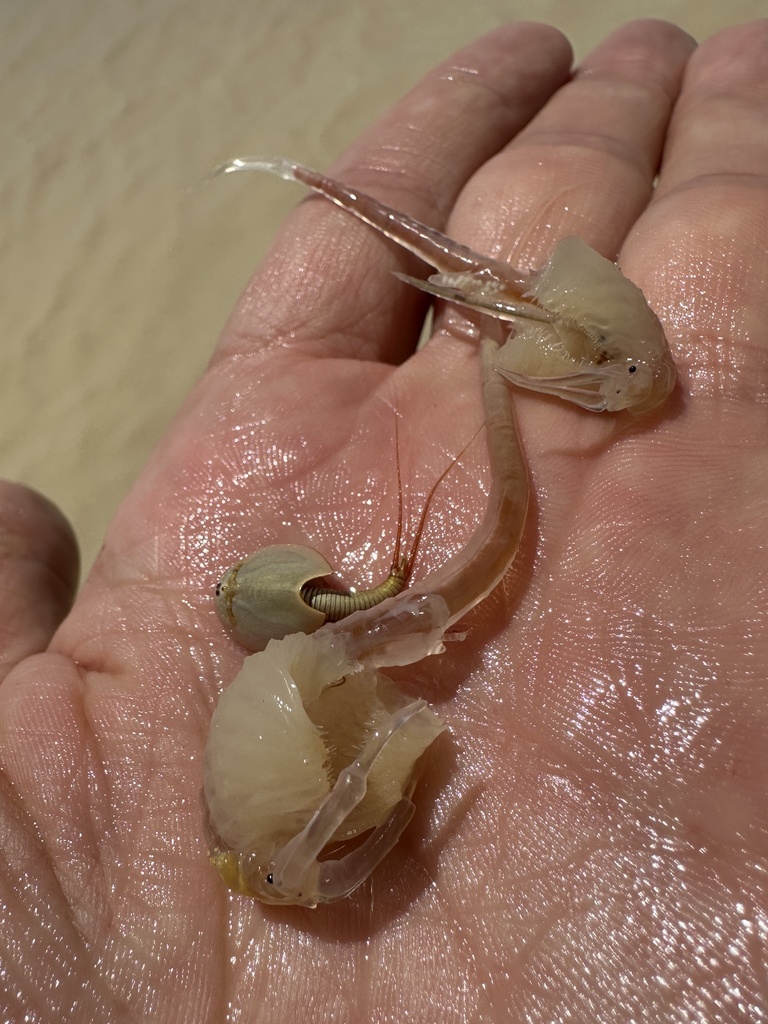
(c) Matt Berger, some rights reserved (CC BY) · licence
Family: Branchinectidae · Class: Branchiopoda · Order: Anostraca
Conservation status: G2 S2S3
Branchinecta mesovallensis (Midvalley Fairy Shrimp) is a California animal in the Branchinectidae family.
The Midvalley fairy shrimp is a small freshwater crustacean in the order Anostraca, distinguished by its translucent body and distinctive swimming pattern. Adults typically measure 11 to 25 mm (0.4 to 1.0 inches) in length, with females being slightly larger than males (USFWS 2005). The species exhibits sexual dimorphism, with males possessing enlarged second antennae used for grasping females during reproduction. Like other fairy shrimp, they swim upside-down using rhythmic movements of their phyllopods (leaf-like appendages), which also function in filter feeding and respiration. Historically, Midvalley fairy shrimp occurred in disjunct populations across California's Central Valley from Shasta County to northern Tulare County, and in the central coast ranges from Solano County to Alameda County. The species' fragmented distribution reflects the patchy nature of suitable vernal pool habitat throughout these regions. Current populations are concentrated in remaining intact vernal pool complexes, though the exact number and size of extant populations require further survey work. Midvalley fairy shrimp are obligate inhabitants of seasonal wetlands, particularly vernal pools and other temporary water bodies that fill during winter and spring rains. These pools typically hold water for 2 to 4 months, providing the specific hydroperiod required for the species' life cycle. The pools are characterized by shallow depths, usually less than one meter, and occur in grassland and oak woodland habitats. Water chemistry varies but generally includes low to moderate salinity levels. The species requires pools that remain inundated long enough for reproduction and cyst development but dry completely to prevent establishment of predatory fish. The species exhibits a typical anostracan life cycle, with drought-resistant cysts hatching when pools fill with water. Development from nauplius larva to reproductive adult occurs over several weeks, with timing dependent on water temperature and food availability. Adults are filter feeders, consuming bacteria, algae, protozoa, and organic detritus suspended in the water column. Reproduction involves internal fertilization, with females carrying fertilized eggs in a ventral brood pouch. As pools begin to dry, females produce drought-resistant cysts that can remain dormant in dried sediments for years until suitable conditions return. Currently, the Midvalley fairy shrimp lacks federal protection under the Endangered Species Act, though the U.S. Fish and Wildlife Service conducted a 90-day finding for a petition to list the species as endangered and initiated a status review. The species is assigned a global rank of G2 (imperiled) and state rank of S2S3 (imperiled to vulnerable) by NatureServe, reflecting significant conservation concern. Primary threats include habitat loss due to agricultural conversion, urban development, and hydrological modifications that alter natural flooding patterns. Climate change poses additional risks through altered precipitation patterns that may affect the timing and duration of pool inundation. Conservation efforts focus on protecting remaining vernal pool complexes and maintaining natural watershed processes that sustain seasonal flooding patterns essential for the species' survival.
Classification
Class: Branchiopoda · Order: Anostraca · Family: Branchinectidae
Conservation status
G2 S2S3
Frequently asked questions
How is Branchinecta mesovallensis classified?
Branchinecta mesovallensis belongs to class Branchiopoda, order Anostraca, family Branchinectidae.
What family does Branchinecta mesovallensis belong to?
Branchinecta mesovallensis is in the Branchinectidae family.
Is Branchinecta mesovallensis protected or of conservation concern?
Branchinecta mesovallensis carries the following status: G2 S2S3.
What is Branchinecta mesovallensis?
The Midvalley fairy shrimp is a small freshwater crustacean in the order Anostraca, distinguished by its translucent body and distinctive swimming pattern.
Is Branchinecta mesovallensis found in California?
Yes. Branchinecta mesovallensis is recorded in California in The California Species Project's catalogue.
Related species
Other California species in the same genus, family, or bioregion.
Data from The California Species Project — 14,000+ California species with verified data from CNPS, CDFW, USFWS, and more.