Branchinecta sandiegonensis
San Diego fairy shrimp
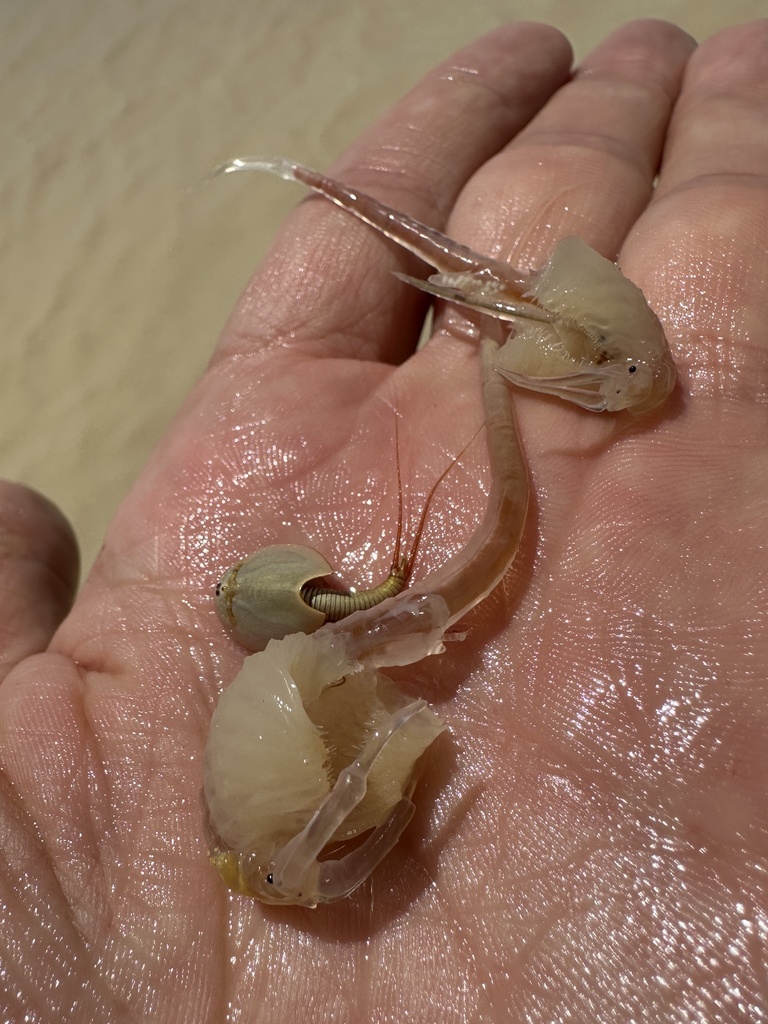
(c) Matt Berger, some rights reserved (CC BY) · licence
Family: Branchinectidae · Class: Branchiopoda · Order: Anostraca
Conservation status: Endangered · G2 S1
Branchinecta sandiegonensis (San Diego fairy shrimp) is a California animal in the Branchinectidae family.
The San Diego fairy shrimp is a small aquatic crustacean in the order Anostraca, measuring approximately 12 to 25 millimeters (0.5 to 1.0 inch) in length. Like other fairy shrimp, it has a translucent, elongated body with numerous paired swimming appendages called phyllopods. Males are distinguished by their enlarged second antennae, which are modified into clasping organs used during reproduction. The species exhibits sexual dimorphism, with females possessing a distinctive brood pouch for carrying eggs. Historically, San Diego fairy shrimp occurred throughout coastal southern California and northwestern Baja California, Mexico. The species currently inhabits San Diego and Orange counties in California, representing a significant reduction from its former range. Populations have been documented in scattered locations within this restricted distribution, with many historical sites now extirpated due to development and habitat loss. San Diego fairy shrimp are obligate inhabitants of vernal pools and other temporary freshwater wetlands. These ephemeral pools fill during winter rains and gradually dry throughout spring and early summer. The species requires pools that retain water for sufficient periods to complete their life cycle, typically lasting several weeks to a few months. Pool depth, water chemistry, and hydroperiod are critical habitat factors that influence population success and reproduction. The species exhibits a complex life cycle adapted to the seasonal nature of vernal pool habitats. Adult fairy shrimp emerge when pools fill with winter rains, typically between November and May. Reproduction occurs through internal fertilization, with males depositing spermatophores that females collect. Females produce drought-resistant cysts that can survive multiple years of desiccation in pool sediments. According to USFWS research, only a small percentage of San Diego fairy shrimp cysts hatch after initial pool inundation, with the remainder forming a viable cyst bank that ensures population persistence through unfavorable years (USFWS 2003). This bet-hedging reproductive strategy is crucial for survival in unpredictable seasonal wetlands. The U.S. Fish and Wildlife Service listed the San Diego fairy shrimp as endangered on February 3, 1997 (USFWS 1997). The species faces multiple threats including urban development, which has eliminated numerous vernal pool complexes throughout its range. Additional threats include off-highway vehicle use, invasive plant species that alter pool hydrology and water chemistry, potential hybridization with closely related species, disease, and altered hydrology from human activities. Agricultural conversion and infrastructure development continue to fragment remaining habitat. Recent genetic studies indicate that landscape homogenization threatens the genetic integrity of remaining populations, as habitat fragmentation reduces gene flow between isolated pools (Simovich et al. 2013). Climate change poses an emerging threat through altered precipitation patterns that may affect pool hydroperiods. Conservation efforts focus on habitat protection, restoration of degraded vernal pool sites, and management of threats in occupied areas. Recovery planning emphasizes maintaining viable populations across the species' remaining range while protecting the specialized vernal pool ecosystems upon which it depends.
Classification
Class: Branchiopoda · Order: Anostraca · Family: Branchinectidae
Conservation status
Endangered · G2 S1
Frequently asked questions
How is Branchinecta sandiegonensis classified?
Branchinecta sandiegonensis belongs to class Branchiopoda, order Anostraca, family Branchinectidae.
What family does Branchinecta sandiegonensis belong to?
Branchinecta sandiegonensis is in the Branchinectidae family.
Is Branchinecta sandiegonensis protected or of conservation concern?
Branchinecta sandiegonensis carries the following status: Endangered · G2 S1.
What is Branchinecta sandiegonensis?
The San Diego fairy shrimp is a small aquatic crustacean in the order Anostraca, measuring approximately 12 to 25 millimeters (0.5 to 1.0 inch) in length.
Is Branchinecta sandiegonensis found in California?
Yes. Branchinecta sandiegonensis is recorded in California in The California Species Project's catalogue.
Related species
Other California species in the same genus, family, or bioregion.
All Branchinecta sandiegonensis species · All Branchinectidae
Data from The California Species Project — 14,000+ California species with verified data from CNPS, CDFW, USFWS, and more.