Branta bernicla
Brant
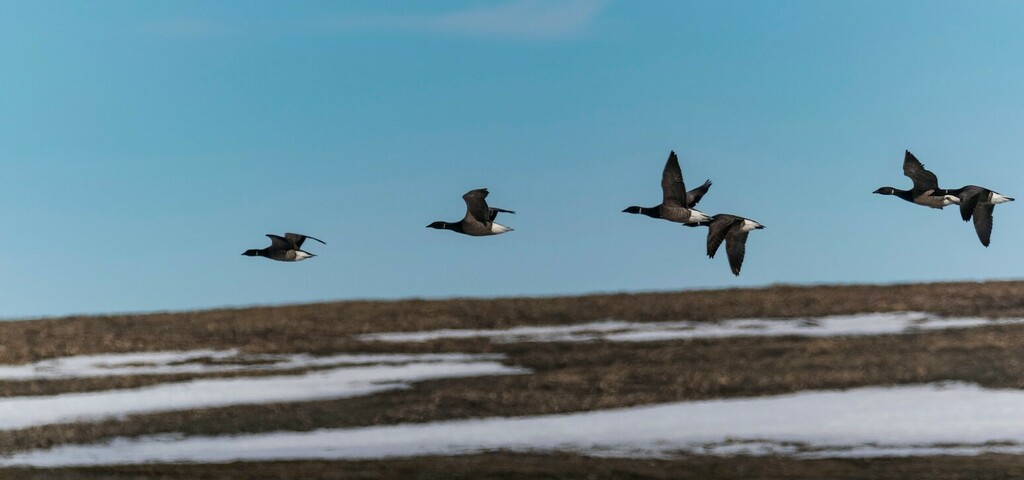
(c) Алексей Логинов, some rights reserved (CC BY) · licence
Family: Anatidae · Class: Aves · Order: Anseriformes
Conservation status: G5 S2
Branta bernicla (Brant) is a California animal in the Anatidae family.
The Brant is a small, compact sea goose that measures 56-61 cm (22-24 inches) in length with a wingspan of 110-120 cm (43-47 inches). Adults weigh 1.2-1.6 kg (2.6-3.5 pounds). The species displays distinctive dark plumage with a blackish-brown head and neck marked by white collar patches on either side of the neck. The breast and belly are dark gray to brownish-black, contrasting with white undertail coverts and a white rump patch visible in flight. The bill and legs are black. Juveniles lack the white neck patches and show more brownish overall coloration with pale barring on the wings and back. Brant breed in the high Arctic tundra of Canada, Alaska, and Siberia. During migration and winter, they occur along both Pacific and Atlantic coasts of North America. In California, Brant are primarily winter visitors and migrants, with the Pacific population (Branta bernicla nigricans) found along the entire coastline from October through April. Peak abundance occurs from November through February. Major wintering areas include San Francisco Bay, Humboldt Bay, Morro Bay, and coastal lagoons from Mendocino County south to San Diego County. The species inhabits shallow coastal waters, estuaries, salt marshes, and adjacent mudflats. Brant favor areas with extensive eelgrass (Zostera marina) beds, which constitute their primary food source during winter. They also utilize brackish ponds, coastal agricultural fields, and occasionally freshwater wetlands near the coast. Water depth preferences range from intertidal zones to depths of 2-3 meters (6-10 feet). Brant are highly gregarious outside the breeding season, forming flocks of hundreds to thousands of individuals. They feed primarily by grazing on submerged aquatic vegetation, particularly eelgrass, sea lettuce (Ulva lactuca), and algae. During low tide, they forage on exposed mudflats for marine invertebrates and detritus. The species exhibits strong site fidelity to wintering areas. Migration timing is closely linked to ice conditions on Arctic breeding grounds, with spring departure from California occurring from March through May. Brant typically breed at 2-3 years of age, laying 3-5 eggs in ground nests on Arctic tundra. The Brant is not federally listed but has experienced significant population fluctuations. The Pacific population, which winters primarily on the west coast including California, numbers approximately 130,000-150,000 individuals according to recent surveys. Primary threats include habitat loss from coastal development, climate change impacts on Arctic breeding habitat, and degradation of eelgrass beds due to pollution and disease. Sea level rise poses long-term risks to coastal wintering habitat. The species' narrow dietary specialization makes it particularly vulnerable to eelgrass decline. Conservation efforts focus on protecting key wintering sites, monitoring eelgrass health, and international cooperation for Arctic habitat protection.
Classification
Class: Aves · Order: Anseriformes · Family: Anatidae
Conservation status
G5 S2
Frequently asked questions
How is Branta bernicla classified?
Branta bernicla belongs to class Aves, order Anseriformes, family Anatidae.
What family does Branta bernicla belong to?
Branta bernicla is in the Anatidae family.
Is Branta bernicla protected or of conservation concern?
Branta bernicla carries the following status: G5 S2.
What is Branta bernicla?
The Brant is a small, compact sea goose that measures 56-61 cm (22-24 inches) in length with a wingspan of 110-120 cm (43-47 inches).
Is Branta bernicla found in California?
Yes. Branta bernicla is recorded in California in The California Species Project's catalogue.
Related species
Other California species in the same genus, family, or bioregion.
Data from The California Species Project — 14,000+ California species with verified data from CNPS, CDFW, USFWS, and more.