Branta canadensis
Canada Goose
no rights reserved · CC0
Family: Anatidae · Class: Aves · Order: Anseriformes
Branta canadensis (Canada Goose) is a California animal in the Anatidae family.
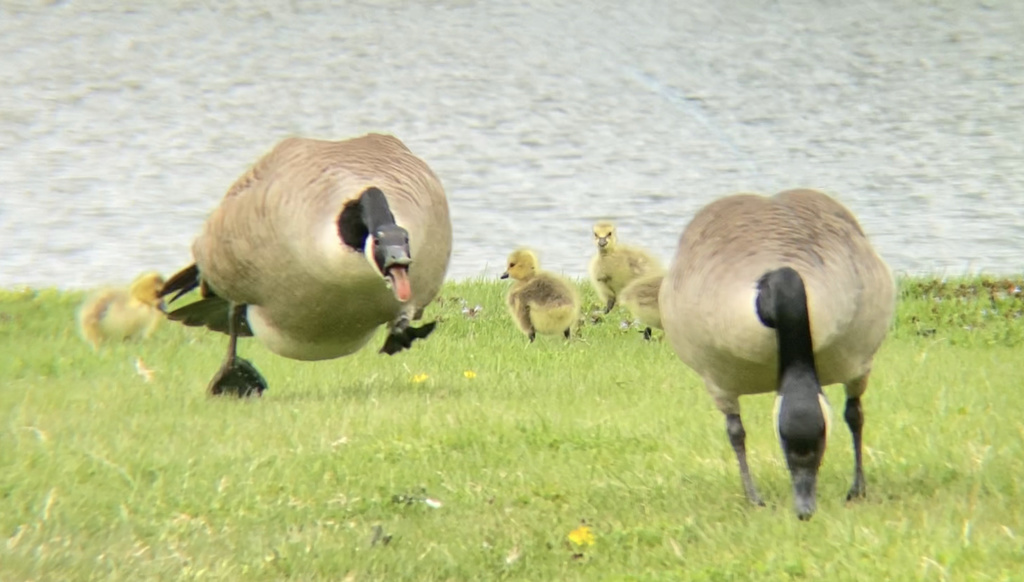
The Canada Goose is a large waterfowl species measuring 75-110 cm (30-43 inches) in length with a wingspan of 127-185 cm (50-73 inches). Adults weigh between 3.2-6.5 kg (7-14 pounds), with males typically larger than females. The species displays distinctive plumage consisting of a black head and neck with a prominent white chinstrap extending from cheek to cheek. The body is brownish-gray above with lighter underparts, and the tail is black with white undertail coverts. The bill and legs are black, and the species exhibits no seasonal plumage variation. Historically, Canada Geese bred across much of North America from Alaska to Newfoundland and south to the northern United States. In California, the species occurs as both a year-round resident and migrant, with breeding populations established in suitable habitats throughout the state. Resident populations are found in urban and suburban areas, agricultural regions, and managed wetlands from sea level to montane elevations. Migratory populations winter in California's Central Valley, coastal areas, and southern regions, with numbers varying annually based on breeding success and weather conditions in northern breeding areas. Canada Geese inhabit a variety of aquatic and semi-aquatic environments including lakes, ponds, rivers, marshes, and coastal estuaries. The species requires open water for roosting and escape cover, along with adjacent short grass areas for feeding. Urban populations readily adapt to parks, golf courses, and retention ponds with maintained turf grass. During breeding season, pairs select nesting sites on islands, muskrat houses, or elevated areas near water with clear sightlines. Canada Geese are primarily grazers, feeding on grasses, sedges, aquatic plants, and agricultural crops. The diet varies seasonally, with increased consumption of protein-rich foods during breeding and molting periods. Breeding occurs from March through June, with females constructing nests of vegetation lined with down feathers. Clutch size ranges from 2-8 eggs, typically 4-6, with an incubation period of 25-28 days. Young are precocial and capable of feeding themselves shortly after hatching, though they remain with parents for 10-12 weeks until fledging. The species exhibits strong site fidelity and forms long-term pair bonds. During late summer, Canada Geese undergo molt migration, becoming flightless for 3-4 weeks while replacing flight feathers. Non-breeding birds often gather in large flocks during this period. Canada Geese are not federally or state listed and maintain stable to increasing populations across most of their range. The North American population is estimated at 4.2-5.6 million birds according to the U.S. Fish and Wildlife Service. In some urban areas, resident populations have increased substantially, leading to management challenges including crop damage, water quality impacts, and public safety concerns around airports. Conservation efforts focus on habitat management and population monitoring rather than protection measures.
Classification
Class: Aves · Order: Anseriformes · Family: Anatidae
Frequently asked questions
How is Branta canadensis classified?
Branta canadensis belongs to class Aves, order Anseriformes, family Anatidae.
What family does Branta canadensis belong to?
Branta canadensis is in the Anatidae family.
What is Branta canadensis?
The Canada Goose is a large waterfowl species measuring 75-110 cm (30-43 inches) in length with a wingspan of 127-185 cm (50-73 inches).
Is Branta canadensis found in California?
Yes. Branta canadensis is recorded in California in The California Species Project's catalogue.
Related species
Other California species in the same genus, family, or bioregion.
Data from The California Species Project — 14,000+ California species with verified data from CNPS, CDFW, USFWS, and more.