Branta hutchinsii
Cackling Goose
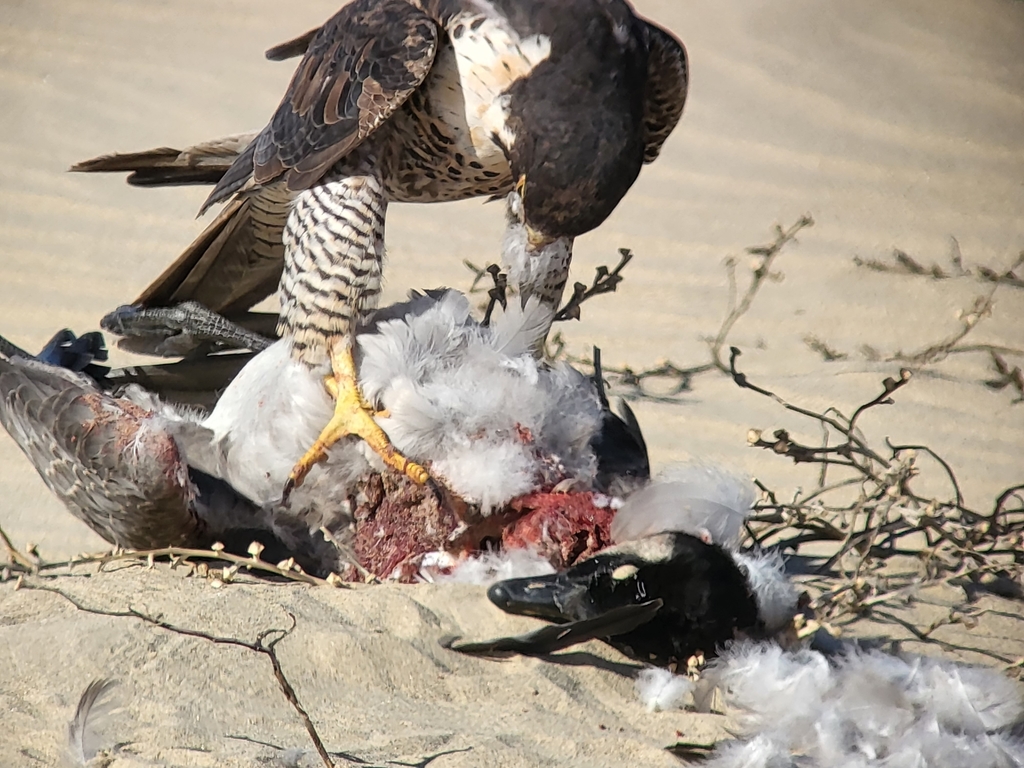
(c) Nicole, some rights reserved (CC BY) · licence
Family: Anatidae · Class: Aves · Order: Anseriformes
Branta hutchinsii (Cackling Goose) is a California animal in the Anatidae family.
The Cackling Goose is a medium-sized waterfowl measuring 56-66 cm (22-26 inches) in length with a wingspan of 110-150 cm (43-59 inches). Adults weigh 1.4-3.0 kg (3.1-6.6 pounds), making them smaller than the closely related Canada Goose. The species displays a black head and neck with a distinctive white chinstrap extending from cheek to cheek below the bill. The body is brownish-gray above with lighter underparts, and a white rump patch is visible in flight. The bill is short and black, proportionally smaller than that of Canada Geese. Sexual dimorphism is minimal, though males average slightly larger than females. Cackling Geese breed across Alaska and northern Canada, from the Aleutian Islands east to Hudson Bay. Four subspecies are recognized, with different populations utilizing distinct Pacific and Central flyways during migration. In California, the species is primarily a winter resident and passage migrant, occurring from September through March. The subspecies B. h. minima (Alaskan Cackling Goose) and B. h. leucopareia (Aleutian Cackling Goose) are most common in the state, with concentrations in the Central Valley, San Francisco Bay area, and coastal regions. Winter habitat consists of agricultural fields, wetlands, grasslands, and coastal marshes. The species shows strong preference for areas with short grass or recently harvested grain fields adjacent to water bodies for roosting. In California's Central Valley, Cackling Geese utilize flooded rice fields, permanent and seasonal wetlands, and pastures. Coastal populations frequent salt marshes, estuarine areas, and nearby agricultural lands. The species typically roosts on large open water bodies including reservoirs, lakes, and protected bays. Cackling Geese are highly gregarious outside the breeding season, forming flocks of hundreds to thousands of individuals. Diet consists primarily of grasses, sedges, aquatic vegetation, and waste grain from agricultural fields. The species exhibits strong site fidelity to both breeding and wintering areas. Breeding occurs on Arctic tundra, with nests constructed on elevated sites near water. Females lay 4-6 creamy white eggs, with incubation lasting 24-28 days. Pairs are monogamous and maintain long-term bonds. Migration timing varies by subspecies, with peak southward movement through California occurring from October through November. Spring migration begins in February, with most birds departing by early April. Flight speeds average 65 km/h (40 mph), and the species can reach altitudes exceeding 8,000 meters during migration. The Cackling Goose is not federally listed and maintains stable populations overall. However, the Aleutian subspecies experienced severe decline due to introduced foxes on breeding islands and was listed as endangered in 1967. Recovery efforts including fox removal and habitat restoration led to delisting in 2001, representing a conservation success story. Current threats include habitat loss from agricultural conversion, climate change affecting Arctic breeding grounds, and hunting pressure. Winter population surveys in California indicate fluctuating but generally stable numbers, with annual Christmas Bird Count data showing regional variations in abundance.
Classification
Class: Aves · Order: Anseriformes · Family: Anatidae
Frequently asked questions
How is Branta hutchinsii classified?
Branta hutchinsii belongs to class Aves, order Anseriformes, family Anatidae.
What family does Branta hutchinsii belong to?
Branta hutchinsii is in the Anatidae family.
What is Branta hutchinsii?
The Cackling Goose is a medium-sized waterfowl measuring 56-66 cm (22-26 inches) in length with a wingspan of 110-150 cm (43-59 inches).
Is Branta hutchinsii found in California?
Yes. Branta hutchinsii is recorded in California in The California Species Project's catalogue.
Related species
Other California species in the same genus, family, or bioregion.
Data from The California Species Project — 14,000+ California species with verified data from CNPS, CDFW, USFWS, and more.