Bruceia hubbardi
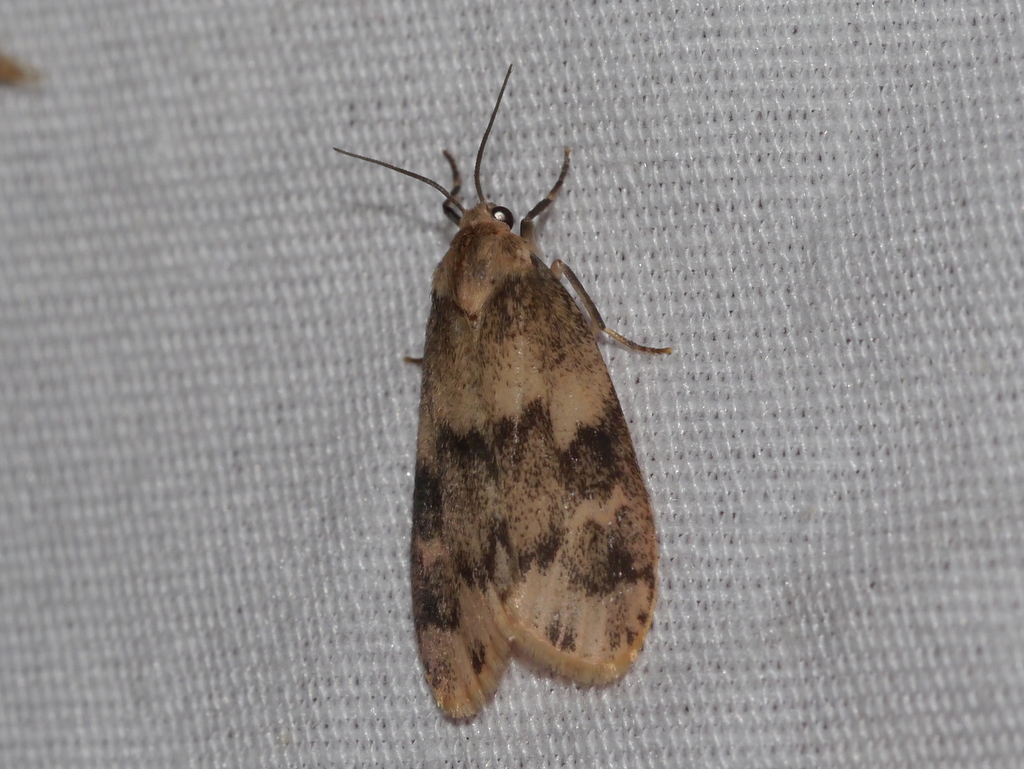
(c) Matt Muir, some rights reserved (CC BY) · licence
Family: Erebidae · Class: Insecta · Order: Lepidoptera
Bruceia hubbardi is a California animal in the Erebidae family.
Bruceia hubbardi is a moth in the family Erebidae, described by Harrison Gray Dyar Jr. in 1898. This species represents one of the lesser-known members of the erebid moth fauna of western North America, with limited scientific documentation of its biology and ecology. Physical descriptions of B. hubbardi remain sparse in the scientific literature. As a member of the Erebidae family, it likely exhibits the typical moth body plan with a robust thorax, feathery or thread-like antennae, and wings held horizontally at rest. Specific details regarding wingspan, coloration patterns, and distinguishing morphological features have not been well documented in accessible scientific sources. The species occurs across a relatively broad western North American range, extending from California and Nevada eastward to Colorado and western Texas (iNaturalist). Within California, specific distributional records and county-level occurrences have not been comprehensively documented, though the species' presence in the state indicates it occupies suitable habitat within California's diverse topographic and climatic zones. Habitat preferences for B. hubbardi appear to include desert shrublands and mountainous areas, though specific ecological requirements remain poorly documented (Grokipedia). The broad geographic range from California's varied ecosystems to the Rocky Mountain region suggests the species may utilize multiple habitat types across different elevational zones. Without detailed ecological studies, the specific vegetation associations, elevation ranges, and microhabitat preferences cannot be definitively characterized. The life history, behavior, and ecological relationships of B. hubbardi have received minimal scientific attention. Flight periods, larval host plants, feeding behaviors, and reproductive biology remain largely undocumented in the available literature. The species' placement within Erebidae suggests it likely follows typical nocturnal moth patterns, but specific activity periods, mating behaviors, and seasonal occurrence have not been systematically studied or reported. No formal conservation status has been assigned to B. hubbardi at federal, state, or international levels. The species does not appear on threatened or endangered species lists, nor has it been assessed by conservation organizations. Without population data, trend information, or threat assessments, the conservation status remains unknown. The apparent rarity of scientific records may reflect either genuine scarcity, cryptic behavior patterns, or simply limited survey effort for this group of moths. The paucity of ecological and biological information for B. hubbardi reflects a broader pattern common among many moth species, where taxonomic description often precedes detailed life history studies by decades or longer. Scientific documentation for this species remains limited. The information presented here is based on available sources including taxonomic databases and citizen science platforms. If you have additional verified information about this species' biology, distribution, or ecology, please contact us to help improve this species account.
Classification
Class: Insecta · Order: Lepidoptera · Family: Erebidae
Frequently asked questions
How is Bruceia hubbardi classified?
Bruceia hubbardi belongs to class Insecta, order Lepidoptera, family Erebidae.
What family does Bruceia hubbardi belong to?
Bruceia hubbardi is in the Erebidae family.
What is Bruceia hubbardi?
Bruceia hubbardi is a moth in the family Erebidae, described by Harrison Gray Dyar Jr.
Is Bruceia hubbardi found in California?
Yes. Bruceia hubbardi is recorded in California in The California Species Project's catalogue.
Related species
Other California species in the same genus, family, or bioregion.
Data from The California Species Project — 14,000+ California species with verified data from CNPS, CDFW, USFWS, and more.