Brymblia quadrimaculella
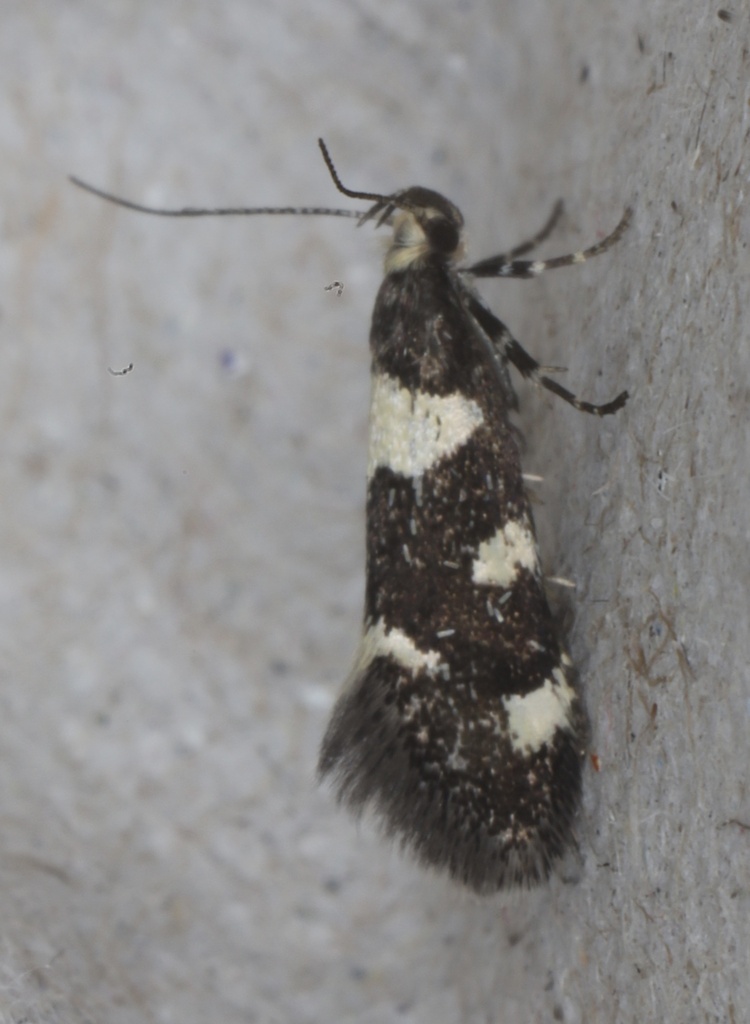
no rights reserved · CC0
Family: Oecophoridae · Class: Insecta · Order: Lepidoptera
Brymblia quadrimaculella is a California animal in the Oecophoridae family.
Brymblia quadrimaculella is a small moth in the family Oecophoridae, one of the concealer moth families. This species represents part of California's diverse but poorly studied microlepidoptera fauna. Adult moths typically measure 8 to 12 mm in wingspan, characteristic of many oecophorid species. The forewings display the four spots referenced in the species name 'quadrimaculella,' though detailed morphological descriptions of this species remain limited in published literature. Like other members of the Oecophoridae, adults likely have narrow forewings and relatively broad hindwings with reduced venation patterns. The distribution and range of Brymblia quadrimaculella in California remain poorly documented. Most oecophorid moths have restricted ranges tied to specific host plant associations, suggesting this species may be endemic to particular regions within the state. The genus Brymblia appears to be primarily North American, with several species recorded from western states. Without comprehensive survey data, the full extent of this species' California range cannot be definitively established. Habitat requirements for Brymblia quadrimaculella are not well documented in available literature. Oecophorid moths typically inhabit diverse environments from coastal scrub to montane forests, with larvae often developing in plant debris, dead wood, or as internal feeders in stems or roots. Some species in this family are associated with specific vegetation types or plant communities. The microhabitat preferences of B. quadrimaculella likely depend on the availability of suitable host plants and larval development sites. The ecology and life history of Brymblia quadrimaculella remain largely unstudied. Adult flight periods, mating behavior, and reproductive cycles are not documented in accessible scientific literature. Larvae of oecophorid moths typically feed as concealed borers or in plant debris, with development times varying seasonally. Many species in this family are univoltine, producing one generation per year, though multivoltine species also occur. Host plant relationships, if any, remain unknown for this species, representing a significant knowledge gap. The conservation status of Brymblia quadrimaculella is not assessed by any major conservation organization. The species lacks federal or state protection status and does not appear in comprehensive invertebrate surveys or conservation databases as of December 2025. This absence from conservation assessments likely reflects the limited taxonomic and ecological research conducted on California's microlepidoptera rather than actual rarity. Many small moth species remain poorly known due to identification challenges, limited collecting efforts, and taxonomic uncertainty within diverse families like Oecophoridae. The lack of basic distributional and ecological data for B. quadrimaculella represents a common pattern among California's estimated 5,000 to 6,000 moth species, many of which require systematic study to assess their conservation needs and population status. Comprehensive surveys of California's microlepidoptera fauna would be necessary to determine the current status and distribution of this and other poorly known oecophorid species.
Classification
Class: Insecta · Order: Lepidoptera · Family: Oecophoridae
Frequently asked questions
How is Brymblia quadrimaculella classified?
Brymblia quadrimaculella belongs to class Insecta, order Lepidoptera, family Oecophoridae.
What family does Brymblia quadrimaculella belong to?
Brymblia quadrimaculella is in the Oecophoridae family.
What is Brymblia quadrimaculella?
Brymblia quadrimaculella is a small moth in the family Oecophoridae, one of the concealer moth families.
Is Brymblia quadrimaculella found in California?
Yes. Brymblia quadrimaculella is recorded in California in The California Species Project's catalogue.
Related species
Other California species in the same genus, family, or bioregion.
Data from The California Species Project — 14,000+ California species with verified data from CNPS, CDFW, USFWS, and more.