Bryolymnia viridata
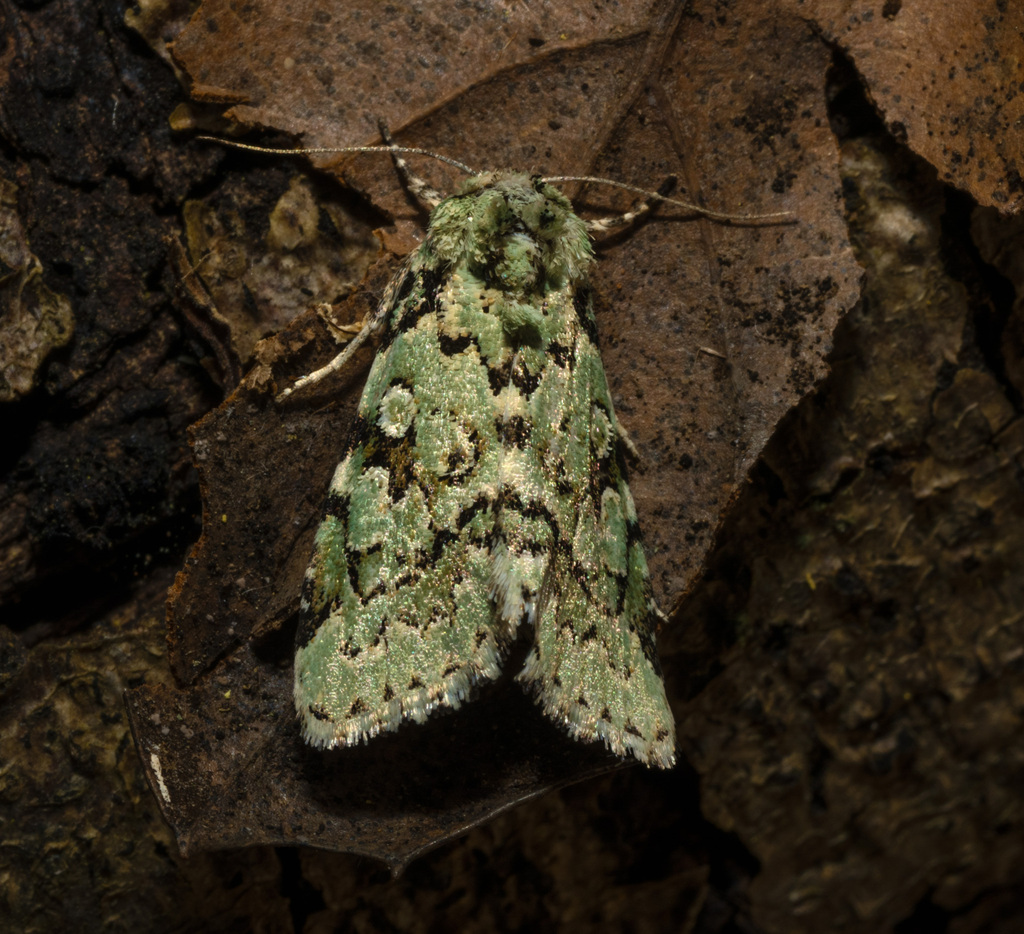
(c) Alan Rockefeller, some rights reserved (CC BY) · licence
Family: Noctuidae · Class: Insecta · Order: Lepidoptera
Bryolymnia viridata is a California animal in the Noctuidae family.
Bryolymnia viridata is a moth species in the family Noctuidae, commonly known as owlet moths or cutworm moths. This species belongs to a genus of noctuid moths found primarily along the western coast of North America. Adults typically measure 12-18 mm in forewing length, displaying the characteristic nocturid body structure with relatively narrow forewings and broader hindwings. The forewings are generally brownish-gray to olive-green, with subtle darker markings and pale lines that provide camouflage against bark and vegetation. The hindwings are typically paler, often grayish-white with darker marginal borders. Bryolymnia viridata occurs in western California, ranging from Sonoma County north of San Francisco southward to San Diego County. This distribution spans approximately 600 kilometers along the California coast and adjacent inland areas. The species' range encompasses diverse topographic regions including coastal plains, foothills, and montane areas within the California Floristic Province. Historical records suggest the species has maintained a relatively stable distribution throughout this range, though comprehensive population surveys are limited. The species inhabits various plant communities typical of Mediterranean climate regions, including coastal scrub, chaparral, oak woodlands, and mixed evergreen forests. Adults are found from sea level to elevations of approximately 1,500 meters. The moths show preference for areas with dense understory vegetation and are often collected near riparian corridors and canyon bottoms where moisture levels remain higher during dry periods. Larval host plants likely include various shrubs and herbaceous plants common to California's native plant communities, though specific host relationships require further study. Adults are nocturnal and attracted to artificial lights, following typical nocturid behavior patterns. Flight period data from museum specimens suggest activity from late spring through early fall, with peak abundance occurring during summer months. Males likely locate females through pheromone detection, as is common among noctuids. Females deposit eggs on or near larval host plants, and caterpillars likely feed on foliage during their development. The species presumably overwinters as pupae in soil or leaf litter, emerging as adults the following year. Generation time and specific reproductive details remain poorly documented for this species. Bryolymnia viridata currently holds no federal or state conservation status designation in California. The species appears to maintain stable populations across its range, though comprehensive population monitoring has not been conducted. Potential threats include habitat conversion due to urban development, particularly in coastal and foothill areas where human population growth continues. Climate change may affect the species through altered precipitation patterns and increased temperature extremes, potentially impacting both adult flight periods and larval development. Fire management practices in chaparral and woodland habitats could influence local population dynamics. Agricultural expansion and invasive plant species may also pose localized threats to native plant communities that support this moth species. Additional research is needed to better understand the species' ecology, population trends, and conservation requirements.
Classification
Class: Insecta · Order: Lepidoptera · Family: Noctuidae
Frequently asked questions
How is Bryolymnia viridata classified?
Bryolymnia viridata belongs to class Insecta, order Lepidoptera, family Noctuidae.
What family does Bryolymnia viridata belong to?
Bryolymnia viridata is in the Noctuidae family.
What is Bryolymnia viridata?
Bryolymnia viridata is a moth species in the family Noctuidae, commonly known as owlet moths or cutworm moths.
Is Bryolymnia viridata found in California?
Yes. Bryolymnia viridata is recorded in California in The California Species Project's catalogue.
Related species
Other California species in the same genus, family, or bioregion.
Data from The California Species Project — 14,000+ California species with verified data from CNPS, CDFW, USFWS, and more.