Bubulcus ibis
Cattle Egret
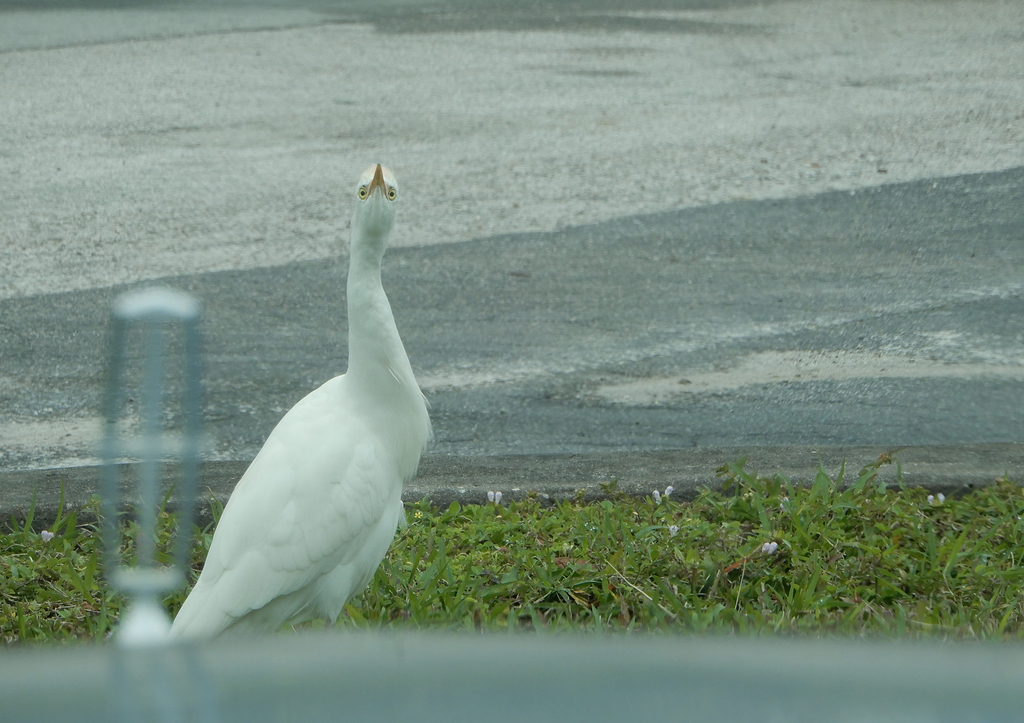
(c) Lyndsey, some rights reserved (CC BY) · licence
Family: Ardeidae · Class: Aves · Order: Pelecaniformes
Bubulcus ibis (Cattle Egret) is a California animal in the Ardeidae family.
The Cattle Egret is a small to medium-sized wading bird measuring 46-56 cm (18-22 inches) in length with a wingspan of 88-96 cm (35-38 inches). Adults weigh 270-512 grams (9.5-18 ounces). During breeding season, adults develop distinctive buff-orange plumes on the head, breast, and back, while the bill becomes bright orange-red and the legs turn coral-red. Non-breeding adults are predominantly white with a yellow bill and dark legs. The species exhibits sexual dimorphism, with males slightly larger than females and displaying more pronounced breeding plumage. Originally native to Africa and southern Eurasia, Cattle Egrets underwent an extensive natural range expansion during the 20th century. The species first appeared in North America in the 1950s, likely arriving from Africa via natural flight across the Atlantic. In California, Cattle Egrets were first recorded in the 1960s and have since established breeding populations throughout much of the state. The species now occurs year-round in the Central Valley, coastal regions, and southern California, with seasonal presence extending into northern counties during migration and summer months. Cattle Egrets inhabit open grasslands, pastures, agricultural fields, and wetland edges, typically at elevations below 1,000 meters (3,280 feet). Unlike other herons and egrets, this species shows strong association with grazing mammals, including cattle, horses, and sheep. They utilize both natural and agricultural landscapes, demonstrating high adaptability to human-modified environments. The species roosts colonially in trees and shrubs near water sources, often mixing with other heron species. The species exhibits unique foraging behavior, following large mammals to capture insects and small vertebrates disturbed by grazing activity. Their diet consists primarily of grasshoppers, crickets, flies, beetles, frogs, and small rodents. Cattle Egrets are highly social, foraging in groups and nesting in mixed-species colonies with other herons and egrets. Breeding occurs from March through August in California, with peak activity from April to June. Females construct platform nests of sticks in trees or shrubs, typically 2-8 meters above ground. Clutch size ranges from 1-6 eggs, with an average of 3-4 eggs per nest. Incubation lasts 21-26 days, and young fledge after 30-35 days. The Cattle Egret is not federally or state-listed and is considered a species of Least Concern by the International Union for Conservation of Nature. Population trends in North America show continued expansion and stability. According to the North American Breeding Bird Survey, California populations have remained relatively stable since establishment, with some fluctuations related to drought cycles affecting wetland availability. The species benefits from agricultural practices and livestock grazing, though intensive pesticide use in some agricultural areas may pose localized threats. Climate change may affect the species through altered precipitation patterns and extreme weather events, but the Cattle Egret's adaptability suggests continued population stability in California.
Classification
Class: Aves · Order: Pelecaniformes · Family: Ardeidae
Frequently asked questions
How is Bubulcus ibis classified?
Bubulcus ibis belongs to class Aves, order Pelecaniformes, family Ardeidae.
What family does Bubulcus ibis belong to?
Bubulcus ibis is in the Ardeidae family.
What is Bubulcus ibis?
The Cattle Egret is a small to medium-sized wading bird measuring 46-56 cm (18-22 inches) in length with a wingspan of 88-96 cm (35-38 inches).
Is Bubulcus ibis found in California?
Yes. Bubulcus ibis is recorded in California in The California Species Project's catalogue.
Related species
Other California species in the same genus, family, or bioregion.
Data from The California Species Project — 14,000+ California species with verified data from CNPS, CDFW, USFWS, and more.