Bucculatrix quadrigemina
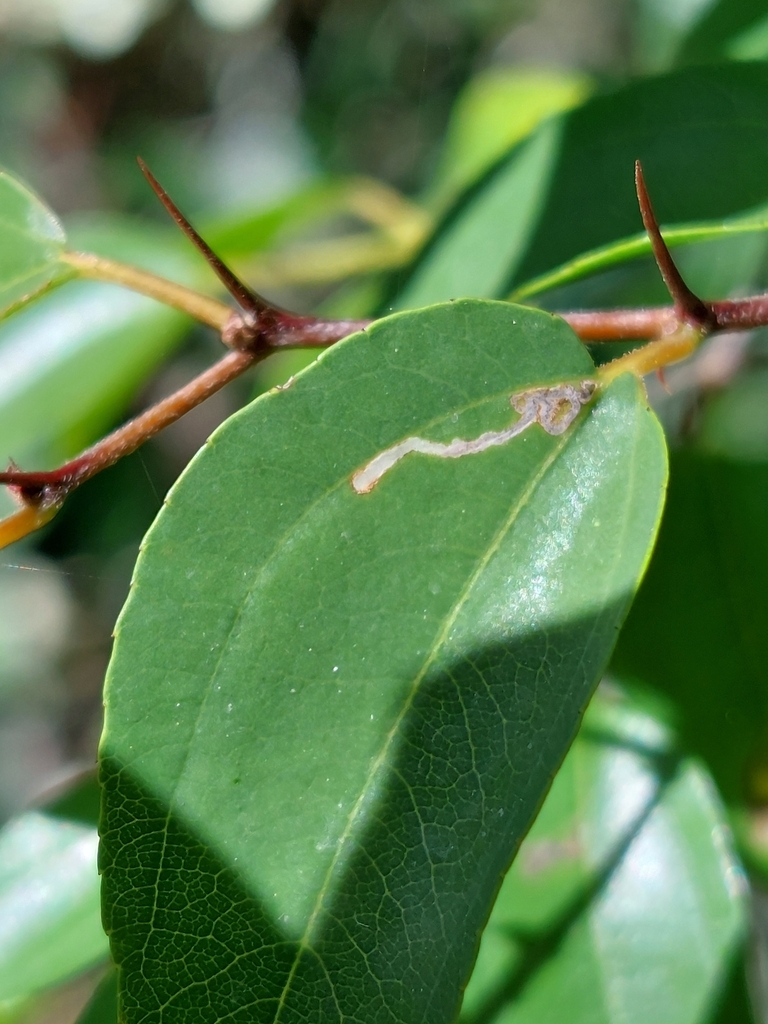
(c) Thomas Koffel, some rights reserved (CC BY) · licence
Family: Bucculatricidae · Class: Insecta · Order: Lepidoptera
Bucculatrix quadrigemina is a California animal in the Bucculatricidae family.
Bucculatrix quadrigemina is a small microlepidopteran moth in the family Bucculatricidae, a group of specialized leaf-mining moths. Adult moths in this family typically measure 4 to 8 mm in wingspan, with narrow forewings and distinctive wing patterns. The forewings are usually brown or gray with metallic scales, while the hindwings are pale and fringed. Like other Bucculatrix species, B. quadrigemina likely has a slender body with prominent antennae and long legs adapted for rapid movement across leaf surfaces. The current distribution and range of Bucculatrix quadrigemina in California remains poorly documented in available databases. The species appears to have a limited range within the state, though specific counties or regions of occurrence are not well-established in the literature. Many Bucculatrix species have highly localized distributions tied to the presence of their specific host plants, suggesting this species may occur only where suitable host vegetation is present. Habitat requirements for Bucculatrix quadrigemina are closely linked to its host plant associations, which remain undocumented for this species. Members of the genus Bucculatrix are obligate leaf miners as larvae, requiring specific plant hosts for reproduction and development. The habitat likely consists of areas supporting the larval host plants, which may include shrublands, woodlands, or other plant communities where the appropriate vegetation occurs. Adult moths are typically found in close proximity to larval host plants during the flight season. The life cycle follows the typical pattern of Bucculatricidae moths, with larvae mining within leaves of their host plants. Larval feeding creates distinctive mines - usually linear or blotch-shaped areas where the leaf tissue has been consumed between the upper and lower epidermis. After completing several larval instars within the mine, mature larvae exit to pupate in small cocoons, often attached to the host plant or nearby structures. Adults emerge to mate and lay eggs on suitable host plants, completing the annual cycle. Flight periods for California Bucculatrix species typically occur in spring or early summer, though specific timing for B. quadrigemina is not documented. The conservation status of Bucculatrix quadrigemina is not formally assessed at federal, state, or global levels. This lack of formal conservation ranking is common among microlepidoptera, as many species remain poorly studied and their population trends are unknown. The primary conservation concern for specialized leaf-mining moths like B. quadrigemina relates to habitat loss and degradation affecting their host plants. Without knowledge of the specific host plant requirements, it is difficult to assess potential threats to this species. Climate change, urbanization, and agricultural conversion may impact populations if they result in loss of critical host plant habitats. Further research is needed to determine the species' distribution, host plant associations, population status, and conservation needs within California.
Classification
Class: Insecta · Order: Lepidoptera · Family: Bucculatricidae
Frequently asked questions
How is Bucculatrix quadrigemina classified?
Bucculatrix quadrigemina belongs to class Insecta, order Lepidoptera, family Bucculatricidae.
What family does Bucculatrix quadrigemina belong to?
Bucculatrix quadrigemina is in the Bucculatricidae family.
What is Bucculatrix quadrigemina?
Bucculatrix quadrigemina is a small microlepidopteran moth in the family Bucculatricidae, a group of specialized leaf-mining moths.
Is Bucculatrix quadrigemina found in California?
Yes. Bucculatrix quadrigemina is recorded in California in The California Species Project's catalogue.
More California species
This species has no close relatives in our California data — here are other species to explore.
Data from The California Species Project — 14,000+ California species with verified data from CNPS, CDFW, USFWS, and more.