Bucephala clangula
Common Goldeneye
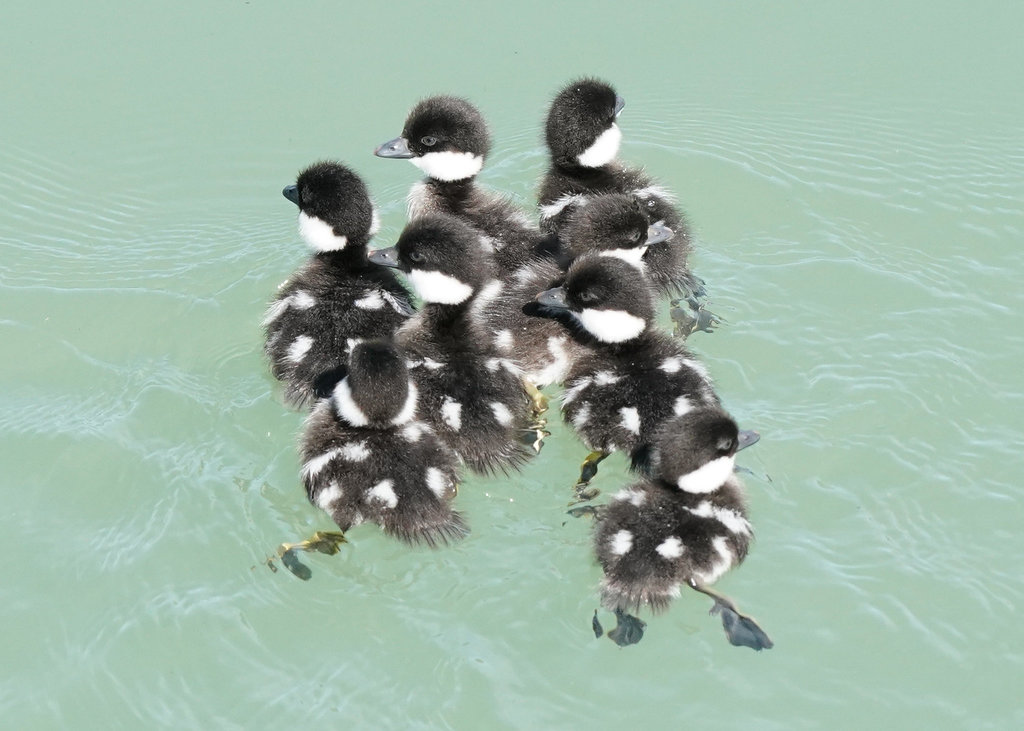
(c) Pam Hardy, some rights reserved (CC BY) · licence
Family: Anatidae · Class: Aves · Order: Anseriformes
Bucephala clangula (Common Goldeneye) is a California animal in the Anatidae family.
The Common Goldeneye is a medium-sized diving duck with distinctive features that aid in identification across age and sex classes. Adult males in breeding plumage display a glossy dark green head with a prominent white circular patch between the eye and bill. The body shows stark black and white coloration, with white underparts, white shoulder patches, and black back. Adult females have chocolate-brown heads and gray bodies with white collars. Both sexes possess bright golden-yellow eyes that give the species its common name. Males measure 42-50 cm (16.5-19.7 inches) in length with a wingspan of 77-83 cm (30-33 inches), while females are slightly smaller at 40-50 cm (15.7-19.7 inches) length. The Common Goldeneye breeds across northern forests of North America and Eurasia, with its North American range extending from Alaska through Canada to the northern United States. In California, the species occurs primarily as a winter visitor and migrant, with regular presence along the coast and in interior valleys from October through March. The species winters on ice-free lakes, rivers, coastal bays, and estuaries throughout much of the continental United States. Small numbers may overwinter in suitable habitat in the Central Valley and along the California coast. Wintering habitat consists of large, deep freshwater lakes, reservoirs, and slow-moving rivers, as well as sheltered coastal waters including bays and estuaries. The species prefers areas with water depths of 1-4 meters (3-13 feet) that support diverse invertebrate communities. During migration, Common Goldeneyes utilize a variety of wetland types including smaller lakes and ponds. Breeding habitat in northern regions consists of boreal and mixed forests adjacent to lakes and wetlands, where females nest in tree cavities or nest boxes. Common Goldeneyes are accomplished divers that feed primarily on aquatic invertebrates, small fish, and crustaceans. Wintering birds consume mollusks, aquatic insect larvae, small fish, and plant material obtained through diving to depths of up to 6 meters (20 feet). The species exhibits strong site fidelity, often returning to the same wintering locations annually. Breeding occurs from April through July in northern regions, with females laying 6-15 olive-green eggs in tree cavities. Incubation lasts 28-32 days, and ducklings jump from nest cavities within 24-48 hours of hatching. The Common Goldeneye maintains stable populations throughout most of its range and is not federally listed under the Endangered Species Act. According to the North American Bird Conservation Initiative, the species shows stable population trends with an estimated North American population of 1.4 million individuals. The species benefits from nest box programs in some regions and habitat management focused on maintaining forested wetland complexes. Climate change may affect northern breeding ranges, but the species' adaptability to diverse wetland habitats provides some resilience. Waterfowl hunting regulations help maintain sustainable harvest levels throughout the species' range.
Classification
Class: Aves · Order: Anseriformes · Family: Anatidae
Frequently asked questions
How is Bucephala clangula classified?
Bucephala clangula belongs to class Aves, order Anseriformes, family Anatidae.
What family does Bucephala clangula belong to?
Bucephala clangula is in the Anatidae family.
What is Bucephala clangula?
The Common Goldeneye is a medium-sized diving duck with distinctive features that aid in identification across age and sex classes.
Is Bucephala clangula found in California?
Yes. Bucephala clangula is recorded in California in The California Species Project's catalogue.
Related species
Other California species in the same genus, family, or bioregion.
Data from The California Species Project — 14,000+ California species with verified data from CNPS, CDFW, USFWS, and more.