Bulia deducta
Deducta Bulia
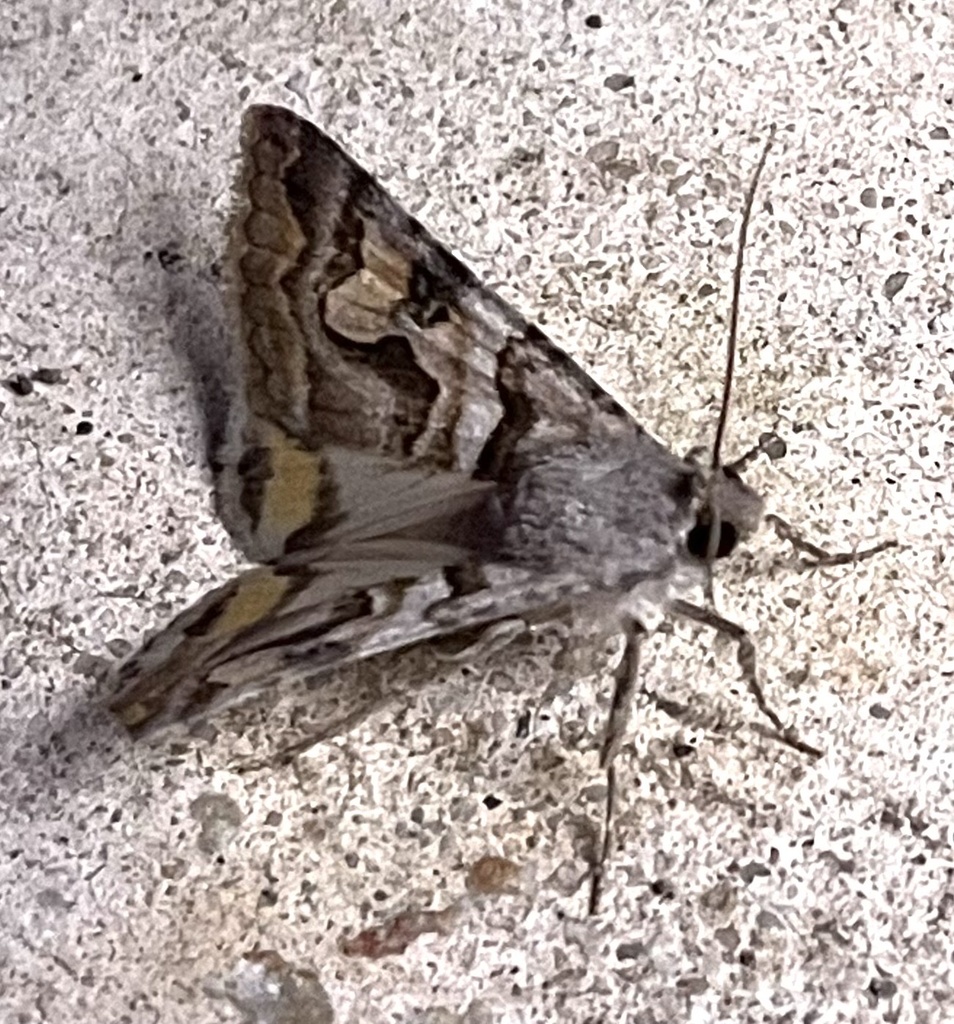
(c) IDClaire, some rights reserved (CC BY) · licence
Family: Erebidae · Class: Insecta · Order: Lepidoptera
Bulia deducta (Deducta Bulia) is a California animal in the Erebidae family.
Bulia deducta is a medium-sized moth in the family Erebidae, subfamily Erebinae. Adults have a wingspan ranging from 28 to 38 mm (1.1 to 1.5 inches), displaying the typical nocturnal moth body plan with broad forewings and reduced hindwings (BugGuide). The species belongs to the tribe Melipotini and can be distinguished from closely related species through genital dissection, as external morphological features are often insufficient for reliable identification (Ferris 2007). This species exhibits a broad distribution across North America, being resident throughout the southwestern United States from California and Nevada eastward to Missouri and Mississippi, extending south into Mexico (BugGuide). The species also occurs as a migrant in northwestern United States and rarely reaches Canada, with sparse records from four western provinces. Additional records exist from Florida, likely representing vagrant individuals. Within California, the species has been documented across multiple regions as part of its established southwestern range. Bulia deducta inhabits diverse ecosystems across its range, from desert regions to more mesic environments. The species has been recorded at various elevations, including mountainous areas such as Big Black Mountain in Kentucky above 3,700 feet elevation (News of the Lepidopterists' Society 2016). Adults are nocturnal and attracted to artificial lights, making light trapping an effective collection method. The species has been documented flying during multiple months, with records spanning from April through November depending on geographic location. As with many nocturnal moths, Bulia deducta likely feeds on nectar from flowers during its adult stage, though specific host plants and larval biology remain poorly documented in the literature. The species appears to have multiple generations per year in southern portions of its range, based on extended flight periods documented in collection records. Adults have been observed in light traps alongside other noctuoid moths, suggesting similar ecological preferences and activity patterns. Bulia deducta currently lacks federal or state listing status, though it has been identified as a Species of Greatest Conservation Need in Arkansas due to insufficient knowledge about its taxonomic status, life history, and conservation requirements (BugGuide). This designation reflects broader concerns about declining lepidopteran populations and the need for additional research on lesser-known species. The species' wide distribution suggests it may be more stable than locally endemic moths, though population trends have not been systematically monitored. Climate change and habitat modification across its southwestern range could potentially impact populations, particularly in desert margin habitats. The species' status as both resident and migratory in different portions of its range indicates complex population dynamics that warrant further investigation to understand conservation needs and population connectivity across its extensive distribution.
Classification
Class: Insecta · Order: Lepidoptera · Family: Erebidae
Frequently asked questions
How is Bulia deducta classified?
Bulia deducta belongs to class Insecta, order Lepidoptera, family Erebidae.
What family does Bulia deducta belong to?
Bulia deducta is in the Erebidae family.
What is Bulia deducta?
Bulia deducta is a medium-sized moth in the family Erebidae, subfamily Erebinae.
Is Bulia deducta found in California?
Yes. Bulia deducta is recorded in California in The California Species Project's catalogue.
Related species
Other California species in the same genus, family, or bioregion.
Data from The California Species Project — 14,000+ California species with verified data from CNPS, CDFW, USFWS, and more.