Burnettweldia plumbella
Beaked Twig Gall Wasp
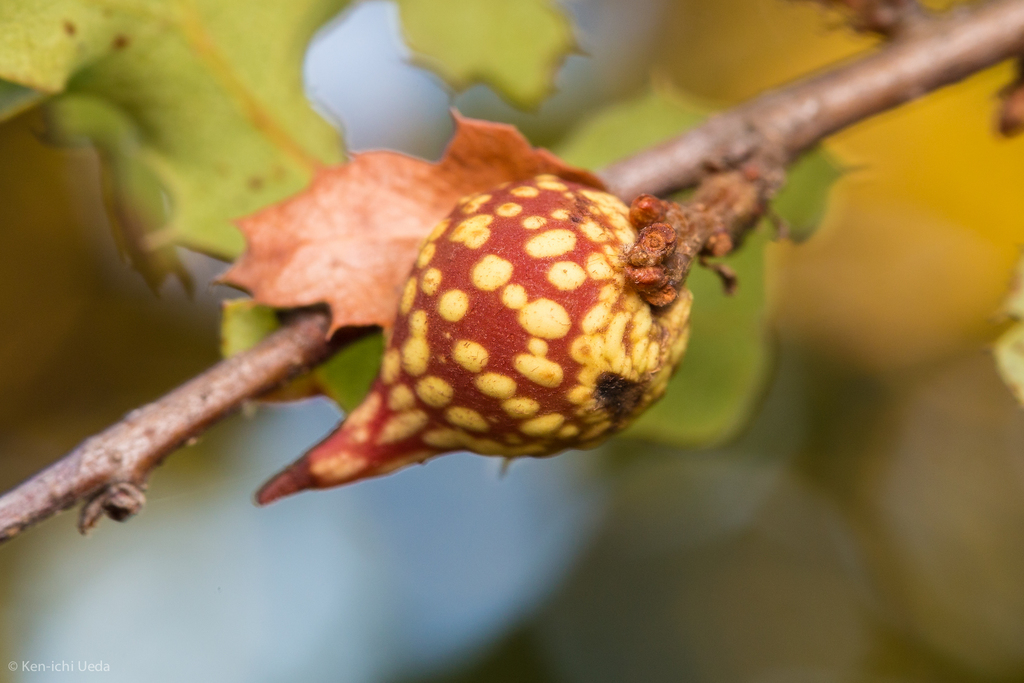
(c) Ken-ichi Ueda, some rights reserved (CC BY) · licence
Family: Cynipidae · Class: Insecta · Order: Hymenoptera
Burnettweldia plumbella (Beaked Twig Gall Wasp) is a California animal in the Cynipidae family.
Burnettweldia plumbella, commonly known as the Beaked Twig Gall Wasp, is a small parasitoid wasp in the family Cynipidae. Like other gall wasps, adults are typically 2-4 mm in length with a compact body structure. The species exhibits the characteristic morphology of cynipid wasps, including a compressed abdomen, elbowed antennae, and reduced wing venation. The common name "beaked" likely refers to distinctive mouthpart structures or ovipositor morphology used for egg laying, though detailed morphological descriptions are not well documented in the scientific literature. The current distribution of B. plumbella is not comprehensively documented. As with many small parasitoid wasps, the species' range may be broader than currently recorded, limited primarily by the availability of suitable host species and habitat. Distribution records for cynipid wasps often reflect collection intensity rather than actual abundance, as these small insects can easily be overlooked in field surveys. Habitat requirements for this species are closely tied to the presence of its host organisms. Cynipidae typically inhabit areas where their specific host plants or arthropods occur, ranging from forest understory to shrubland and grassland environments. The "twig gall" designation suggests an association with woody plant stems or twigs, where the wasp likely induces gall formation or parasitizes existing gall-forming insects. Elevation preferences and specific microhabitat requirements have not been documented. The ecology of B. plumbella follows the typical cynipid life cycle pattern. Adult females use their specialized ovipositor to insert eggs into host tissue, either directly parasitizing other insects or inducing plant galls that provide nutrition for developing larvae. The larval stage develops within the host or gall structure, pupating before emerging as adults. Seasonal activity patterns, generation time, and adult longevity are not well documented for this species. Like most cynipids, adults likely emerge during specific seasons aligned with host availability and optimal environmental conditions. Burnettweldia plumbella does not appear on federal or state endangered species lists, and its conservation status has not been formally assessed. The species' small size and cryptic nature make population monitoring challenging. As with many specialized parasitoids, conservation concerns may relate to habitat loss affecting host species availability or ecosystem disruption altering plant-insect community dynamics. Climate change impacts on host plant phenology could potentially affect synchronization between wasp emergence and optimal parasitism timing. Scientific documentation for this species remains extremely limited. The information presented here represents available knowledge from taxonomic databases and general cynipid ecology. Detailed studies of B. plumbella's biology, host relationships, and ecological role are needed. Field observations, host plant associations, and distributional data would significantly contribute to understanding this species' natural history and conservation needs.
Classification
Class: Insecta · Order: Hymenoptera · Family: Cynipidae
Frequently asked questions
How is Burnettweldia plumbella classified?
Burnettweldia plumbella belongs to class Insecta, order Hymenoptera, family Cynipidae.
What family does Burnettweldia plumbella belong to?
Burnettweldia plumbella is in the Cynipidae family.
What is Burnettweldia plumbella?
Burnettweldia plumbella, commonly known as the Beaked Twig Gall Wasp, is a small parasitoid wasp in the family Cynipidae.
Is Burnettweldia plumbella found in California?
Yes. Burnettweldia plumbella is recorded in California in The California Species Project's catalogue.
Related species
Other California species in the same genus, family, or bioregion.
Data from The California Species Project — 14,000+ California species with verified data from CNPS, CDFW, USFWS, and more.